

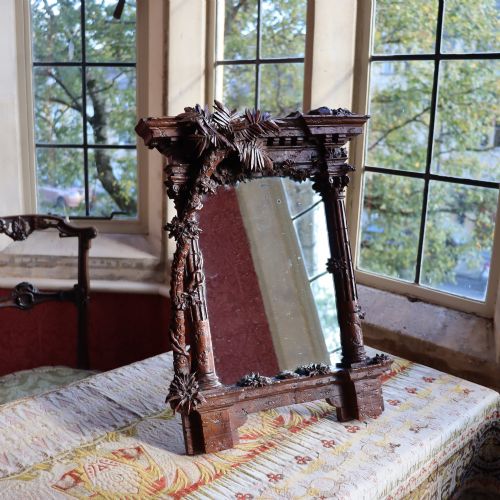
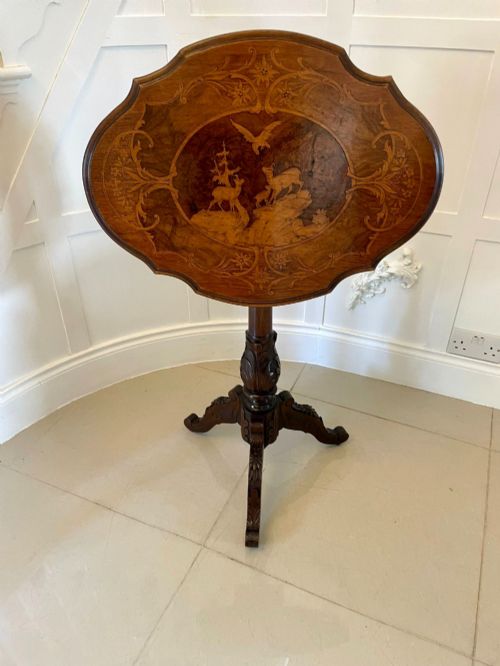
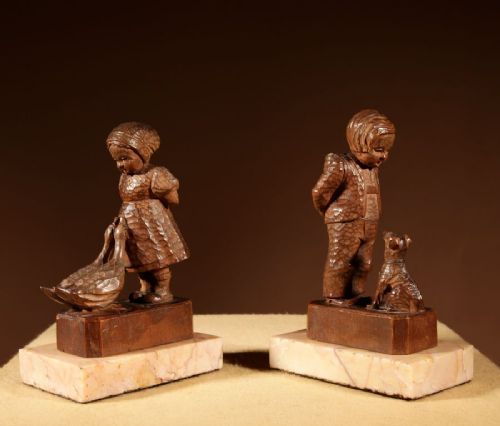
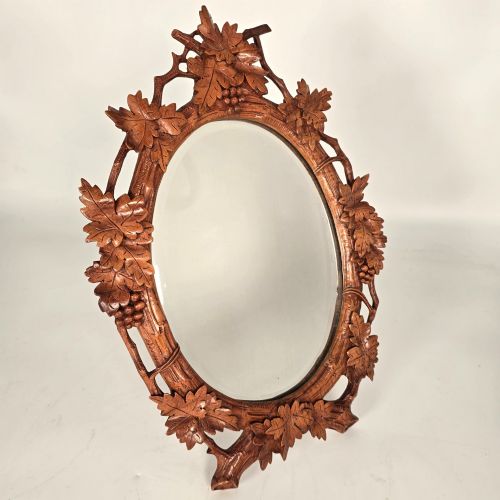
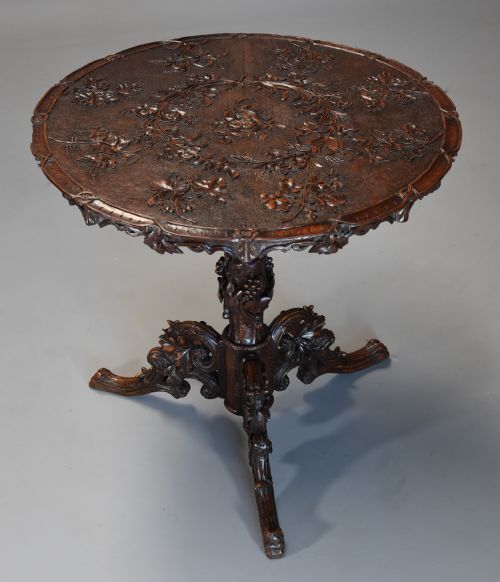


Swiss Black Forest Table
A swiss black forest table brings expressive animal carving and rich timber into a room, offering both practical surface space and distinct regional artistry.
Swiss Black Forest Table
The selections available span occasional tables, centre tables, and musical tables, frequently executed in walnut or linden wood.
Buyers will encounter both circular top variants with naturalistically carved bases and pieces incorporating marquetry inlay reflecting Victorian tastes.
Materials and Technique
Carvers utilised soft timbers such as linden wood, often referred to as lime wood, alongside harder woods like walnut to achieve deep relief and detailed animal forms.
Construction methods combined traditional joinery for the wooden tables with hand-carved sculptural elements, occasionally paired with brass or metal components.
Surfaces received careful finishing to highlight the natural grain and the precision of the profuse carving.
Swiss Black Forest Table Retail Price Guide 2026
Typical asking prices for swiss black forest table among the pieces listed under this phrase on Sellingantiques today, from the lower quarter to the upper quarter. They describe what is for sale here now, not the wider market.
Listings feature items dated from the nineteenth century into the 1930s, constructed predominantly from linden wood and walnut.
Standards of Execution
Quality rests entirely on the depth, animation, and anatomical accuracy of the carving rather than the mere presence of decoration.
The integration between the structural table top and the figural base dictates the overall cohesion and success of the piece.
Bergen & Co
The Swiss Black Forest Table Glossary
- Linden wood
- A pale timber native to central Europe favoured by carvers for its fine, even grain and softness which allows deep undercut relief. It is also known as lime wood.
- Marquetry
- The art and craft of applying pieces of veneer to a structure to form decorative patterns and pictures. It appears on Victorian table tops.
- Centre table
- A freestanding piece designed to be viewed from all sides rather than pushed against a wall, common in nineteenth century reception rooms.
- Rococo
- An ornate artistic style characterised by asymmetry, scrollwork, and natural curves, which influences some clock and table designs.
Swiss Black Forest Table: Frequently Asked Questions
What is a swiss black forest table?
A swiss black forest table is a nineteenth or early twentieth-century wooden furniture piece defined by realistic carvings of animals, particularly bears, and natural foliage.
These tables combine functional surfaces with elaborate sculptural bases produced in the Alpine regions of Switzerland and Germany.
Which woods were used?
Carvers relied primarily on linden wood, also known as lime wood, because its soft and even texture suited intricate relief work.
Walnut was also utilised for tabletops and structural components, sometimes enhanced by marquetry inlay.
How do I care for the wood?
Keep the timber away from direct heat sources and strong sunlight to prevent the carved elements and dry wood from splitting.
Dust the intricate carvings gently with a soft brush rather than a cloth to avoid snagging delicate relief work.
Are these tables sturdy?
While the structural tops are robust, the carved figural bases often feature projecting limbs or delicate botanical details that require careful handling.
Position the furniture away from heavy traffic areas where the carved wooden supports might suffer accidental knocks.