


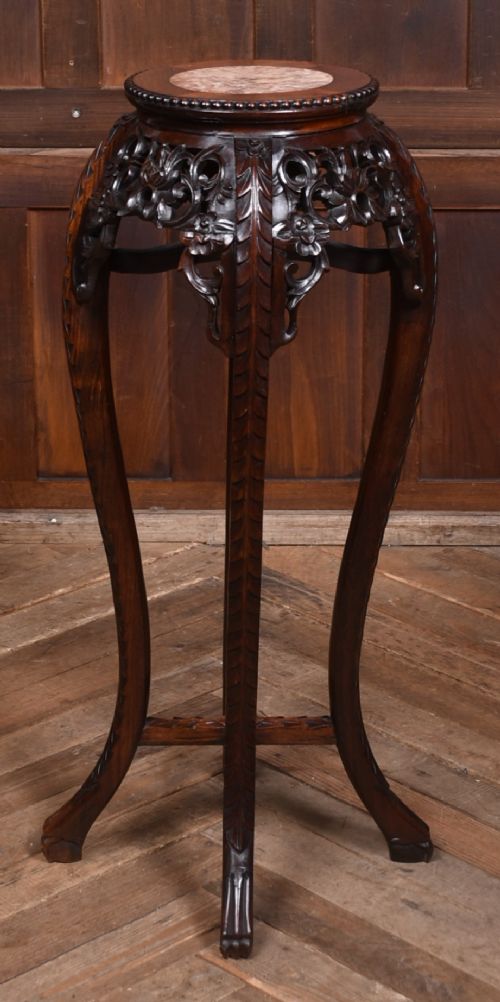


Dark Timber Pedestal Table
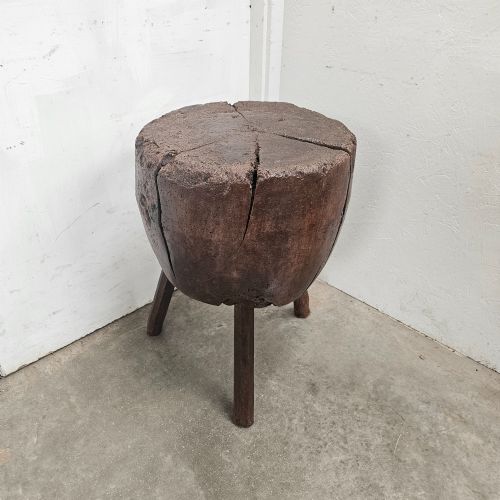
A dark timber pedestal table brings grounded character and central support to a room, offering a solid surface without corner legs cluttering the floor plan.
Dark Timber Pedestal Table
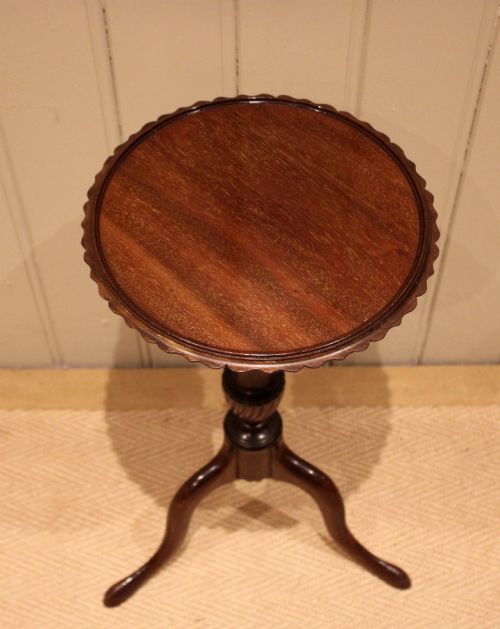
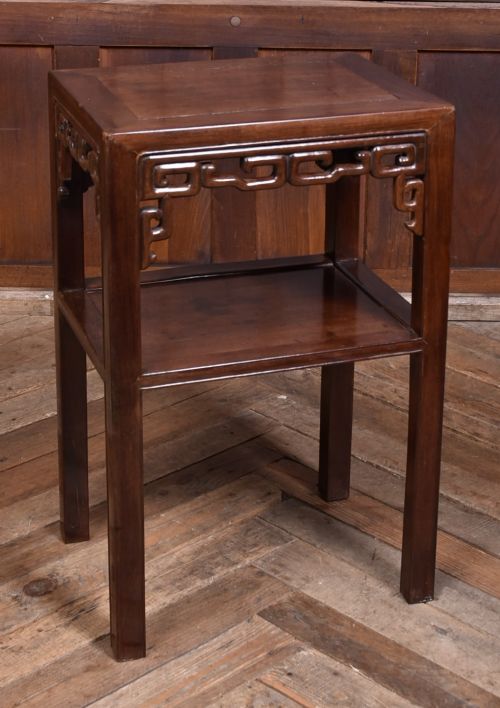
A dark timber pedestal table encompasses a wide variety of practical and decorative forms, including side tables, plant stands, desks, and dining tables. When searching for a dark timber pedestal table, buyers frequently encounter pieces designed for versatile placement, such as lamp tables, occasional tables, and jardiniere stands.
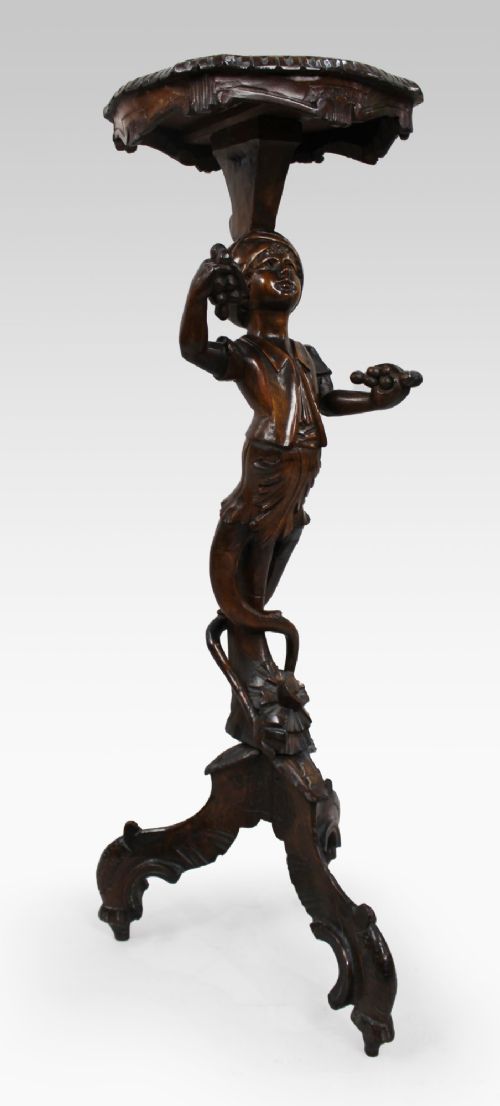
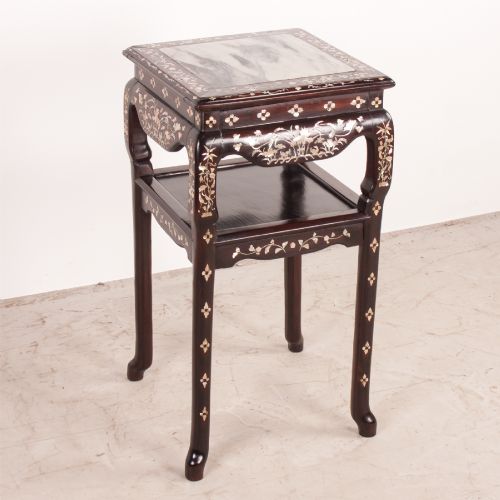
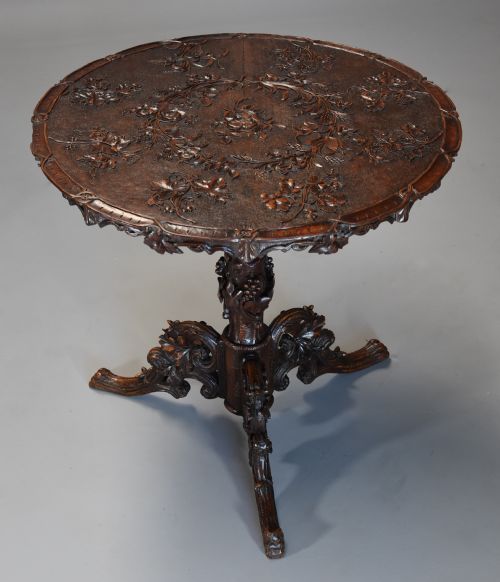
The selection spans numerous periods and regional traditions, ranging from Georgian and Regency eras to Victorian, Edwardian, and twentieth-century examples. Alongside traditional British and European furniture, many pieces originate from Chinese Export workshops, Anglo-Indian makers, and Black Forest carvers.
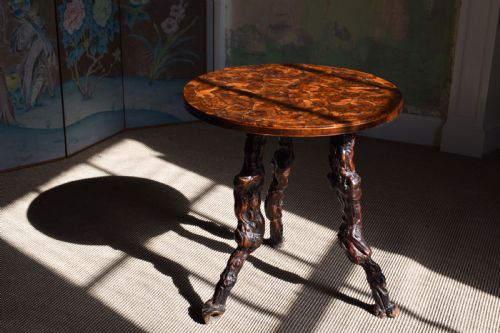
Support structures vary from single-column tripods and barley twist pillars to elaborately carved figural pedestals, architectural columns, and sculptural grape vine designs. Tops range from smooth mahogany and rosewood boards to inlaid mother of pearl and inset marble slabs.
Materials and Construction
Cabinet makers utilised dense hardwoods such as mahogany, rosewood, walnut, padouk, and teak, which took deep polishes and supported intricate carving. These dark timbers provided the structural strength needed for slender pillar supports and heavy tripod bases.
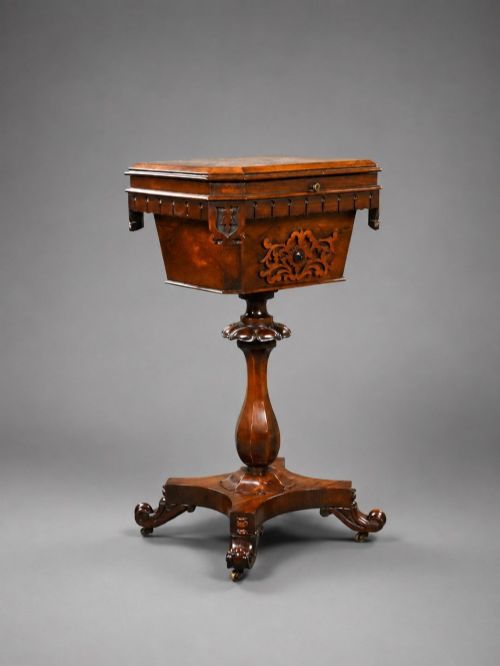
Surface decoration involved sophisticated techniques including profuse hand carving, figural sculpting, burr woodveneering, and mother of pearl inlay. Some specialised pieces combined timber frameworks with inset marble tops or incorporated brass fittings.
Some nineteenth-century makers carved entire crouching figures and Black Forest linden wood into functional furniture pedestals.
Craftsmanship and Proportion
Quality rests heavily on the crispness of the timber carving and the stability of the central pillar assembly. Superior examples exhibit tightly jointed tripod legs, well-balanced proportions, and rich, undisturbed grain across the tabletop.
Materials also dictate the tier of a piece, with finely figured burr wood, solid rosewood, and heavy marble inserts marking out workshop output from standard production. Integration of decorative elements, such as detailed figural stands or precise mother of pearl inlay, separates standard utility items from ambitious cabinet work.
Trollope & sons
The Dark Timber Pedestal Table Glossary
- Pedestal table
- A table supported by a single central pillar or column rather than four corner legs. This construction allows for greater legroom and compact placement.
- Tripod table
- A small occasional table whose central pillar rests on three spreading feet. These are frequently designed with tilt-top mechanisms for easy storage.
- Jardiniere stand
- A tall pedestal or small table specifically designed to hold a plant pot or flower bowl. They often feature inset marble tops to protect the timber from moisture.
- Tea poy
- A small box or chest mounted on a pedestal, originally used for storing and serving loose tea leaves. Examples often include internal compartments and secure lids.
- Padouk
- A heavy, durable tropical hardwood with a reddish-brown colour that darkens with age. It responds exceptionally well to fine carving and polishing.
- Mother of pearl inlay
- The decorative embedding of iridescent shell fragments into carved channels within the timber surface. This technique creates high-contrast geometric or floral patterns.
Dark Timber Pedestal Table: Frequently Asked Questions
What rooms suit a pedestal table?
These tables adapt easily to various living spaces because their central pillar eliminates corner legs, freeing up floor area for chairs and movement. Smaller versions function effectively beside sofas or as lamp tables in sitting rooms.
Larger pedestal formats serve well as dining tables or central library desks where seated guests or users require unobstructed legroom around the perimeter.
What is a tilt-top mechanism?
A tilt-top mechanism allows the tabletop to pivot vertically on its central pillar, enabling the furniture to be stored flat against a wall when not in use. This clever engineering was particularly popular in eighteenth and nineteenth-century occasional tables.
The hinge assembly beneath the top locks securely into a horizontal position during daily use, providing a stable surface.
How do I identify a plant stand?
Plant stands and jardiniere tables are typically taller and narrower than standard occasional tables, designed to elevate greenery into natural light. Their tops frequently incorporate durable inset marble or waterproof surfaces to handle damp pots.
Many examples feature slender columns or carved figural pedestals that add vertical interest to room corners or window spaces.