


Burr Veneer Accent Table
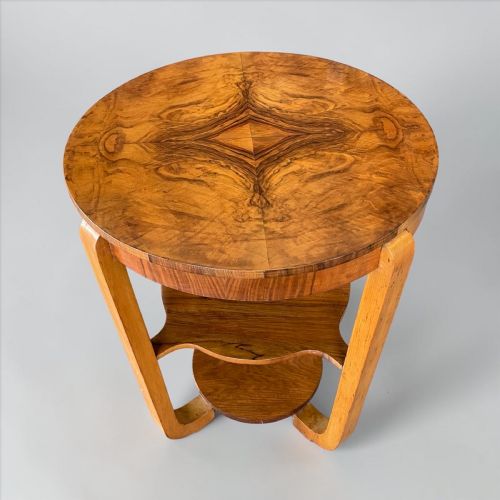
A burr veneer accent table brings warmth and movement to a room through richly figured timber surfaces.
Burr Veneer Accent Table
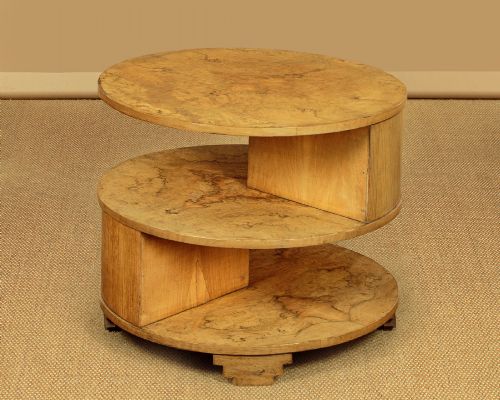
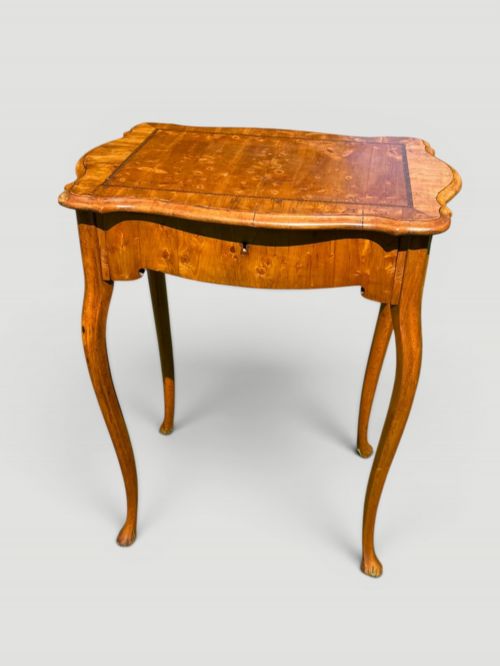
When you search for a burr veneer accent table, you find small occasional furniture designed to sit beside seating or in corners. These pieces provide a practical surface while showcasing the intricate grain patterns of timber. You meet various forms on this page, including coffee tables, lamp tables, side tables, and tilt top tables.
The selection spans several periods, with examples from the nineteenth century, nineteen-hundreds, nineteen-tens, nineteen-twenties, and nineteen-thirties. Styles range from Georgian Revival and Edwardian to Art Deco and nineteenth-century Scandinavian. Walnut and burr walnut dominate the selection, alongside rarer examples in burr birch, alder root, mahogany, and elm.
Most pieces function as occasional or side tables, offering compact proportions suited to modern interiors. The integration of brass fittings appears on select items, adding subtle contrast to the dark timber. Every piece relies on figured wood to create a strong visual focal point without dominating the space.
How they were made
Cabinetmakers constructed these tables by applying thin slices of highly figured timber over solid wood foundations. Burr walnut, burr birch, and alder root were sliced into delicate veneers to expose the complex knots and swirling growth rings beneath the bark. This technique allowed artisans to cover large surfaces with decorative grain patterns that solid timber rarely provided.
Makers combined walnut, mahogany, elm, and timber frames to support the delicate veneer surfaces. Turning and joinery shaped the occasional tables, coffee tables, and tripod bases found in the collection. Selected pieces incorporate brass components for structural joints or decorative accents, completing the construction.
Table forms include coffee tables, side tables, lamp tables, and tilt top tripod tables rendered in walnut, mahogany, and elm.
What varies in quality
The quality of a burr veneer accent table rests primarily on the selection and matching of the timber grain. Superior examples display symmetrical patterns where the swirling burr flows naturally across the top surface, while lesser pieces show disjointed grain alignment. The depth of the finish and the preservation of the underlying timber determine the visual impact of the piece.
Construction methods also distinguish finer tables from standard production. Expert joinery in the tripod bases and frames ensures long-term stability, whereas basic assembly leads to movement in the timber. The integration of secondary woods like mahogany and elm reflects the original tier of the workshop.
The Burr Veneer Accent Table Glossary
- Burr veneer
- A thin slice of wood cut from a tree growth or knot, producing a chaotic and highly decorative pattern of swirls and eyes. This material forms the primary decorative surface on these occasional tables.
- Occasional table
- A small, portable table designed for specific, intermittent use rather than central placement in a room. These forms include lamp tables, coffee tables, and side tables.
- Tripod table
- A small circular table supported by a central pillar resting on three feet. This construction allows the top to tilt on certain models.
- Alder root
- A timber harvested from the root system of the alder tree, showing dense and irregular grain figures. It appears in nineteenth-century Scandinavian pieces.
- Art Deco
- A design style from the early twentieth century characterised by sleek geometric lines and streamlined forms. Pieces from this era often feature bold walnut surfaces.
Burr Veneer Accent Table: Frequently Asked Questions
Where should I place a burr veneer accent table?
These tables fit easily beside armchairs, sofas, or empty corners where a small surface is useful. Their decorative timber tops look best in spaces with good natural light that highlights the grain.
Keep them away from direct sunlight and strong heat sources to protect the delicate veneer and timber finish over time.
How do I clean a burr veneer accent table?
Dust the surface regularly with a soft, dry cloth to prevent grit from scratching the polished wood. Avoid harsh chemical sprays or excessive moisture, which can damage old veneer.
Apply a quality beeswax occasionally to nourish the walnut, birch, or mahogany and maintain a soft sheen.
What is the difference between an occasional table and a coffee table?
Occasional tables are generally taller and smaller in surface area, designed to hold lamps, drinks, or books beside seating. Coffee tables are built lower to the ground for central placement in a living space.
Both forms utilise burr timber veneers to create visual interest within a room.
How can I tell an Art Deco table from an Edwardian one?
Art Deco tables from the nineteen-thirties feature geometric, streamlined silhouettes with smooth curves and minimal ornamentation. Edwardian and Edwardian Revival pieces often display softer, more traditional proportions with lighter framing.
Comparing the edge profiles and base construction helps identify the transition between these periods.