


Victorian Alabaster Bust Statue
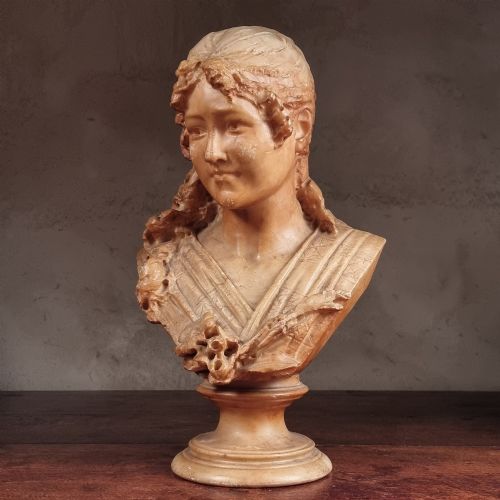
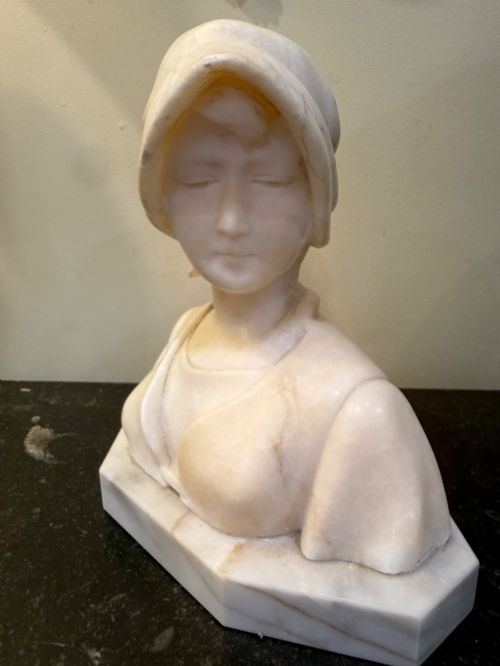
These Victorian alabaster bust statue pieces capture nineteenth-century portraiture in soft stone, bringing classical presence and quiet gravity into a room.
Victorian Alabaster Bust Statue
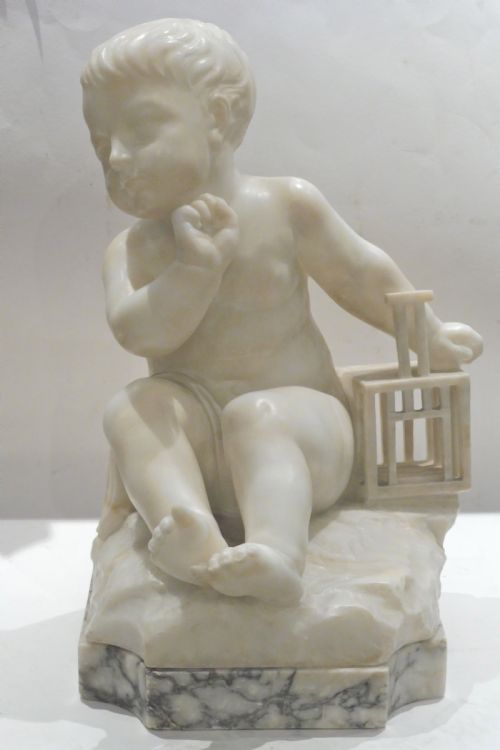
A Victorian alabaster bust statue presents carved depictions of gentlemen, ladies, and children from the nineteenth century, often reflecting neoclassical or Arts and Crafts ideals. These sculptures arrive in various forms, including single portrait busts of young women and sculptural groups featuring children with animals.
The material palette spans soft alabaster and carved marble alongside occasional bronze-finished spelter pieces, echoing the European tastes of the period. Most examples originate from the broader nineteenth century, with specific dates clustering around the decades of the eighteen-fifties through the eighteen-nineties.
Italian provenance appears strongly among these carved figures, often taking the form of detailed sculptures depicting young boys or classical figures. Buyers encounter everything from large single portrait studies to paired pieces representing orientalist subjects.
Materials and construction methods
Carving forms the primary method for these nineteenth-century pieces, utilising the fine grain of alabaster and marble to render facial expressions and drapery. Sculptors shaped the stone by hand, capturing delicate surface textures across hair and fabric.
Alternative pieces employ cast spelter with a bronze finish, offering a different metallic weight and surface sheen while maintaining the sculptural intent of the period. Makers combined these traditional casting and carving techniques to produce lasting decorative works.
Judging the work
The degree of anatomical precision and the subtlety of expression separate finer nineteenth-century carvings from simpler workshop output. A skilled hand renders the drape of clothing and the soft contours of a face with convincing realism.
The choice of stone also defines the character of the piece, with translucent alabaster requiring careful selection to avoid heavy veining that obscures the subject. Maker attribution through signatures adds distinct distinction to individual sculptures.
Mieczyslaw Leon Zawiejski·Joseph Gott·Pugi
The Victorian Alabaster Bust Statue Glossary
- Spelter
- A zinc alloy commonly used in the nineteenth century as a substitute for bronze. It accepts metallic finishes to simulate heavier metals.
- Neoclassical
- A design style drawing inspiration from classical antiquity. It influences the proportion and drapery of many Victorian portrait subjects.
Victorian Alabaster Bust Statue: Frequently Asked Questions
What periods do these busts cover?
The available pieces span the nineteenth century, with particular representation from the middle and late decades between eighteen-fifty and eighteen-ninety.
Craftsmanship during this era reflects neoclassical, Art Nouveau, and Arts and Crafts movements across European workshops.
How do alabaster and marble differ?
Alabaster is generally softer and possesses a warmer, more translucent quality that allows light to penetrate the surface of the stone slightly.
Marble offers greater hardness and durability, often displaying distinct veining patterns across larger sculptural groups and portrait pieces.
Where were these sculptures made?
Many carved stone examples originate from Italian workshops, while other pieces reflect broader European and French manufacturing traditions.
Individual sculptors working within these regions signed their finished pieces in stone or cast metal.
How should I clean alabaster?
Alabaster is water-soluble and soft, meaning moisture can easily damage the delicate surface and polish of the carved stone.
Dusting with a dry, soft cloth remains the safest method for maintaining the appearance of nineteenth-century sculptures.