




Antique Female Stone Bust
An antique female stone bust brings classical calm to a room, carved from marble or alabaster to capture centuries of sculptural tradition.
Antique Female Stone Bust
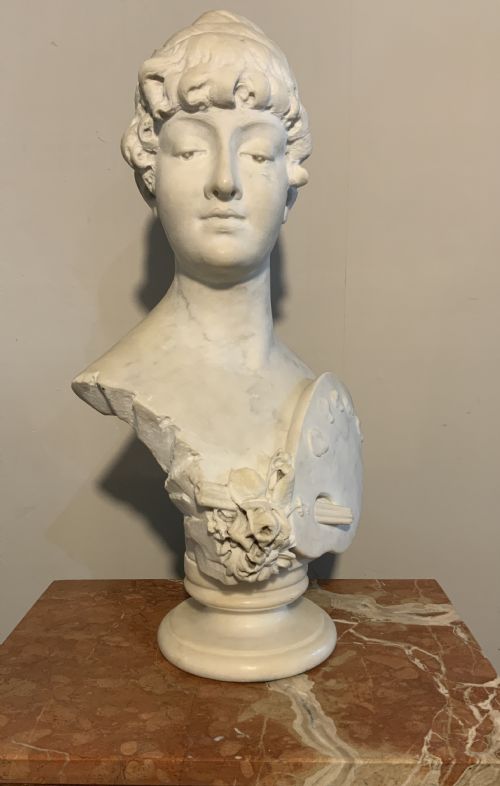
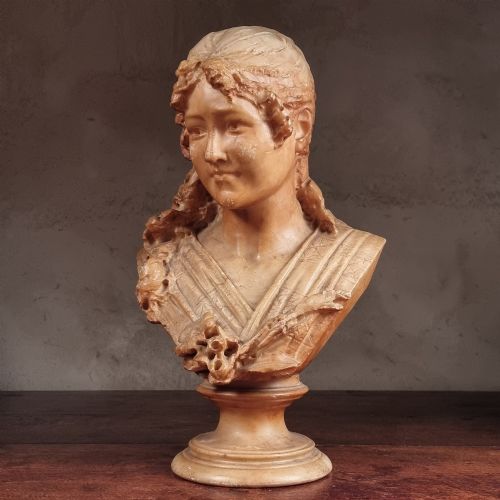
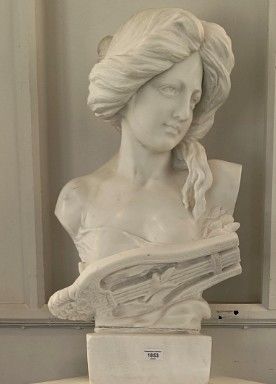
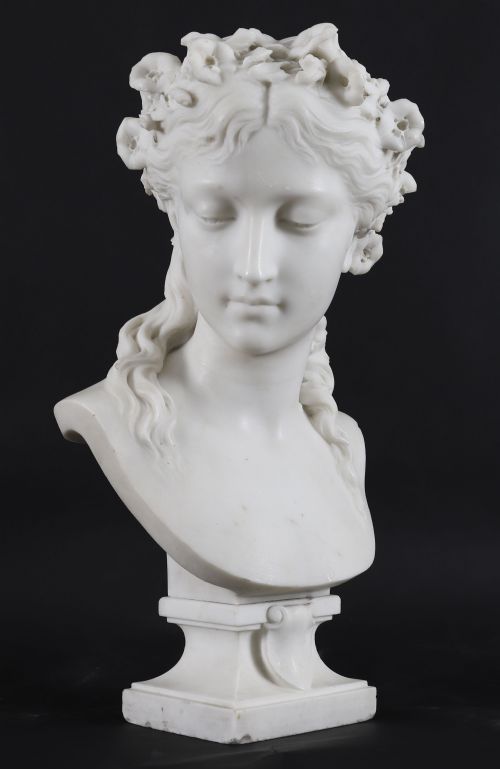
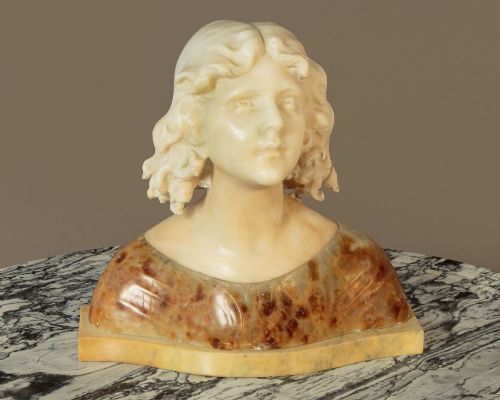
An antique female stone bust represents historical figures, mythological subjects, or idealized portraits carved primarily during the nineteenth and early twentieth centuries. These sculptures range from grand Italian works to intimate Victorian depictions of young women and classical muses.
Makers often drew inspiration from earlier classical styles, producing Neoclassical, Baroque, and Arts and Crafts interpretations. Subjects span from mythological deities like Juno and Erato to French literary heroines and anonymous Dutch girls.
How they were made
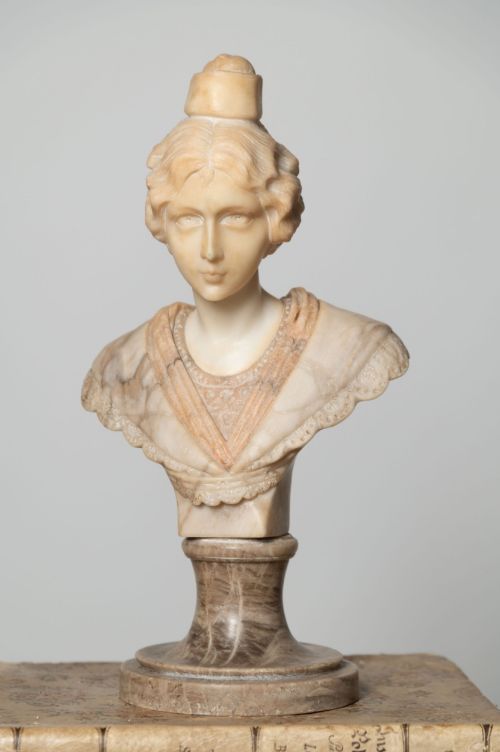
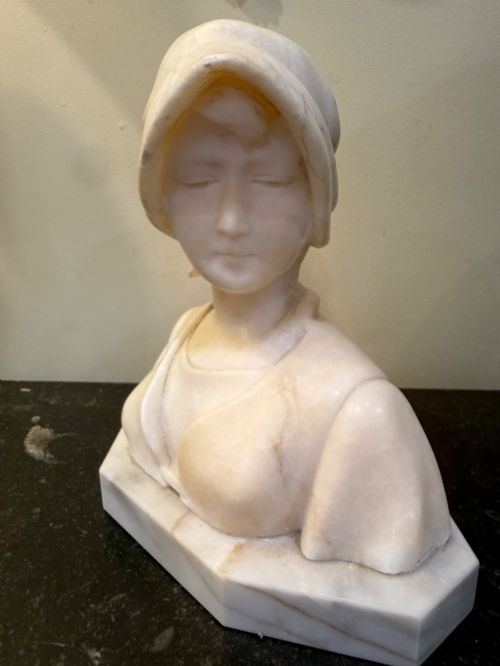
Carvers shaped these sculptures from blocks of stone using chisels, rasps, and abrasive powders for smoothing. Alabaster and various types of marble, including pure white Carrara and mixed coloured varieties, served as the primary mediums.
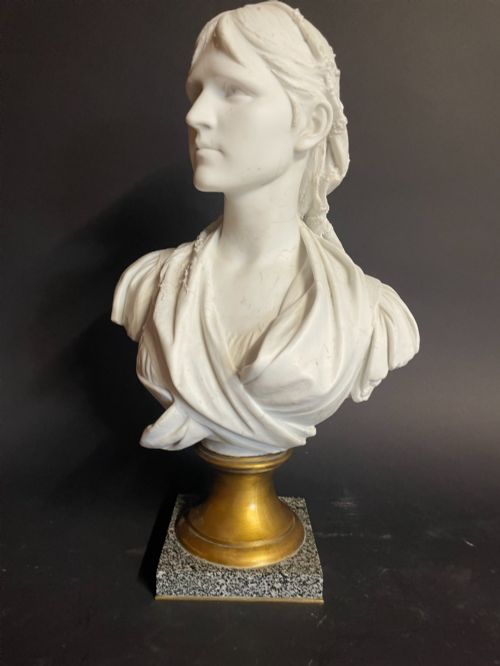
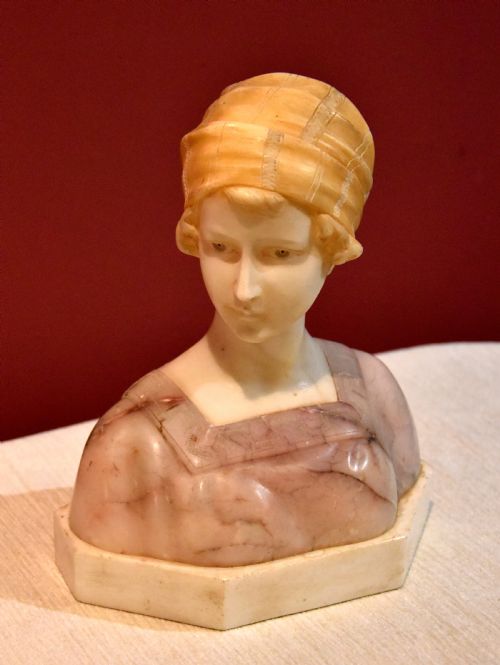
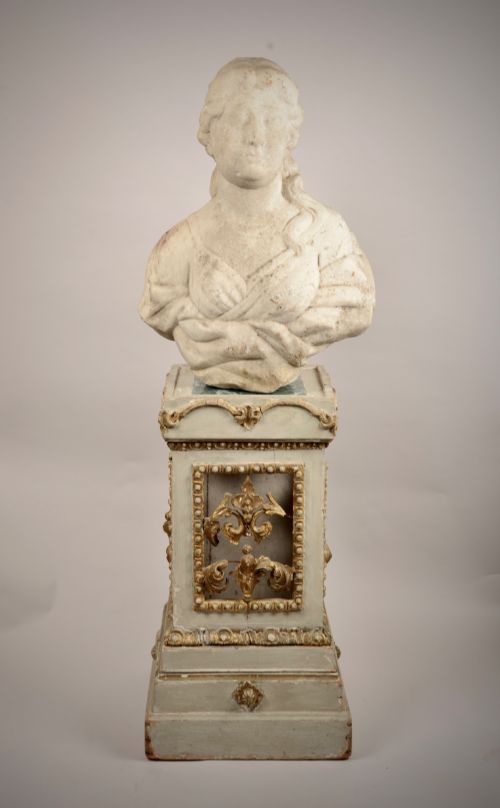
Many works combine different materials within a single composition, mounting white marble or alabaster figures on contrasting granite or brass bases. Artisans also integrated gilt elements to highlight specific details of costume or hair.
Signatures and inscriptions were often incised directly into the stone base or shoulder of the sculpture. Sculptors utilised master models, sometimes working after established painters or earlier classical antiquities.
Listings span from the seventeenth century through the early twentieth century, featuring works in marble, alabaster, granite, and brass.
What varies in quality
The refinement of the carving dictates the distinction between standard production and masterwork pieces. Superior examples display delicate treatment of facial expressions, individual strands of hair, and the subtle folding of textile drapery.
Material selection significantly influences the desirability of a sculpture. Pure, translucent alabaster and high-grade Carrara marble command greater attention than heavily veined or mixed stone alternatives.
Attribution to a known hand elevates a piece beyond anonymous studio output. Sculptors such as Auguste Moreau, Eugene Aizelin, and Auguste Henri Carli introduced distinct artistic authority to their carved stone portraits.
Eugene Aizelin·Auguste Henri Carli·R. Lusili·Auguste Moreau·A. Cipriani
The Antique Female Stone Bust Glossary
- Carrara marble
- A type of white or blue-grey marble quarried in the city of Carrara in Tuscany, widely utilised by European sculptors for portrait busts.
- Alabaster
- A fine-grained, translucent stone that is softer than marble, allowing carvers to achieve delicate facial expressions and soft drapery effects.
- Neoclassical
- A Western cultural movement drawing inspiration from the art and culture of classical antiquity, prevalent in nineteenth-century sculpture.
- Patination
- The natural ageing and surface alteration of stone over time, which develops through handling, exposure to light, and historical cleaning methods.
- Plinth
- The heavy base or pedestal upon which a portrait bust is mounted, sometimes composed of contrasting brass, granite, or mixed marble.
Antique Female Stone Bust: Frequently Asked Questions
Where should I display my bust?
These sculptures suit stable, level surfaces such as strong sideboards, console tables, or dedicated pedestals where their weight is fully supported.
Position the piece away from direct heat sources and strong sunlight to protect the stone surface and prevent any subtle discolouration over time.
How can I date my sculpture?
Examining the clothing style, hairstyle, and base construction provides initial clues to the period of manufacture. Nineteenth-century works frequently display detailed signature lettering and specific regional casting or carving characteristics.
Comparison with documented pieces by known makers recorded in the evidence helps narrow down the active working decades of the sculptor.
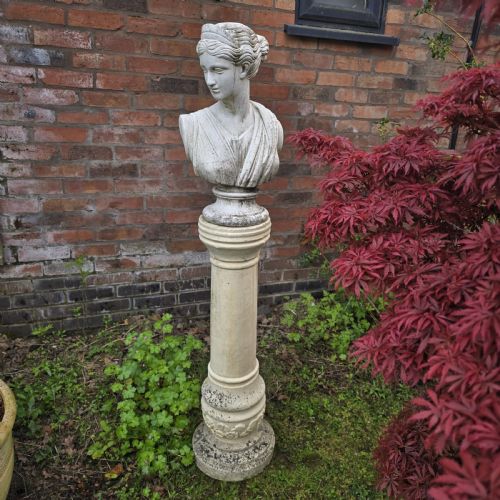
Were these pieces displayed outdoors?
Antique marble and alabaster portrait busts were created exclusively as interior furnishings for nineteenth-century drawing rooms, libraries, and galleries.
Exposing these delicate materials to exterior weather conditions, frost, and dampness would rapidly erode the fine carved details and ruin the polished finish.