
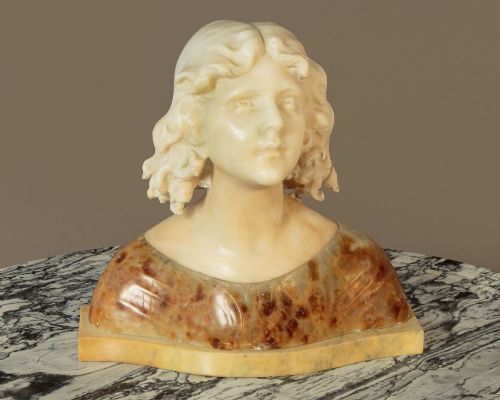


Carved Alabaster Maiden Figure
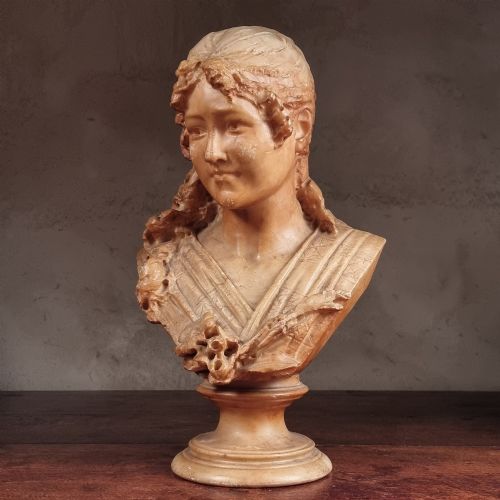
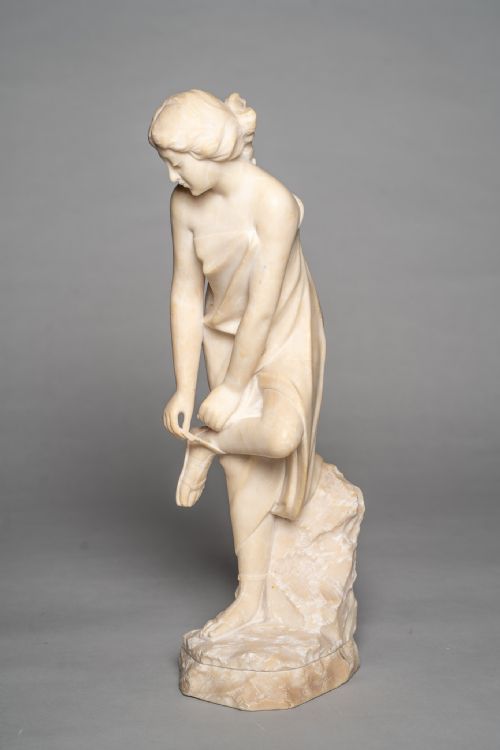
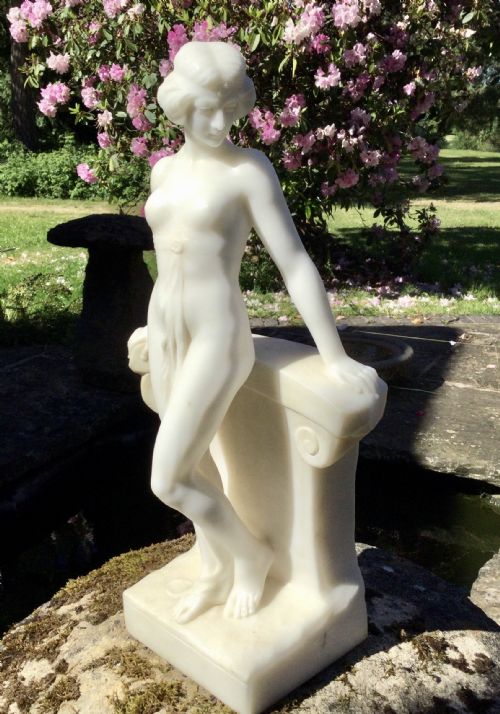
A carved alabaster maiden figure brings tactile, pale stone sculpture into a room, offering the quiet elegance of classical and turn-of-the-century portraiture.
Carved Alabaster Maiden Figure
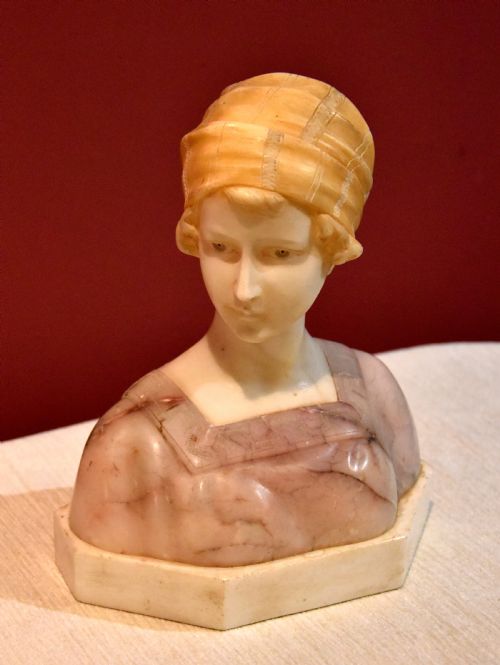
When you search for a carved alabaster maiden figure, you encounter sculptural depictions of women ranging from Victorian neoclassical studies to flowing Art Nouveau pieces. The selection on this page centres primarily on busts and full sculptures created during the nineteenth and early twentieth centuries. These works frequently depict young women or allegorical female figures with serene expressions and detailed drapery or hair.
Most examples originate from European workshops, with Italian makers appearing prominently among the signed works. The forms vary from intimate cabinet busts to large pedestal sculptures incorporating contrasting materials like marble and wood. Dating spans from mid-Victorian productions of the 1850s and 1860s through to French and Italian creations of the early twentieth century.
Materials and construction methods
The primary medium is alabaster, a soft and translucent stone that allows sculptors to achieve remarkably gentle gradients of light across a subject's face. Artisans often combined alabaster with white marble or incorporated wooden elements to add structural contrast and tonal depth to the finished sculpture. Two-tone effects are achieved by selecting stone strata with natural colour variations.
Carving was executed by hand using chisels, rasps, and abrasive powders to smooth the porous surface to a matte or softly polished finish. Many pieces bear signatures or workshop incisions directly into the stone base, indicating the hand of named sculptors from the period.
Several Victorian maidens stand permanently poised ankle-deep in sculpted stone pools, safe from ever needing an umbrella.
Assessing quality and execution
The condition of the stone surface also dictates distinction, as softer alabaster is prone to minor abrasions and discolouration over time. Pieces retaining crisp chisel work without smoothing from aggressive cleaning represent the higher echelon of surviving nineteenth-century output.
A.Gamay·Auguste Henri Carli·Gugielmo Pugi
The Carved Alabaster Maiden Figure Glossary
- Alabaster
- A fine-grained, translucent stone prized for sculpture since antiquity. It is softer than marble, allowing for subtle detail work.
- Bust
- A sculpted representation of a person from the chest or shoulders up. This format dominates nineteenth-century portraiture.
- Neoclassical
- An artistic style inspired by the classical art and culture of ancient Greece and Rome. It emphasises symmetry, restraint, and classical drapery.
- Art Nouveau
- A decorative style characterised by fluid, organic lines and floral motifs. Pieces from this period often feature maidens with flowing hair.
- Patination
- The natural change in the surface appearance of a material over time. In stone, this includes slight mellowing or handling marks.
Carved Alabaster Maiden Figure: Frequently Asked Questions
What is an alabaster maiden figure?
These pieces are carved stone sculptures and busts depicting female subjects, produced mainly during the nineteenth and early twentieth centuries.
They serve as decorative focal points, often displayed on mantelpieces, columns, or specialised pedestals within period interiors.
How do I date a marble and alabaster bust?
Dating relies on stylistic clues such as Victorian neoclassical drapery versus flowing Art Nouveau hair, alongside costume details and overall form.
Signatures etched into the stone and recorded biographical dates of makers like Gugielmo Pugi also provide precise manufacturing windows.
Where were these nineteenth-century sculptures made?
The majority of these carved figures originated in European workshops, with Italian and French studios producing a high volume of export pieces.
Italian carvers frequently utilised local alabaster quarries to create detailed female portraits for the Victorian art market.