


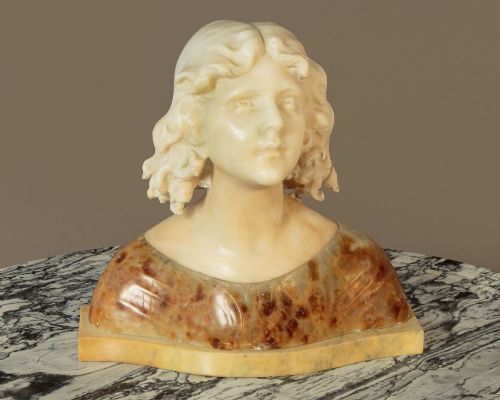
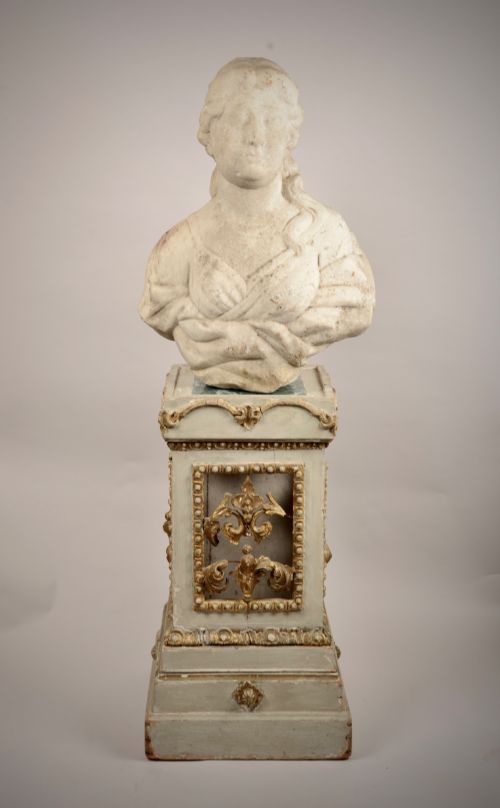


Carved Female Portrait Bust
A carved female portrait bust brings classical gravity and intimate human presence into a room, spanning centuries of stone and wood sculpture.
Carved Female Portrait Bust
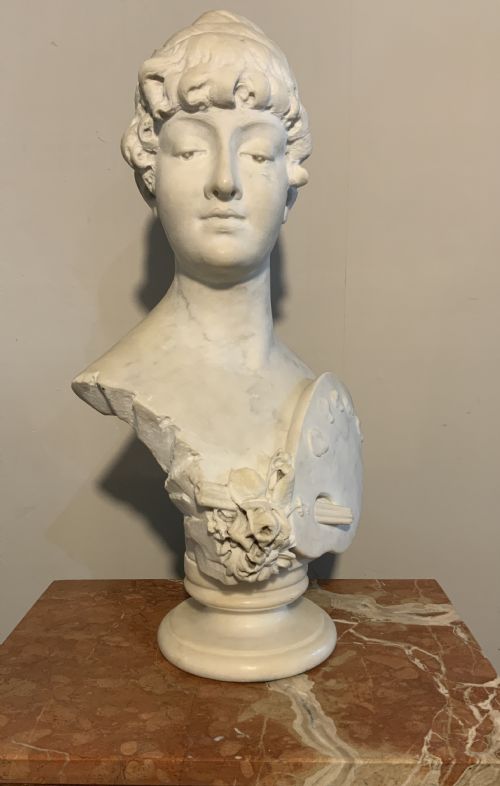
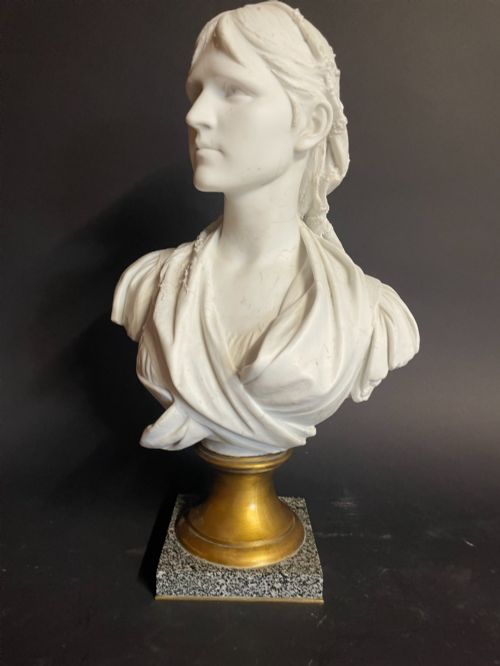
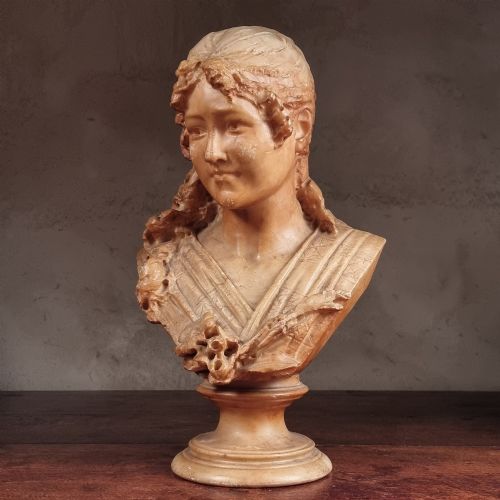
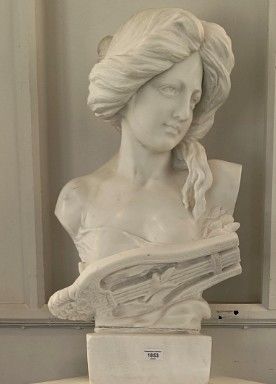
A carved female portrait bust represents women from mythology, history, or personal life, rendered in three dimensions down to the shoulders or chest. The pieces encountered here emerge predominantly from the nineteenth century, alongside examples from the seventeenth, eighteenth, and early twentieth centuries.
Makers shaped these works within distinct aesthetic movements, ranging from severe Neoclassical idealism to flowing Art Nouveau curves and Baroque drama. Subjects span from classical muses and noblewomen to young girls and anonymous regional figures.
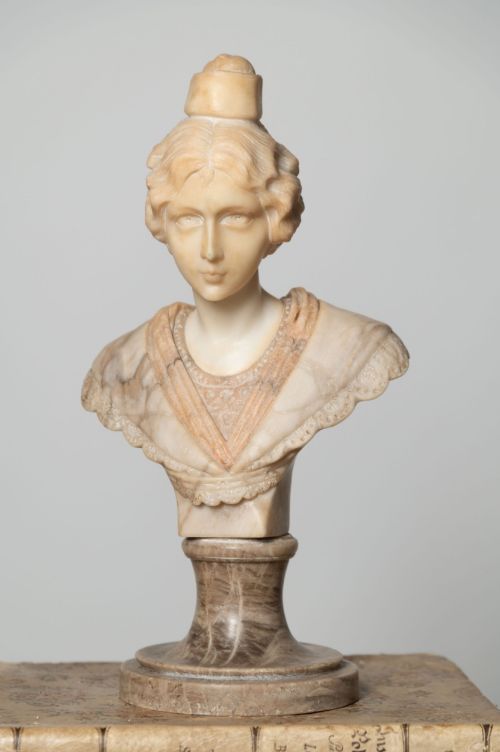
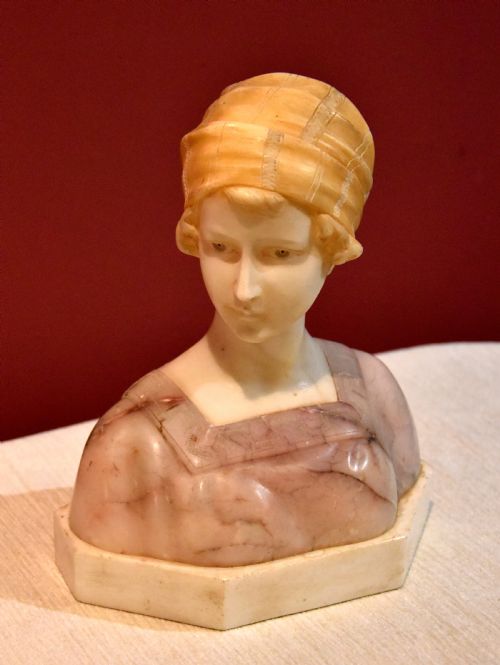
Sculptors executed these forms in varied scales, some designed for grand domestic halls and others intended for intimate tabletop display. The selection includes standalone stone carvings as well as mixed-media compositions integrating bronze, brass, or ormolu.
Materials and Carving Techniques
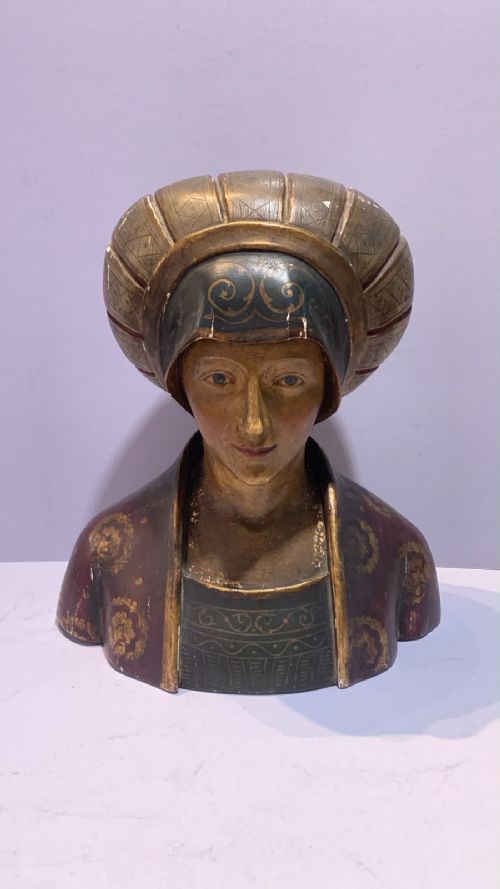
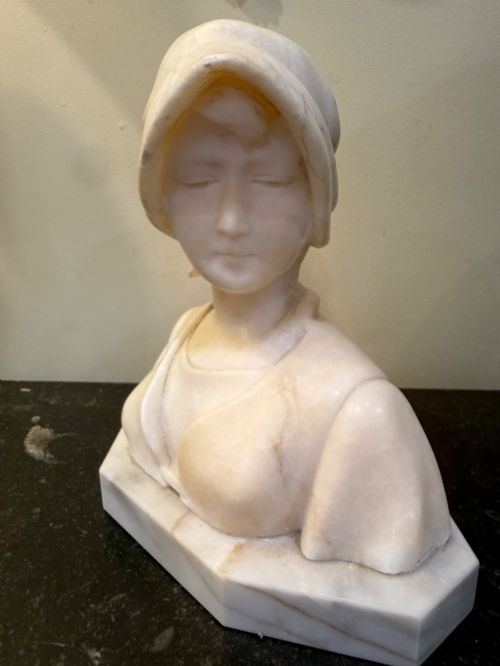
Artisans carved these sculptures primarily from dense stones such as Carrara marble, white marble, and translucent alabaster, often mounting them on contrasting bases of portoro or vert de mer marble. Wood serves as an alternative sculptural medium, utilised by makers to capture softer grain textures and warmer tones.
The working process required precise chisel and rasp work to define facial expressions, hair strands, and draped garments from the raw block. Sculptors occasionally combined carved stone with cast bronze or applied gold leaf to accentuate garments and bases.
Several ladies arrive permanently veiled in solid stone, keeping their expressions hidden behind frozen cascades of carved marble.
Distinctions in Execution and Expression
The upper tier of works demonstrates exceptional anatomical command, where the carving of soft tissue, bone structure, and gaze brings a convincing vitality to the stone. Finer examples capture subtle emotional nuance in the set of the mouth and the fall of eyelids.
Execution of secondary details, such as intricately braided hair, ruffled lace, or complex drapery folds, separates standard commercial production from masterwork carving. The selection of unblemished marble and the precision of the polish across exposed skin versus textured hair further define the grade of a piece.
Auguste Henri Carli·Boudewijn Tuerlinckx·Auguste Moreau·GORY
The Carved Female Portrait Bust Glossary
- Alabaster
- A fine-grained, soft stone that accepts a translucent finish, allowing light to penetrate the surface in a manner similar to human skin.
- Carrara marble
- A type of white or blue-grey marble quarried in Tuscany, widely favored by European sculptors for its purity and fine crystalline structure.
- Neoclassical
- A style spanning the eighteenth and nineteenth centuries that revived the aesthetic and proportions of classical Greek and Roman art.
- Ormolu
- Gilding technique utilising a finely ground gold-mercury amalgam applied to bronze mounts, providing decorative metallic contrast to stone sculptures.
- Grand Tour
- A cultural journey undertaken by wealthy young Europeans through France and Italy, leading to the collection of classical antiquities and portrait busts.
Carved Female Portrait Bust: Frequently Asked Questions
Where were these busts displayed?
Historically, owners placed portrait busts on pedestals in libraries, entrance halls, and formal drawing rooms to signal classical learning and familial lineage.
Today, they function well on sturdy sideboards, mantels, or dedicated pedestals where adequate lighting can reveal the carved contours.
How do I clean marble?
Dust marble and alabaster surfaces regularly with a dry, soft microfibre cloth to prevent particulate accumulation within the carved crevices.
Avoid using water, household detergents, or acidic cleaners, as these substances can etch polished stone and damage softer minerals like alabaster.
What is the difference between marble and alabaster?
Marble is a hard metamorphic rock formed from recrystallised carbonate minerals, offering high durability and a solid, opaque appearance.
Alabaster is a softer stone composed of gypsum or calcite, prized for its natural translucency which allows light to diffuse slightly beneath the surface.
How are periods identified?
Periods are determined through a combination of stylistic markers, such as the severe lines of Neoclassicism versus the organic asymmetry of Art Nouveau.
Signatures, foundry marks, material choices, and historical dress details further anchor the date of creation.