




Carved Alabaster Sculpture Bust
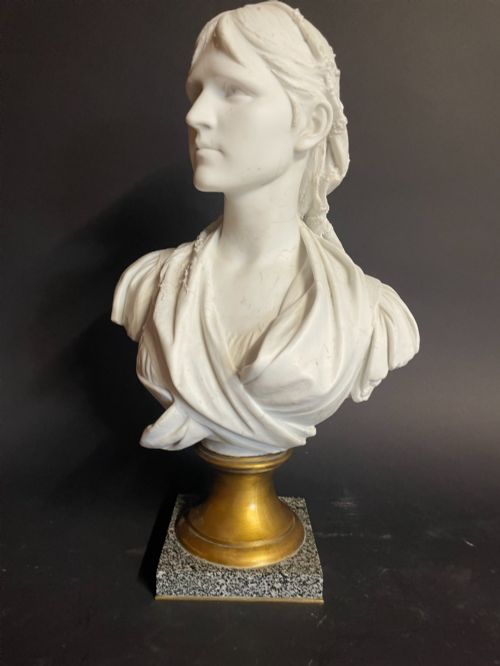
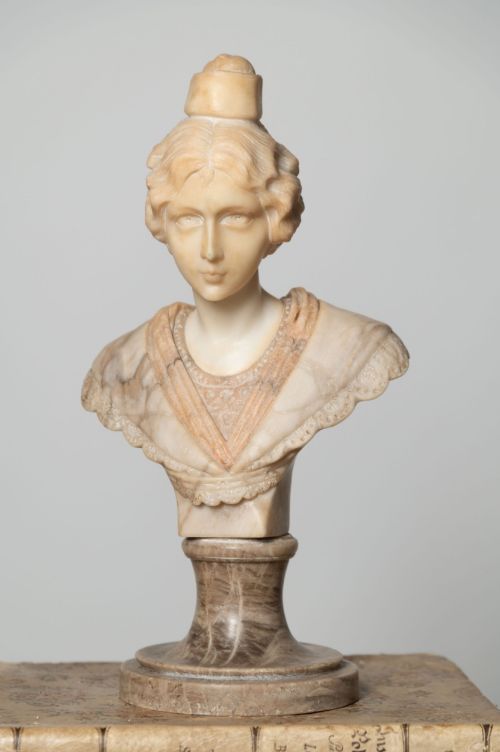
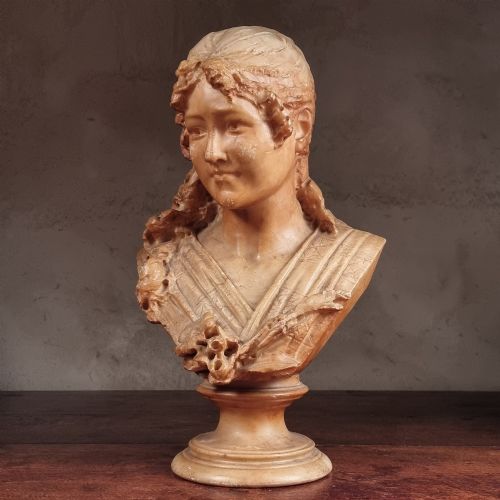
These carved alabaster sculpture bust pieces capture nineteenth and early twentieth century portraiture, offering finely rendered studies of women, children, and classical figures.
Carved Alabaster Sculpture Bust
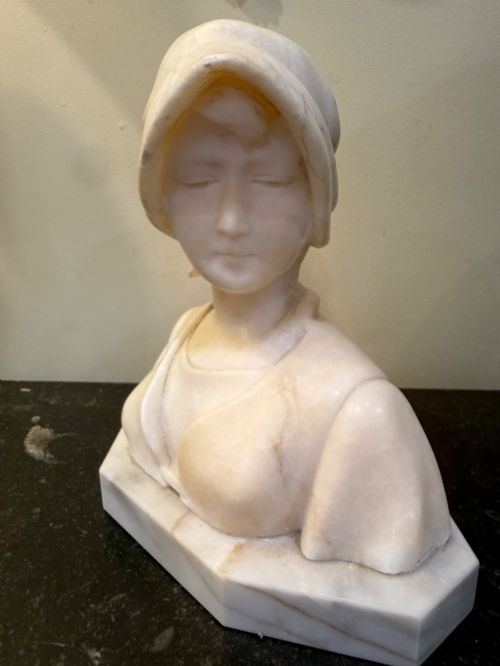
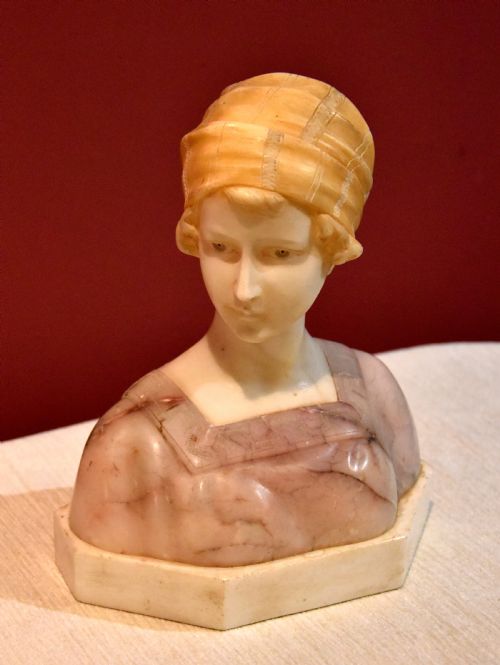
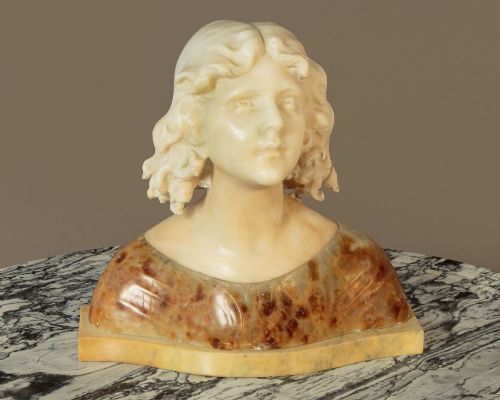
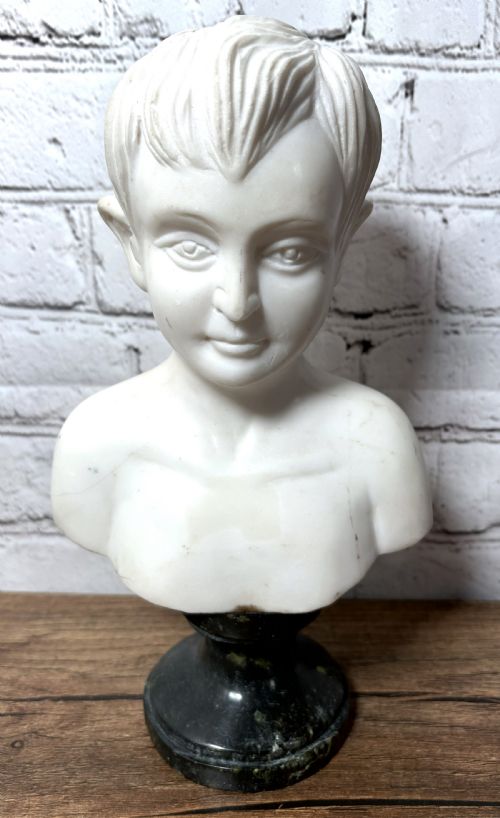
A carved alabaster sculpture bust typically portrays a female subject, a young girl, a young boy, or a historical figure in profile or three-quarter view. The selection on this page ranges from nineteenth century French and Italian works to Edwardian and Arts and Crafts examples, spanning periods from eighteen fifty to nineteen thirty.
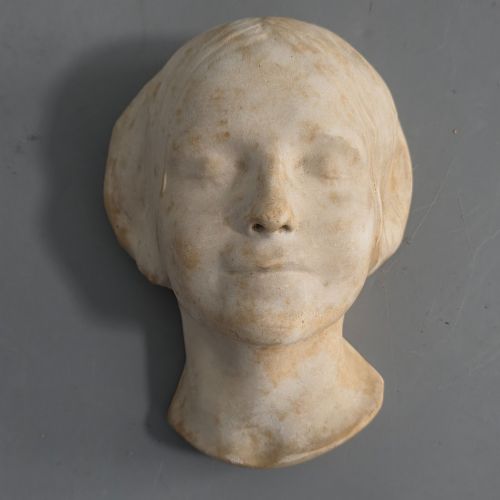
Beyond standard portrait busts, the form extends to wall plaques, death masks, plant stands, and figural groups depicting children with animals. Portrait busts of gentlemen and orientalist figures also appear alongside mythological studies and female figures titled Mignon or Sappho.
How they were made
Sculptors shaped these pieces primarily from alabaster and marble, utilising stone, crystalline quartz, and granite for variety or structural support. Some compositions combine carved alabaster with bronze, brass, or ormolu mounts to accent drapery or bases.
The working of the stone relied on precise hand carving to capture the softness of hair, fabric, and facial expressions. Makers utilised signed plaques and incised signatures directly into the marble or alabaster surface to record their authorship.
Several young boys and girls are immortalised in stone, occasionally caught mid-play with an eager puppy.
What varies in quality
The distinction between standard works and superior pieces lies in the subtlety of the carving and the expressiveness of the subject. Finer examples display delicate handling of hair strands, drapery folds, and realistic flesh tones within the stone.
The choice of materials also elevates a piece, particularly when pure white alabaster meets contrasting coloured marble bases or ormolu details. Signed works by recognised sculptors carry greater distinction than unsigned studio pieces.
Auguste Henri Carli·Mieczyslaw Leon Zawiejski·G.V. Vaerenbergh·Joseph Gott·R.LUSILI·A.Cipriani
The Carved Alabaster Sculpture Bust Glossary
- Ormolu
- Gilt bronze applied as a decorative mount or base on stone sculptures. This metalwork adds structural contrast and visual weight to the composition.
- Neoclassical
- An artistic style inspired by classical antiquity that heavily influenced nineteenth century sculpture. It prioritises restraint, symmetry, and classical subject matter.
- Specimen marble
- Multi-coloured marble assembled from various regional types to create decorative bases or inlaid studies. It showcases geological variety within a single carved object.
Carved Alabaster Sculpture Bust: Frequently Asked Questions
What periods do these busts represent?
The pieces span the nineteenth and early twentieth centuries, with dates stretching from eighteen fifty through to nineteen thirty. Victorian, Edwardian, and Art Nouveau movements dominate the styles.
French and Italian studios created the majority of these works during the height of the classical revival.
How were these sculptures displayed originally?
Portrait busts sat upon library tables, mantelpieces, and dedicated plant or bust stands made of matching alabaster and stone. Libraries and drawing rooms served as the primary settings for domestic display.
Wall plaques hung in pairs to decorate panelled walls and corridors.
How do I identify a signed piece?
Makers incised their names directly into the marble or alabaster plinth, or onto attached metal plaques. Signatures often correspond to known French and Italian sculptors of the period.
Unsigned works remain common, reflecting commercial studio production rather than named masters.
What materials accompany the alabaster?
Sculptors frequently paired alabaster with white or coloured marble, bronze, brass, and ormolu. Granite and crystalline quartz occasionally appear in bases and specialist studies.
These mixed media combinations provided structural stability and decorative contrast.