
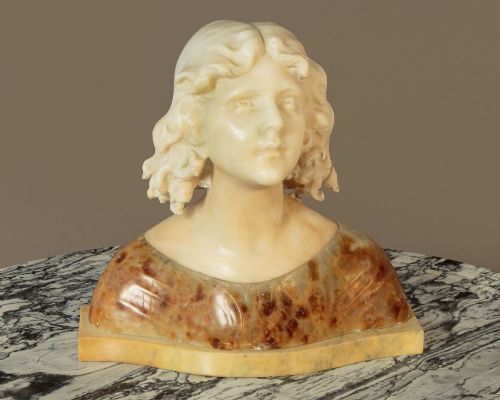


Cream Stone Female Bust
These cream stone female bust carvings bring nineteenth and early twentieth century classical grace straight into a room.
Cream Stone Female Bust
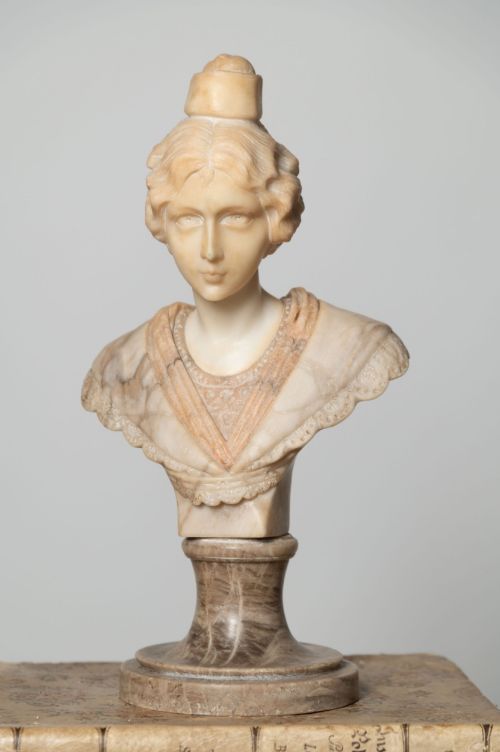
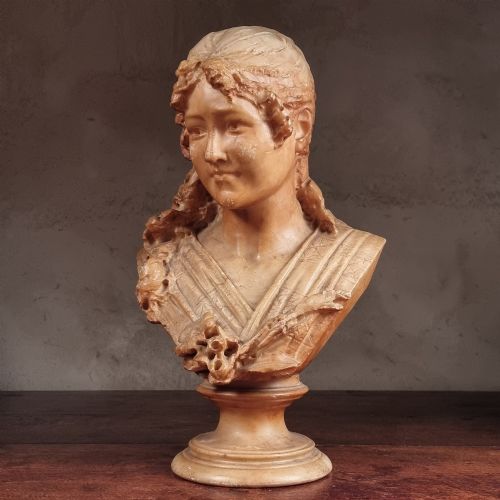
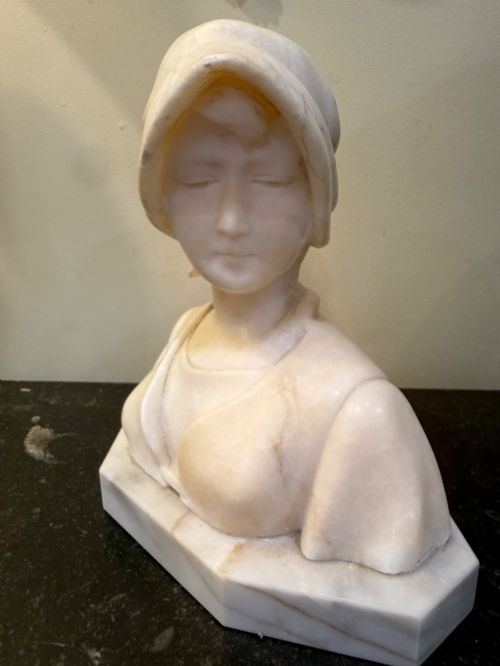
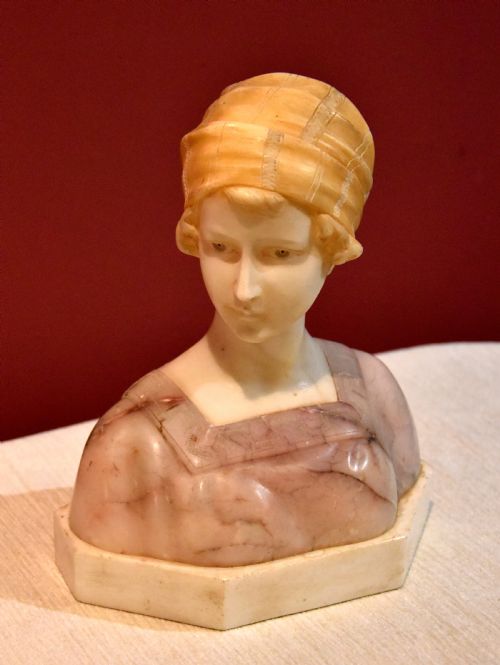
A cream stone female bust presents a sculpted depiction of a woman's head, shoulders, and chest, rendered in pale natural minerals. These sculptures range from small mantel ornaments to large gallery pieces created during the nineteenth and early twentieth centuries.
Most examples found here date from the Victorian period through to the nineteen-twenties, encompassing French Classical, Art Nouveau, and Arts and Crafts styles. They portray young ladies, girls, and classical figures with carved hair, drapery, and expressions.
The form derives from classical traditions, translated by European makers into domestic ornaments for grand interiors. Buyers encounter French and Italian workshop pieces alongside British Victorian works.
How they were made
Many works combine different mineral types, mounting alabaster figures onto contrasting marble bases or incorporating mixed stone elements. Signatures and atelier marks were often incised directly into the stone surface by the sculptor upon completion.
Listings span periods from eighteen sixty to nineteen twenty, featuring both British and continental European works in alabaster, marble, and stone.
What varies in quality
The finesse of the carving in the facial expression and hair dictates the standard of the piece. Master sculptors achieved lifelike softness in the cheeks and precision in the drapery, whereas lesser works appear stiff and generalised.
The choice of material also sets examples apart, with pure, translucent alabaster commanding greater regard than clouded or heavily veined stone. Signed works by documented makers demonstrate higher artistic ambition than anonymous workshop output.
Auguste Henri Carli·GREUZE·A.Cipriani
The Cream Stone Female Bust Glossary
- Alabaster
- A fine-grained, soft mineral stone used for carving classical sculptures and decorative busts. Its slight translucency allows light to penetrate the surface, mimicking the appearance of human skin.
- Art Nouveau
- An international style of art and architecture popular around nineteen hundred. It is characterised by intricate asymmetrical lines and motifs inspired by natural forms.
- French Classical
- An artistic approach adhering to traditional aesthetic principles derived from ancient Greece and Rome. Works in this style emphasise balance, proportion, and dignified poise.
Cream Stone Female Bust: Frequently Asked Questions
Where should I display a cream stone female bust?
These sculptures suit prominent spots such as a wooden mantelpiece, a sturdy console table, or a dedicated column pedestal. Placing them where natural light can catch the translucent surface enhances the carved details.
Ensure the supporting surface is stable and level, as carved stone carries considerable weight. Keep the bust away from direct heat sources to prevent thermal stress on the mineral.
How do I clean an alabaster bust safely?
Dust the stone gently using a soft, dry brush or a clean microfiber cloth. Avoid using water, liquid cleaners, or household polishes, as moisture damages soft alabaster.
Professional conservators should handle any stubborn dirt or discoloration to prevent scratching the polished surface. Regular gentle dusting is all that is required for maintenance.
How can I tell the period of a bust?
Examine the hairstyle, clothing style, and base construction for period clues. Victorian pieces often show classical drapery, while works from nineteen hundred reflect Art Nouveau curves.
Signatures incised into the stone can also help date the work when matched to active workshop years. Material combinations and mounting styles further indicate the decade of creation.