





Alabaster Sculpture Bust
An alabaster sculpture bust brings nineteenth-century portraiture into a room with the soft, translucent depth of carved stone.
Alabaster Sculpture Bust
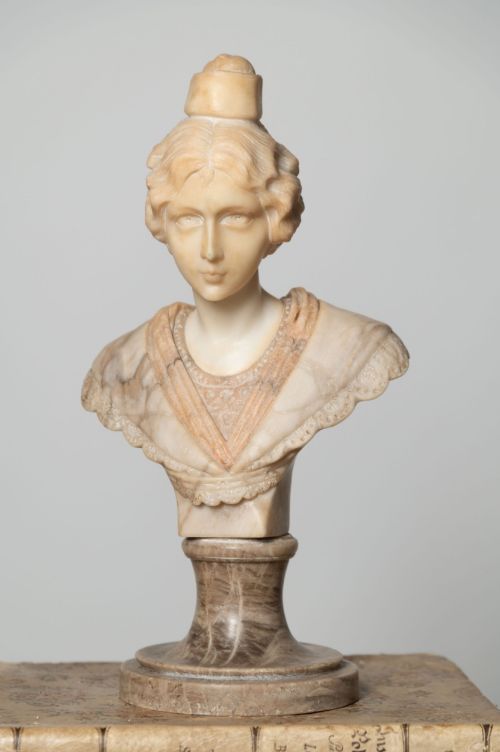
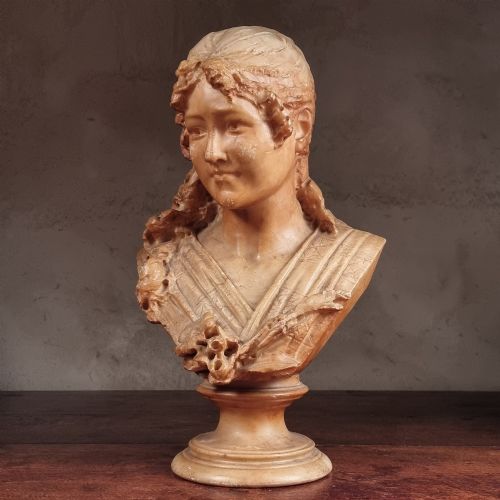
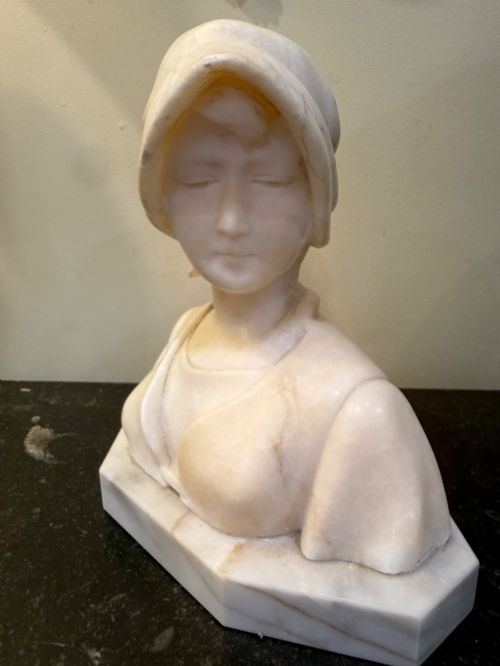
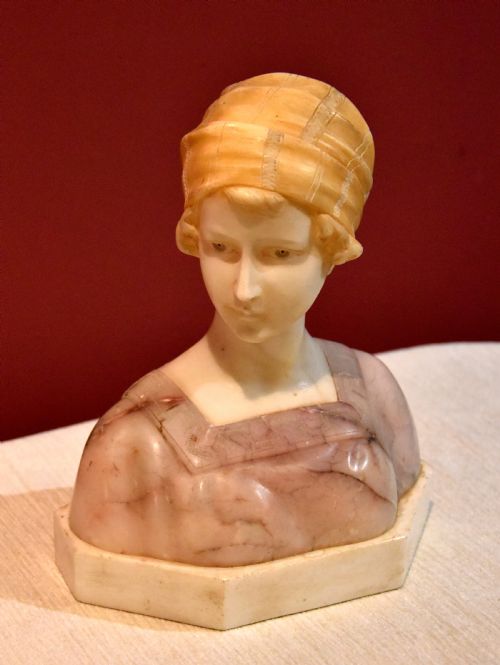
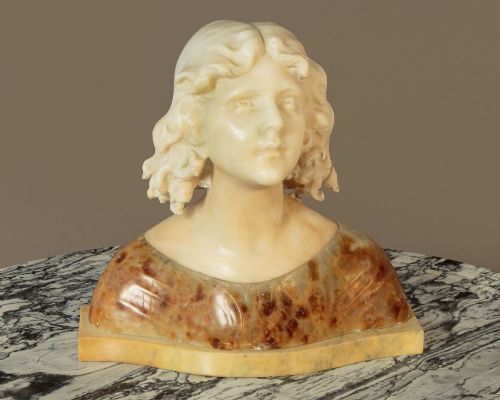
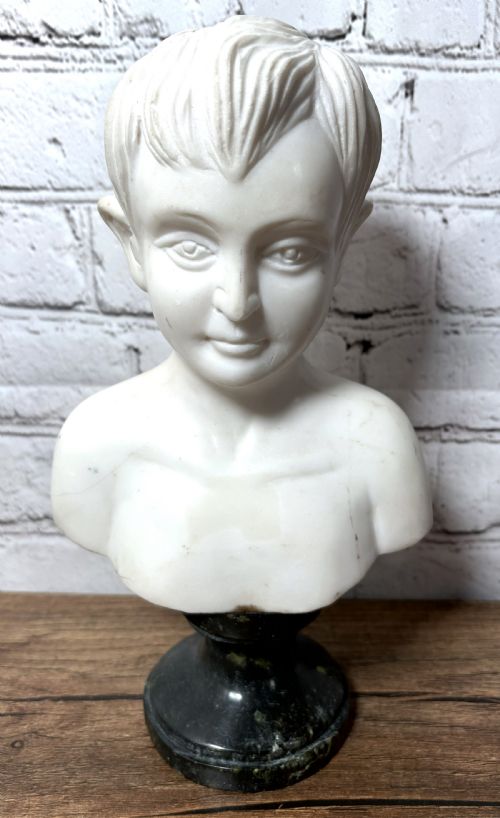
An alabaster sculpture bust presents carved representations of human figures, predominantly young women, children, and historical or literary subjects. These pieces span the nineteenth century and the early decades of the twentieth century, originating largely from Italian and French workshops.
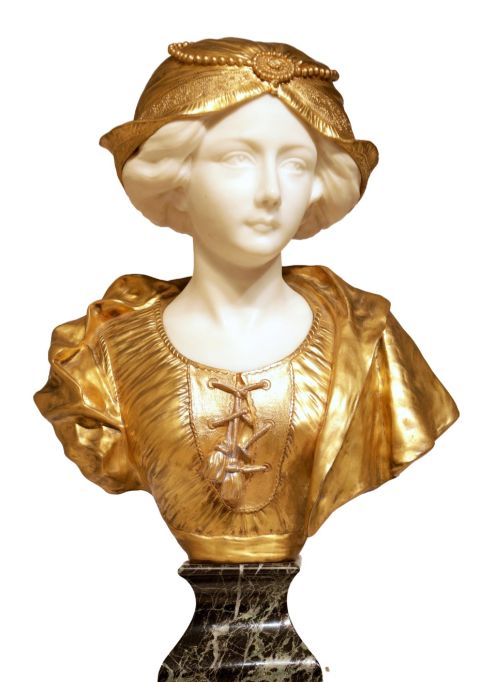
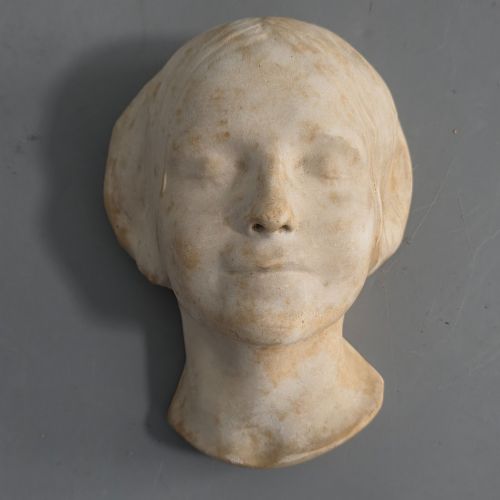
The most common form on this page is the portrait bust on a socle base, alongside full figures, profile plaques, and death masks. Makers utilised supportive materials such as marble, bronze, and brass to mount or accent the primary stone.
Stylistic influences range from Neoclassical and Victorian classicism to Art Nouveau and Arts and Crafts designs. Buyers encounter everything from modest library busts to large gallery sculptures.
Materials and carving techniques
Carvers shaped these works from alabaster, marble, and stone, often combining different geological media within a single sculpture. Gilt bronze, ormolu, and brass appear as structural mounts, costume details, or inscribed plaques.
Sculptors employed hand-chiselling, drilling, and abrasive polishing to achieve the varied textures of hair, drapery, and skin. Translucent alabaster required immense skill to exploit the natural light-capturing properties of the stone without fracturing the fine details of the subject.
Primary materials recorded on this page include alabaster, marble, bronze, brass, granite, and gilt bronze.
Distinctions in craftsmanship and artistry
The sophistication of the carving dictates the distinction between standard workshop output and masterwork sculpture. Subtle undercutting in the hair and drapery creates depth that flat, mechanical finishing lacks.
The selection of the raw block matters greatly, as uniform stone without distracting dark mineral veins allows the sculptor's fine modelling to show clearly. Signed works by documented makers command closer attention for their artistic provenance.
Affortunato Gory·Auguste Henri Carli·George Van Der Straeten·G.V. Vaerenbergh·Joseph Gott·Mieczyslaw Leon Zawiejski·Pugi·A.Cipriani
The Alabaster Sculpture Bust Glossary
- Alabaster
- A soft, fine-grained stone that takes a smooth polish and possesses a warm, translucent quality resembling human skin. It allows light to penetrate slightly beneath the surface.
- Socle
- A short plinth or pedestal base supporting a bust. It provides structural stability and visually grounds the portrait.
- Ormolu
- Gilded bronze mounts applied to sculpture bases and clothing details. This technique adds metallic contrast to the pale stone.
- Patina
- The surface sheen and colour acquired by stone and metal over decades of handling and exposure to air. It marks the age of the piece.
Alabaster Sculpture Bust: Frequently Asked Questions
How do I clean an alabaster sculpture bust?
Dust the stone gently with a dry, soft-bristled brush or a clean microfiber cloth. Avoid using water, soap, or chemical cleaners, as alabaster dissolves easily in moisture and absorbs liquids.
Keep these sculptures away from direct sunlight and damp environments to protect the fragile surface polish. Professional conservation is best left to specialists if the stone requires deeper attention.
Where should I display a marble and alabaster bust?
Place the sculpture on a sturdy surface such as a dedicated plant stand, a heavy console table, or a secure bookcase. Ensure the furniture supports the considerable weight of stone without wobbling.
Position the piece away from high-traffic walkways where the protruding nose or shoulders might suffer accidental knocks. Side lighting accentuates the translucent qualities of the carved stone.
What is the difference between Neoclassical and Art Nouveau busts?
Neoclassical busts adhere to strict classical proportions, featuring calm facial expressions and historical or mythological attire. They reflect a nineteenth-century revival of ancient Greek and Roman ideals.
Art Nouveau pieces embrace flowing, organic lines, often depicting women with long, cascading hair and stylized botanical motifs. These works emerged around the turn of the twentieth century.