


Victorian Agate Brooch
When you handle a victorian agate brooch, you hold a tangible piece of nineteenth-century heritage defined by distinct regional craftsmanship and durable hardstones.

Victorian Agate Brooch
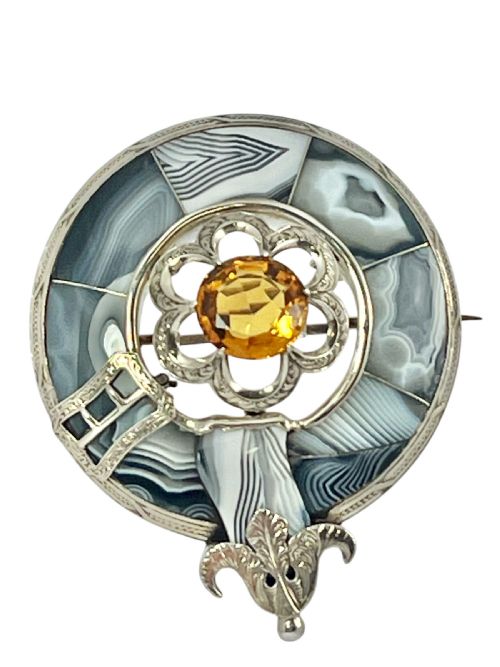
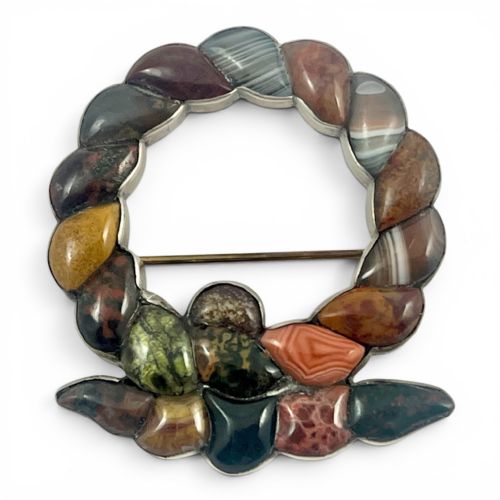
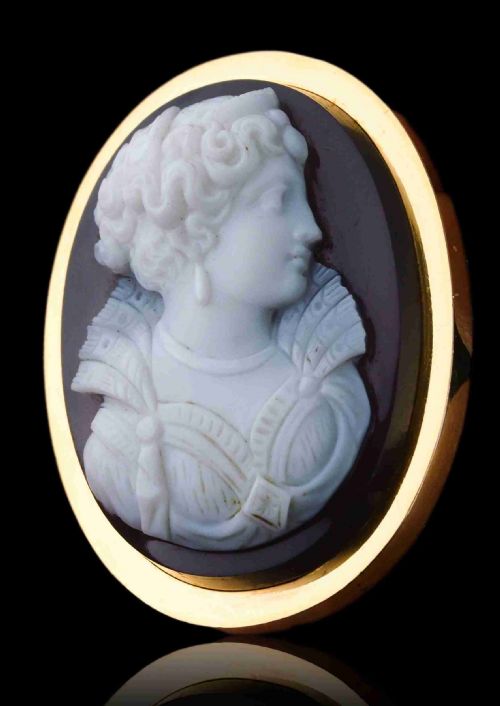
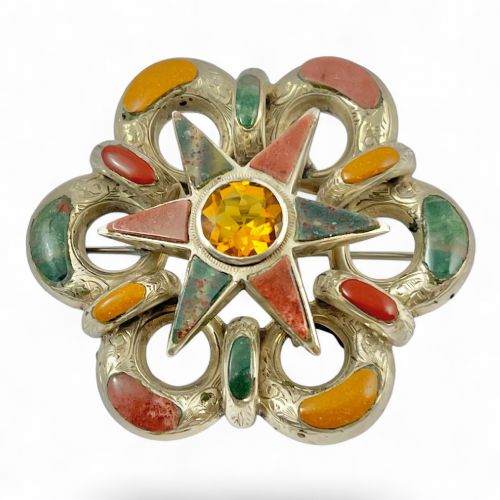
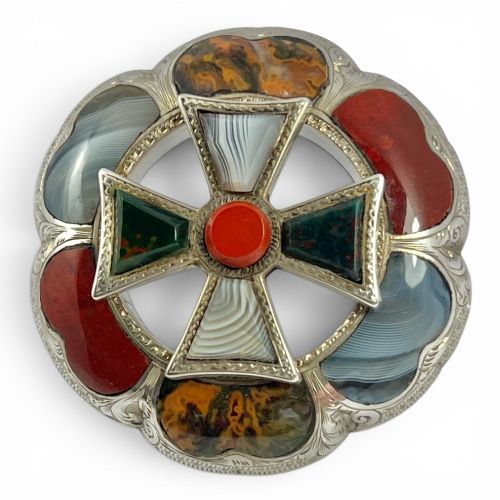
A victorian agate brooch encompasses nineteenth-century ornamental jewellery heavily influenced by Scottish traditions and regional motifs. These pieces typically manifest as silver or gold mounts inset with multicoloured hardstones.
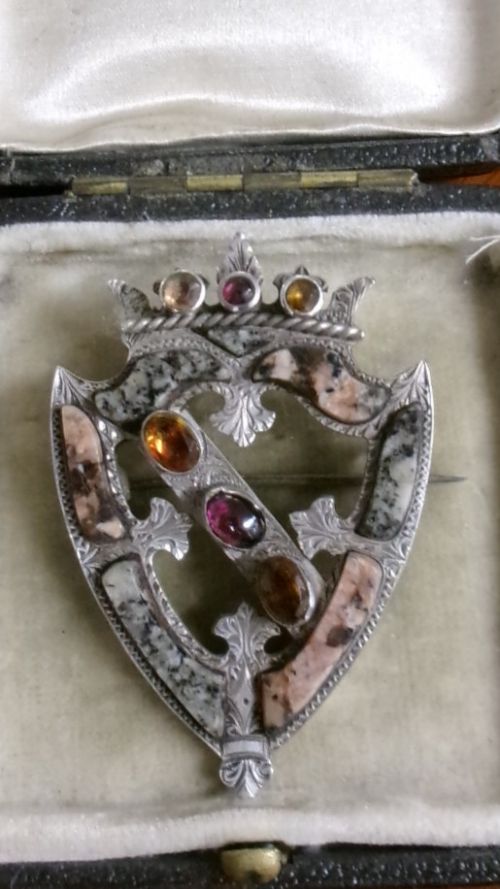
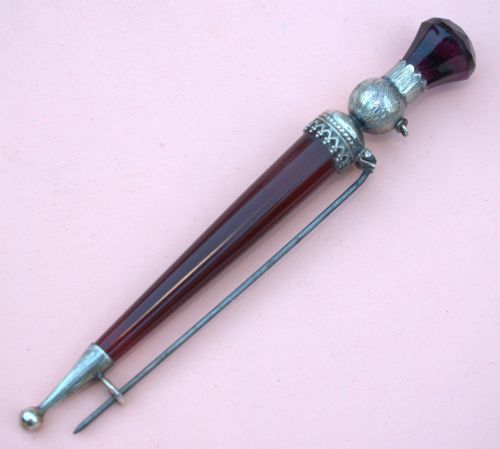
The most common variants encountered on this page derive from the Scottish Revival movement of the mid to late nineteenth century. Such items often display shield, sword, dirk, or geometric pebble configurations rooted in Victorian sentimental and regional design.
How they were made
Silversmiths and goldsmiths shaped substantial mounts from silver, 15ct gold, or 18ct gold to house natural minerals. Stones such as jasper, bloodstone, and banded agate were meticulously cut, polished, and fitted directly into the metal framework.
Many examples incorporate supplementary gems like citrine or amethyst alongside intricate engraved details, braided silver wire, and specialised pins or catches suited for fastening heavy woollen plaids.
Victorian Agate Brooch Retail Price Guide 2026
Typical asking prices for victorian agate brooch among the pieces listed under this phrase on Sellingantiques today, from the lower quarter to the upper quarter. They describe what is for sale here now, not the wider market.
Listings feature items dated from the 1840s through to 1900, demonstrating enduring Victorian production methods.
What varies in quality
The standard of a piece rests heavily upon the stone cutting and the complexity of the metalwork. Superior examples display tightly fitted stones with distinct natural banding and minimal matrix interruption.
Artisanal execution separates ordinary production from exceptional items. Hand-engraved silver work, substantial gold weight, and elaborate dimensional forms like broadswords or dirks reflect higher execution standards.
The Victorian Agate Brooch Glossary
- Agate
- A cryptocrystalline variety of quartz, characterised by its fineness of grain and brightness of colour. It forms naturally in concentric bands and served as the primary decorative medium for these ornaments.
- Hardstone
- A collective term for semi-precious stones utilised in jewellery and decorative arts. These minerals demand specialised cutting and polishing techniques due to their inherent hardness.
- Montrose Agate
- A specific regional variety of Scottish agate prized for its distinct patterning and local provenance. It frequently appears in nineteenth-century provincial silver settings.
- Pebble Brooch
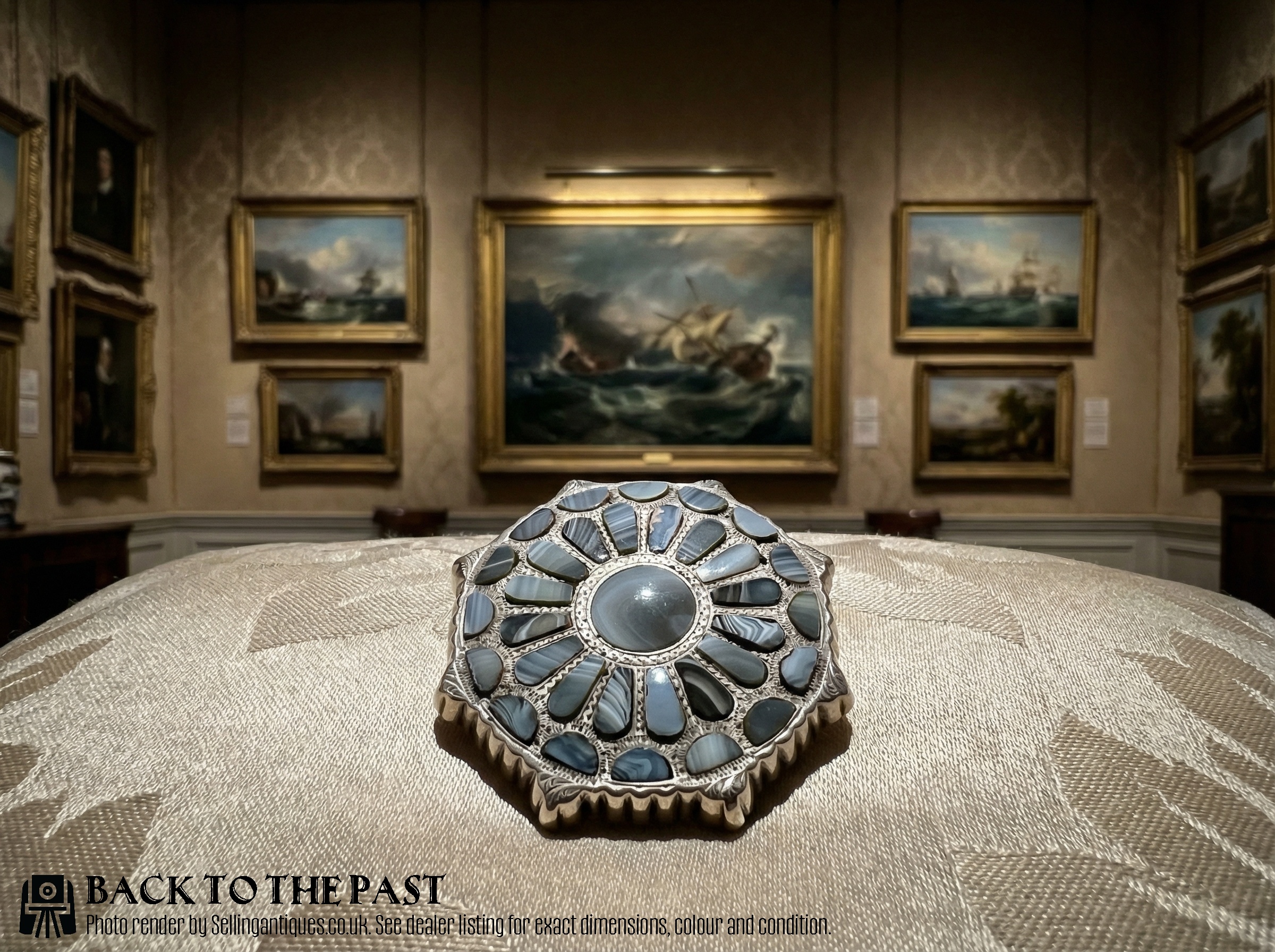
- An ornamental fastening composed of numerous polished stones arranged closely together within a metal border. This style is a cornerstone of Victorian Scottish Revival jewellery.
- Dirk Brooch
- A piece styled after the traditional Scottish dagger, often featuring a long pin and intricate basket-hilt or blade motifs. They were originally utilised to secure highland dress.
Victorian Agate Brooch: Frequently Asked Questions
How were these brooches originally worn?
Victorian wearers pinned these ornaments to heavy garments such as shawls, plaids, and lapels. Their substantial weight required sturdy fastenings and robust metal frames.
Many designs served a dual purpose as functional kilt pins or cloak fasteners while simultaneously acting as fashionable decorative statements.
How can I tell the period?
Dating relies on examining the mount construction, pin mechanisms, and prevailing stylistic motifs. Mid to late nineteenth-century examples often display characteristic Scottish Revival elements and tubular hinge pins.
Hallmarks, where present, provide direct metallurgical and regional indicators, though many provincial pieces rely entirely on stylistic context for dating.
What is Scottish Revival style?
Scottish Revival refers to the nineteenth-century cultural movement popularised by Queen Victoria's affinity for Balmoral and the Highlands. Jewellery from this trend embraced traditional weaponry, Celtic crosses, and regional stones.
This aesthetic dominated much of the Victorian era's output, creating a distinct market for native British hardstones set in silver.
How do I care for agate jewellery?
Quartz-based stones like agate are relatively durable, but historical metal mounts and glued elements demand careful handling. Store pieces individually to prevent scratching the polished stone surfaces.
Avoid chemical dips and ultrasonic cleaners, opting instead for a gentle wipe with a soft, dry cloth to preserve the antique silver or gold.