


Gold Cameo Brooch
A gold cameo brooch combines hand-carved relief imagery with precious metal mounts, offering miniature classical art designed to be worn.

Gold Cameo Brooch
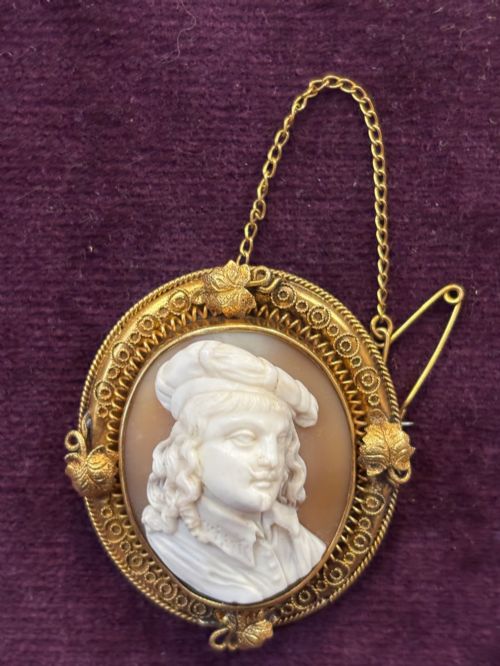
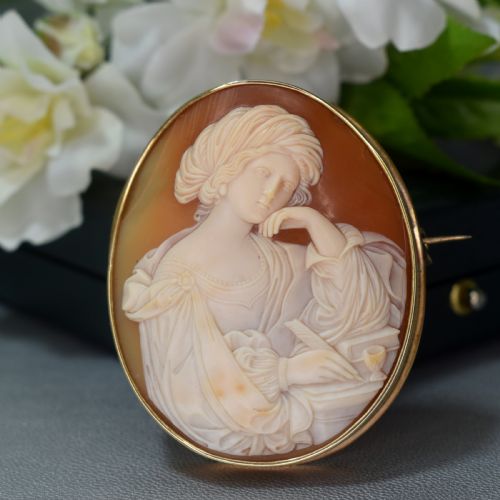
A gold cameo brooch typically presents a carved portrait or mythological scene mounted in yellow gold, ranging from nine to twenty carats. These pieces emerge predominantly from the Victorian period and the nineteenth century, though Georgian and Edwardian examples also appear.
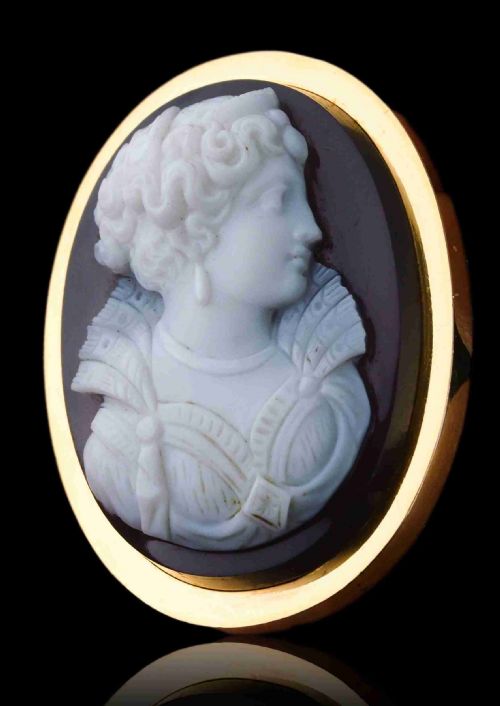
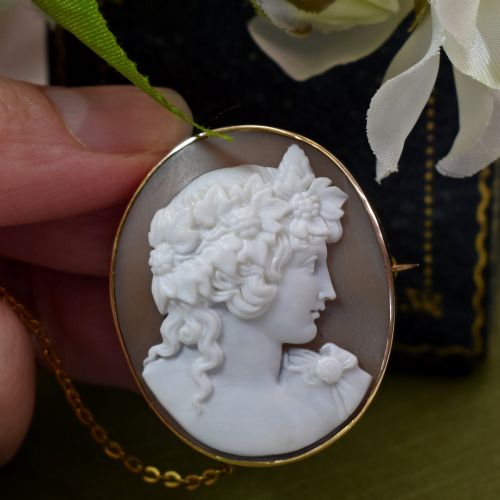
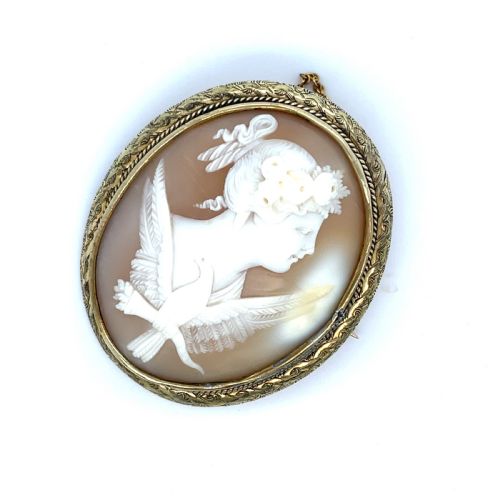
Makers utilised natural shell, banded agate, hardstone, coral, and lava to create raised profiles against contrasting backgrounds. The subjects frequently draw on classical antiquity, depicting figures such as Nike, Flora, Venus, and various mythological heroes.
Many items function as both brooches and pendants, incorporating loops or chains for versatile wear. Scale varies significantly from delicate pins to monumental tabletop ornaments mounted in solid gold frames.
Materials and construction techniques
Carvers worked predominantly with layered materials like conch shell or multi-coloured hardstone, cutting away the upper stratum to leave a crisp relief figure against a darker ground. This meticulous glyptic work required immense precision to utilise the natural colour variations within the shell or stone.
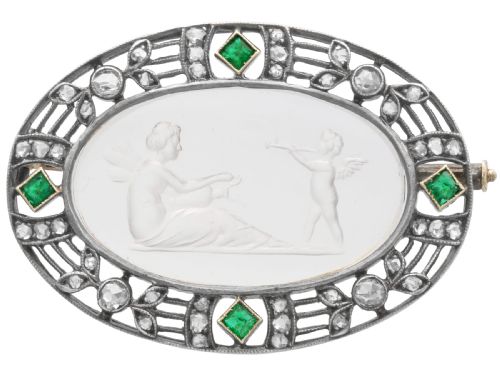
Mounts were fashioned from various purities of gold, including nine carat, fifteen carat, eighteen carat, and twenty carat yellow gold, alongside pinchbeck and gold plating. Artisans enclosed these carvings within frames featuring detailed wirework, scroll motifs, filigree, and occasionally accents of diamonds, emeralds, pearls, or crystals.
Gold Cameo Brooch Retail Price Guide 2026
Typical asking prices for gold cameo brooch among the pieces listed under this phrase on Sellingantiques today, from the lower quarter to the upper quarter. They describe what is for sale here now, not the wider market.
Listings feature shell, agate, hardstone, lava, and coral mounted in yellow gold ranging from nine to twenty carats.
Factors distinguishing finer specimens
The depth, sharpness, and anatomical accuracy of the carving determine the visual merit of the piece. Master carvers defined facial expressions, drapery folds, and hair strands with distinct clarity, whereas lesser examples display softer, shallower relief work.
The weight and elaboration of the gold mount also distinguish the tier of the piece. Solid frames with chased scrollwork, integrated safety chains, or maker signatures elevate the object above standard commercial production.
R. Pernice
The Gold Cameo Brooch Glossary
- Cameo
- A method of carving an object such as an engraved gem, item of shell, or piece of hardstone where a relief image stands out distinctly from a background of a different colour.
- Hardstone
- A term for semi-precious stones such as agate, onyx, and jasper used by lapidaries for carving intricate multi-layered cameos.
- Filigree
- Delicate jewellery ornamentation formed from fine gold or silver wire twisted and soldered into openwork patterns.
- Pinchbeck
- An alloy of copper and zinc developed as an affordable gold substitute that mimics the appearance of real gold.
- Maenad
- A female follower of Dionysus frequently depicted in classical art and carved upon nineteenth-century relief ornaments.
Gold Cameo Brooch: Frequently Asked Questions
How do I wear a gold cameo brooch safely?
Pin the piece securely through heavier fabrics that can support the weight of the gold frame and carved material. Utilising a fitted safety chain attached to your garment provides extra security against accidental loss during wear.
Store the item flat in a lined jewellery box away from direct sunlight and moisture. Avoid spraying perfumes or applying cosmetics near the brooch to protect the natural shell or hardstone surface.
Were these items used for anything other than clothing?
Certain larger examples served a dual purpose as both wearable brooches and pendant necklaces through hidden loops on the reverse. Master carvers also produced monumental versions mounted as tabletop ornaments or framed display pieces.
These varied formats allowed owners to exhibit classical portraits either on garments or within domestic interiors. The interchangeability reflects the high artistic value placed on nineteenth-century glyptic work.
How do I distinguish shell cameos from hardstone?
Shell cameos display a warm, slightly translucent quality with natural colour gradients ranging from peach to brown against a paler ground. Hardstone examples utilise dense minerals like agate, presenting opaque, crisp layers of black, white, or grey.
Examining the reverse with a loupe often reveals the fibrous structure of shell versus the dense, cold surface of stone. Weight also provides a clue, as hardstone and its heavier gold mounts generally feel substantially denser.
What periods do these brooches represent?
The majority of pieces originate from the Victorian era and the broader nineteenth century, spanning from early Georgian examples through to Edwardian and later revivals. Stylistic clues like neoclassical motifs or ornate scrollwork help indicate the specific decades of manufacture.
Nineteenth-century Grand Tour travels to Italy heavily influenced the production of classical Italian carvings brought back to Britain. Hallmarks and frame construction styles further assist in dating individual items accurately.