


Carved Shell Brooch
A carved shell brooch is a miniature carved portrait mounted in gold, prized for its classical profile and delicate relief.

What these pieces are
A carved shell brooch is an ornament featuring a portrait or classical scene worked in relief on a natural shell layer. These pieces draw collectors who appreciate miniature sculpture and nineteenth-century personal adornment.
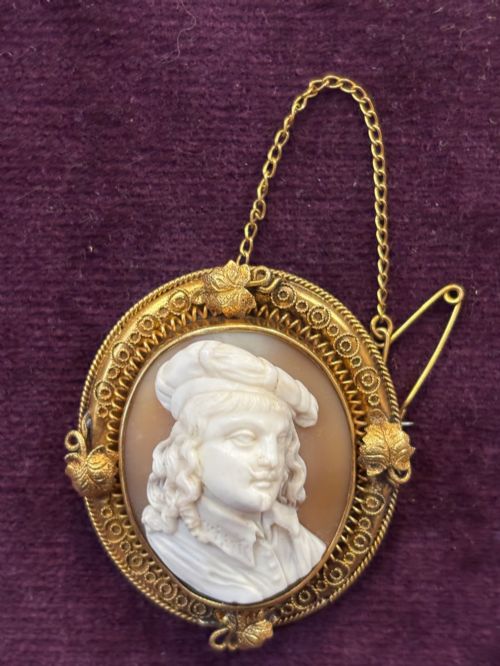
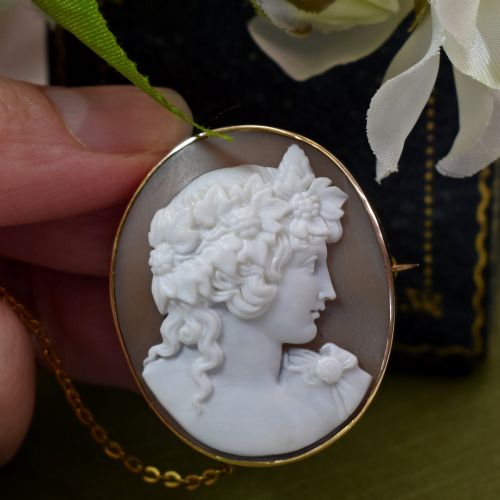
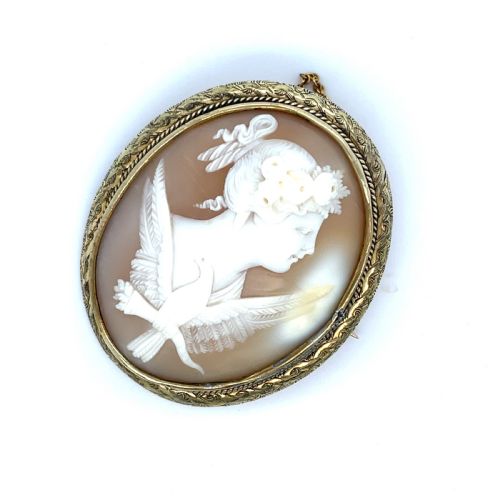
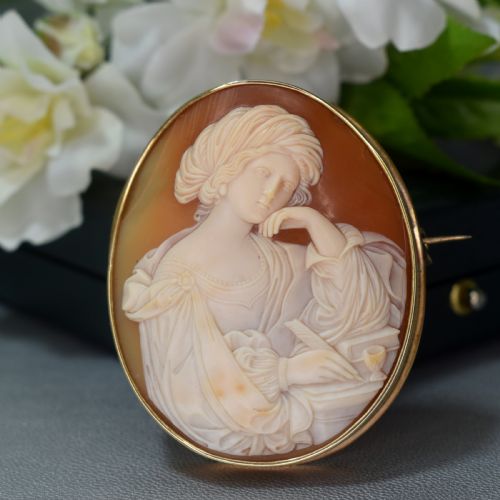
The version most commonly met on this page is the Victorian shell cameo set into a gold frame. These brooches depict classical figures, mythological characters such as Bacchus, Venus, and Flora, or profiles of ladies.
Originating largely from the nineteenth century, these items span periods including the Victorian era and the mid-twentieth century. They combine carving skill with wearable metalwork.
How they were made
Carved shell brooches are fashioned from natural shells, utilising the contrasting colour layers to make the carved figure stand out against a darker background. Artisans carved the relief by hand using small gravers to cut away the outer material.
The finished shell carvings are mounted into metal frames. The evidence records settings made in nine-carat, fifteen-carat, and eighteen-carat yellow gold, securing the delicate material for wear.
Retail Price Guide 2026
Typical UK retail prices for carved shell brooch, calculated from the Sellingantiques database of over a million retail prices indexed since 2003. This retail price guide relies exclusively on Sellingantiques data; no external sources or auction records are used, so the figures do not describe the wider market.
Mythological figures like Venus and Cupid share cabinet space here with Roman deities and classical ladies.
What varies in quality
The setting adds another layer of distinction, where substantial gold mounts with intricate detailing separate standard pieces from higher works. The choice of gold carat, ranging from nine to eighteen-carat, also marks the grade of the mount.
The Carved Shell Brooch Glossary
- Cameo
- A method of carving an object such as a carved shell brooch where the relief image projects from a background. This technique relies on contrasting strata in the material to define the subject.
- Relief
- Carving that stands out from the flat background plane. This forms the three-dimensional aspect of the portrait.
- Mount
- The metal frame that holds the carved shell in place and incorporates the pin mechanism. In the evidence, these frames are constructed from yellow gold.
- Bacchus
- The classical god of wine and agriculture, occasionally depicted in the carved shell brooch subjects. Such mythological motifs are typical of nineteenth-century pieces.
- Flora
- The Roman goddess of flowers and spring, appearing in profile within the carved shell brooch selection. This classical subject reflects the Victorian interest in antiquity.
Frequently Asked Questions
What is a carved shell brooch?
A carved shell brooch is an item of jewellery featuring a hand-carved portrait or classical scene mounted in a gold frame. These ornaments combine miniature sculpture with functional fastening.
Most examples date from the Victorian period and showcase figures from mythology or historical profiles.
How do I wear a shell brooch safely?
These brooches secure to garments using an attached pin mechanism on the gold reverse frame. Fastening them to sturdy fabrics helps support the weight of the gold mount and shell.
Care should be taken to avoid dropping the brooch, as shell is a natural material that can fracture upon impact.
How are different periods identified?
Periods are distinguished through the style of the carving and the characteristics of the gold mount. Victorian pieces often feature high-carat gold frames and distinct classical subjects.
Later items show variations in the mounting style and the depth of the shell relief work.
What materials are used in these brooches?
The primary materials are natural shell and yellow gold. The shell provides the contrasting layers for the carved relief.
The metal frames utilise nine-carat, fifteen-carat, and eighteen-carat gold to secure the delicate carvings.