

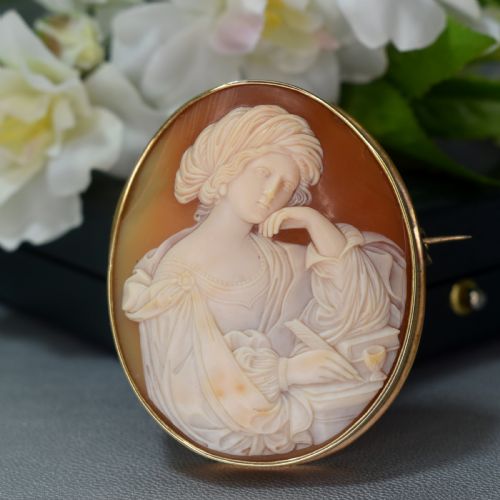


9ct Gold Cameo
A 9ct gold cameo brings classical figures and detailed portraits into wearable jewellery, offering centuries of carved artistry set in warm gold.
9ct Gold Cameo
A 9ct gold cameo combines carved relief imagery with durable gold mountings, appearing frequently as brooches and rings from the Victorian and Edwardian eras. These pieces present classical subjects, mythological figures, and portraits carved by hand from shell or hardstone.
The shell variety dominates the selection, often shaped from conch shell to display white figures against a peach or pink background. Hardstone alternatives utilise agate, tiger's eye, and purple glass to create sharper contrast and deep layering.
Brooches remain the most common form, alongside rings, earrings, pendants, and the occasional large tabletop ornament. The metal framework ranges from simple yellow gold bezels to detailed scroll mounts and pinchbeck wire elements.
Materials and construction methods
Mounts are cast or fabricated from 9ct gold, embracing yellow, rose, and standard tones to secure the fragile carvings. Pins, jump rings, and claw settings are soldered directly to the frames using traditional period techniques.
9ct Gold Cameo Retail Price Guide 2026
Typical asking prices for 9ct gold cameo among the pieces listed under this phrase on Sellingantiques today, from the lower quarter to the upper quarter. They describe what is for sale here now, not the wider market.
Some cameos double as tiny portable art galleries, depicting ancient deities alongside Victorian portrait whimsies.
Distinctions in craftsmanship
Quality rests upon the precision of the carving and the depth of the relief work. Superior pieces show subtle facial expressions, correct human proportions, and sharp detailing in hair and clothing.
The mount also dictates overall excellence, distinguishing mass-produced frames from heavy, hand-carved scrollwork and signed artisan pieces.
R. Pernice
The 9ct Gold Cameo Glossary
- Cameo
- A method of carving an object such as an engraved gem, item of jewellery, or vessel. The design is raised above the background.
- Hardstone
- A collective term for ornamental stones used in jewellery, including agate and tiger's eye. These materials offer greater durability than shell.
- Pinchbeck
- An alloy of copper and zinc developed to imitate gold. It often appears alongside 9ct gold components in period pieces.
- Conch shell
- A material harvested from large sea snails, frequently utilised for Victorian carvings due to its layered pink and white hues.
9ct Gold Cameo: Frequently Asked Questions
How do I date my cameo?
Dating relies on the style of the mount, the subject matter, and the fastening mechanisms used on the reverse. Victorian pieces often feature heavy scrollwork and tube hinges, while later Edwardian examples lean towards lighter frames.
Material choices also guide chronology, as hardstone and shell versions span different decades alongside shifts toward Art Deco geometry.
Can I wear a shell cameo daily?
Shell is softer than gemstones and requires careful handling to prevent scratching or cracking over time. Brooches and pendants face fewer risks than rings, which encounter regular impact.
Store pieces separately from other jewellery and avoid exposing them to harsh chemicals or ultrasonic cleaning.
What subjects appear on these cameos?
Classical mythology provides the most frequent inspiration, depicting figures like Nike, Venus, Cupid, and Diana. Portraits of anonymous ladies and historical sibyls also recur across brooches and rings.
Signed tabletop ornaments showcase larger, highly detailed mythological scenes carved by named artisans.
How do shell and hardstone differ?
Shell provides warm peach and white tones with softer material properties suited to delicate undercutting. Hardstone yields crisper details, sharper colour contrast, and greater durability.
Agate and tiger's eye create heavier jewellery items compared to lighter shell carvings.