




Carved Cameo Portrait
A carved cameo portrait offers a miniature sculpted profile that captures classical elegance in shell, stone or lava.
Carved Cameo Portrait
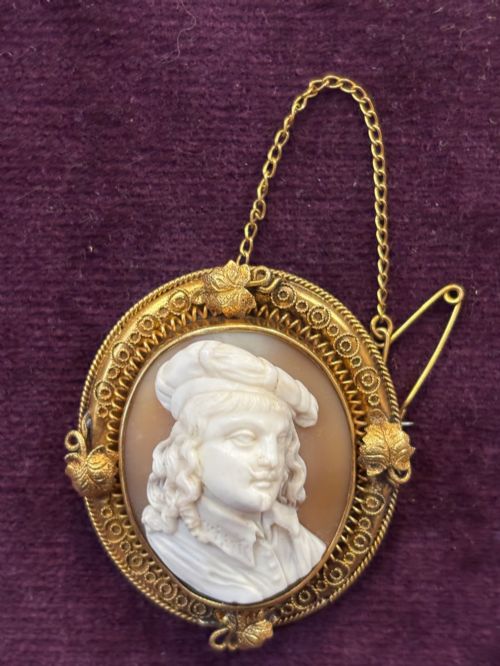
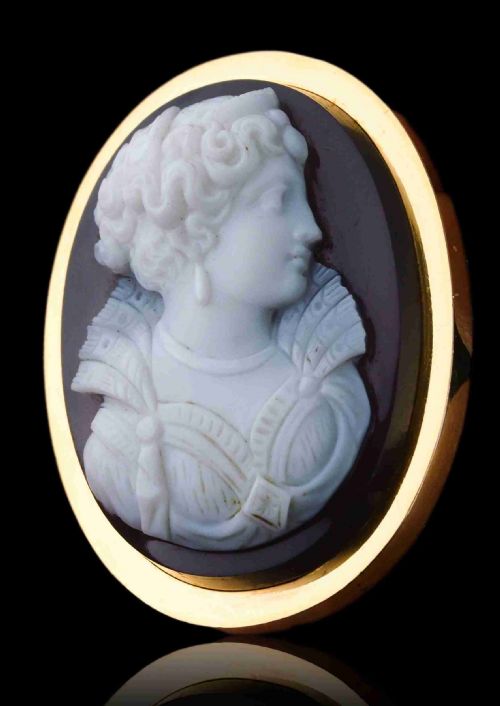
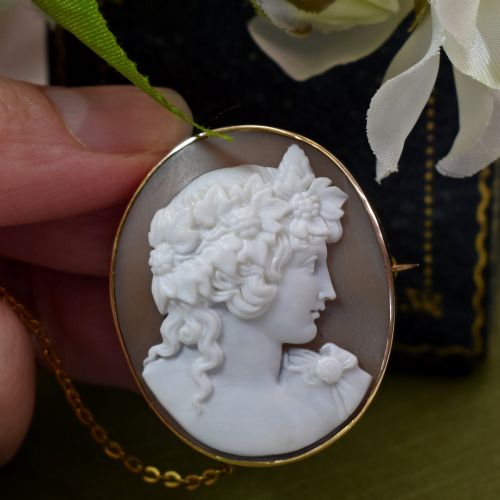
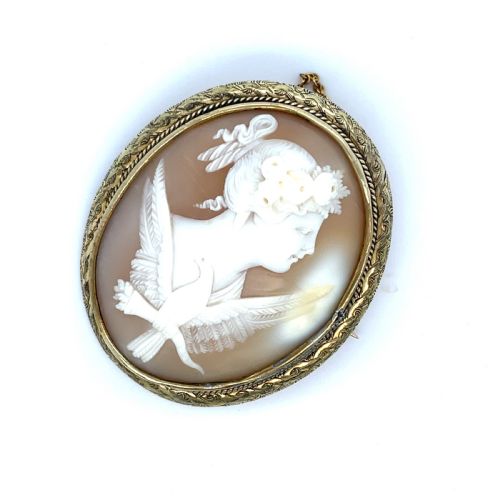
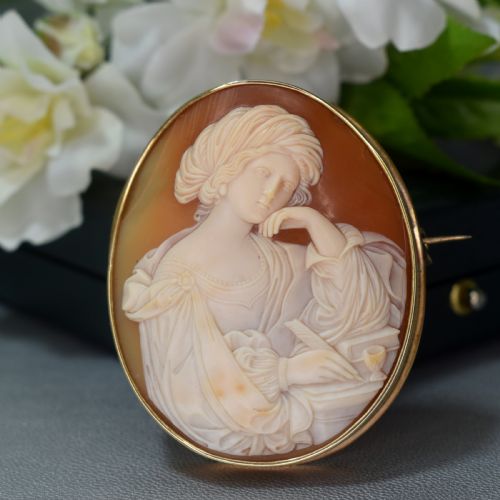
A carved cameo portrait presents a raised relief profile, most frequently encountered here as a Victorian or nineteenth-century brooch, ring or pendant. These miniature sculptures depict classical figures, mythological deities and historical personages carved with notable precision.
The pieces emerge from diverse settings spanning the Georgian era through to the mid-twentieth century, with Victorian examples dominating the selection. Buyers will frequently encounter shell and hardstone formats housed in gold mounts ranging from nine to eighteen carats.
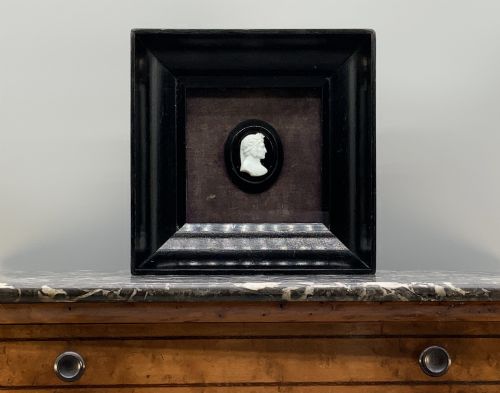
Beyond wearable jewellery, the selection encompasses wall plaques, framed art and desk accessories such as marble inkstands set with carved portraits. Each object serves as a tangible link to historical souvenir traditions and classical revival aesthetics.
Materials and Techniques
Carvers utilised layered natural materials, cutting away the upper stratum to reveal a contrasting background. Shell, particularly conch and bullmouth varieties, provides a warm translucent base, while hardstones such as agate, carnelian and lava offer denser monochromatic or banded surfaces.
Mounting techniques involved securing these carved reliefs into precious metal frames, predominantly using gold of varying purities alongside silver and pinchbeck. Artisans often added intricate wirework, pearls or filigree to complement the central portrait.
Roman emperors and mythological deities gaze out from nineteenth-century desk inkstands and shirt cuffs alike.
Factors Defining Quality
The substance and weight of the metal mount further elevate a piece, with solid higher-carat gold and detailed filigree work indicating superior workshop origin. Signed works by notable makers command particular attention for their artistic execution.
R Pernice·Thorvalsen Workshop
The Carved Cameo Portrait Glossary
- Cameo
- A method of carving where a design is raised above the background. This technique relies on layered materials to create contrast between the subject and the base.
- Hardstone
- A semi-precious stone such as agate or carnelian used for carving. These stones offer durability and sharp detail for miniature portraits.
- Grand Tour
- A cultural journey undertaken by wealthy Europeans in the eighteenth and nineteenth centuries. Souvenirs from these trips included local carved stone and lava portraits.
- Intaglio
- A design incised into the material rather than raised in relief. It functions as the reverse of a cameo and was traditionally used for sealing wax.
- Pinchbeck
- An alloy of copper and zinc developed to imitate gold. It appears frequently in period frames and mounts.
Carved Cameo Portrait: Frequently Asked Questions
How do I wear a antique cameo brooch?
Pin the piece securely to the lapel of a tailored jacket, the collar of a blouse, or at the neckline of a heavy knit garment. Ensure the fastening pin catches firmly in the safety clasp.
Heavier framed pieces benefit from heavier fabrics that support the weight without pulling or sagging. Position the portrait so the profile faces toward the centre of the outfit.
What is a lava cameo?
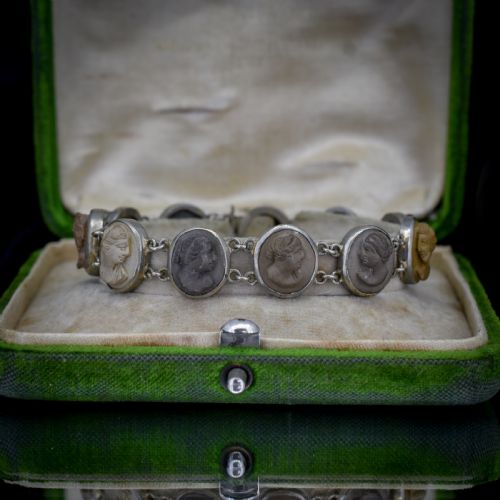
Lava cameos are carved from volcanic rock sourced near Naples during the nineteenth century. These pieces typically feature matte, porous surfaces in muted grey, cream or terracotta tones.
Carvers utilised this softer material during the Grand Tour period to produce affordable sculptural souvenirs. The resulting portraits often depict classical figures and mythological deities in high relief.
How can I date a carved portrait?
Examine the style of the hair, the clothing and the shape of the metal mount to determine the period. Victorian pieces often feature elaborate gold frames, while earlier Georgian examples display distinct Neoclassical motifs.
Hallmarks on the metal mounts provide definitive year markers where present. The thickness of the shell and the depth of the carving also shift across different decades.