




Antique Portrait Brooch
An antique portrait brooch brings hand-painted likenesses and sculpted profiles close to the heart, offering wearable history from Georgian and Victorian centuries.

What an antique portrait brooch is
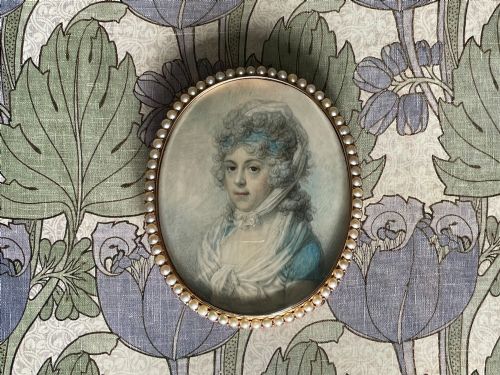
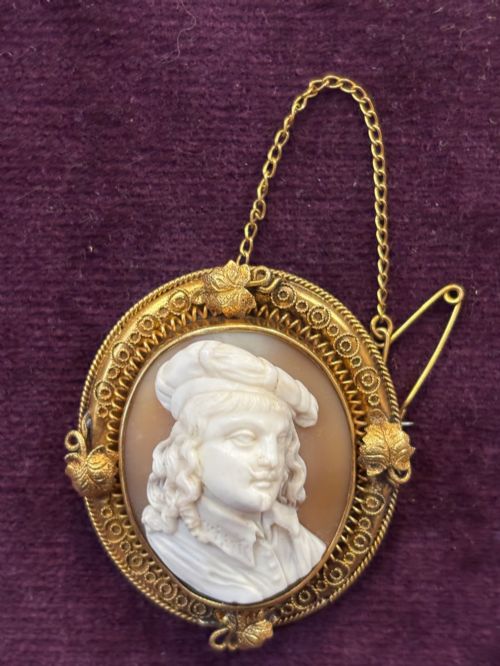
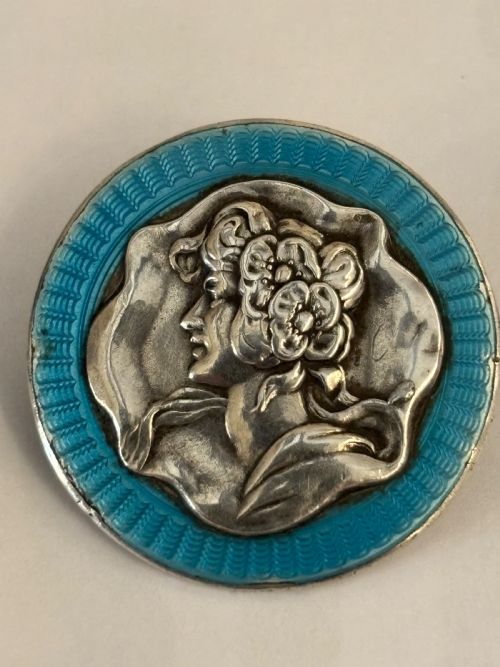
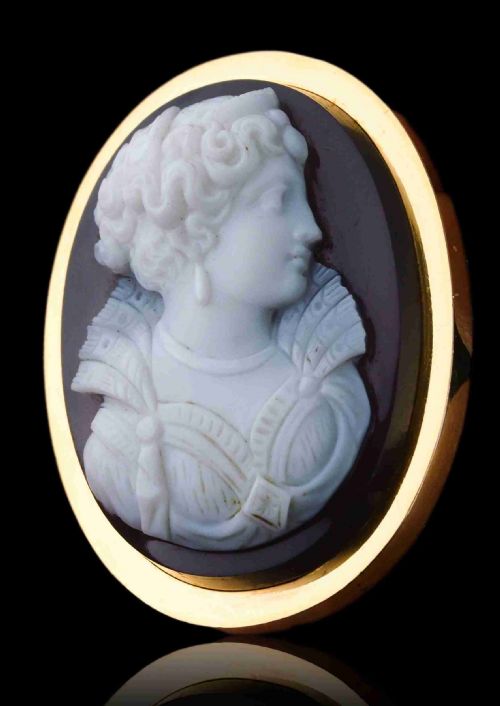
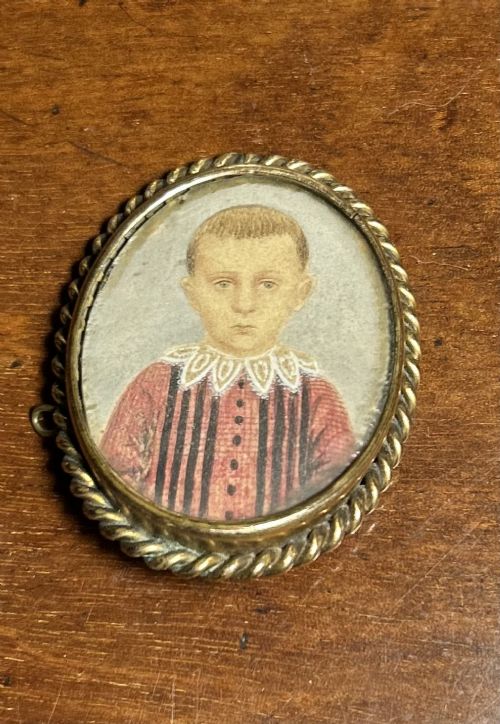
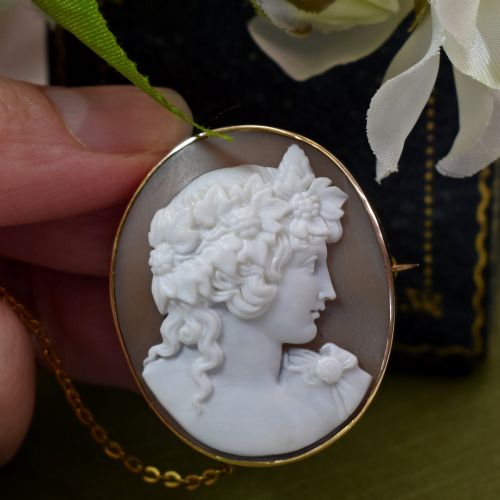
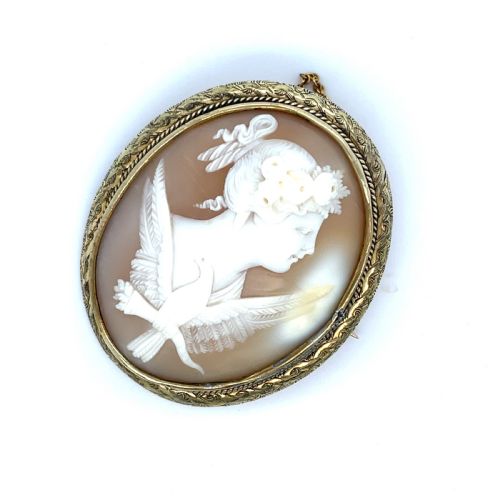
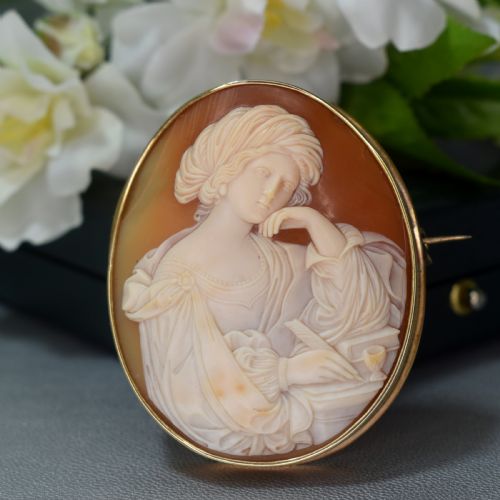
An antique portrait brooch is a miniature work of art transformed into jewellery, taking the form of painted likenesses, silhouettes, enamels or carved cameos mounted in precious frames. When you search for an antique portrait brooch, you encounter pieces spanning the Georgian era through to the late Victorian period.
The most common versions on this page are Victorian and Georgian pieces, frequently featuring hand-painted miniatures in watercolour or oil, alongside hardstone cameos and Limoges enamels. These jewels served as keepsakes, sentimental love tokens or memorials, preserving the likeness of family members and notable figures.
Forms vary from delicate swivel mounts to substantial gold frames, often accented with seed pearls or set within 18ct gold. Each piece combines personal remembrance with the prevailing portrait styles of its period, such as Georgian Neoclassical aesthetics or Victorian sentimentality.
Materials and techniques
Makers constructed the mounts from 18ct gold and gold-toned metal, housing delicate artworks behind glass or within secure bezels. Cameos were carved from hardstone and agate, relying on the natural strata of the material to create contrast between the sculpted portrait and the background.
The miniature portraits themselves utilise paper, glass, watercolour and oil paint, capturing fine details on a tiny scale. Enamel pieces, such as French Limoges work, involve fusing vitreous enamel to a metal base to achieve lasting colour and luminous depth.
Retail Price Guide 2026
Typical UK retail prices for portrait brooch, calculated from the Sellingantiques database of over a million retail prices indexed since 2003. This retail price guide relies exclusively on Sellingantiques data; no external sources or auction records are used, so the figures do not describe the wider market.
Some brooches feature a swivel design that lets you spin the portrait around, as if the gentleman inside is shy of company.
Judging quality
Quality rests in the precision of the miniature painting or the crispness of the cameo carving, where the artist's skill defines the expression and realism of the subject. Finer portraits display subtle shading, accurate anatomy and lifelike detail that elevate the piece beyond a simple keepsake.
The metalwork and framing further distinguish the pieces, with substantial 18ct gold mounts and integrated elements like seed pearls representing higher tiers of craftsmanship. Signed works and pieces attributed to known miniaturists carry additional distinction through documented artistry.
Richard Cosway·John Miers
The Antique Portrait Brooch Glossary
- Miniature painting
- A small-scale portrait created with meticulous brushwork on media such as paper, ivory or vellum. These works required immense skill to capture likeness and character within a compass of a few inches.
- Cameo
- A method of carving where a relief image is raised above a contrasting background. In jewellery, this technique was applied to shell, hardstone or agate to depict classical profiles or portraits.
- Vitreous enamel
- A material made by fusing powdered glass to a substrate by firing. This produced durable, glossy coloured surfaces seen in painted enamel portraits and decorative surrounds.
- Silhouette
- A solid shadow portrait, typically cut from paper or painted in black profile. Artists like John Miers specialised in these sharp, elegant likenesses before photographic methods emerged.
- Swivel brooch
- A mounting style that allows the central portrait panel to turn on an axis. This design often permitted a second view, such as a lock of hair or a monogram on the reverse.
Frequently Asked Questions
What is an antique portrait brooch?
An antique portrait brooch is a wearable keepsake featuring a painted miniature, silhouette, enamel or cameo set into a metal frame.
Created primarily during the Georgian and Victorian eras, these pieces functioned as personal tokens, memorials or portable galleries of loved ones.
How do I date a portrait brooch?
Dating relies on the materials, artistic style, and mounting techniques characteristic of specific periods like Georgian Neoclassical or Victorian revivals.
Costume details, hairstyles, and signatures or signatures of known miniaturists also provide clear chronological markers.
What materials were used in these brooches?
Makers utilised gold, including 18ct gold, alongside gold-toned metal and glass to protect the delicate artworks inside.
Artistic mediums range from watercolour on paper and oil paintings to vitreous enamel, hardstone cameos, and agate.
How were portrait brooches worn?
They were pinned securely to garments, often positioned near the shoulder or at the centre of a neckline in the fashion of the period.
Many designs also incorporated integrated loops, allowing the brooch to double as a pendant on a chain.