

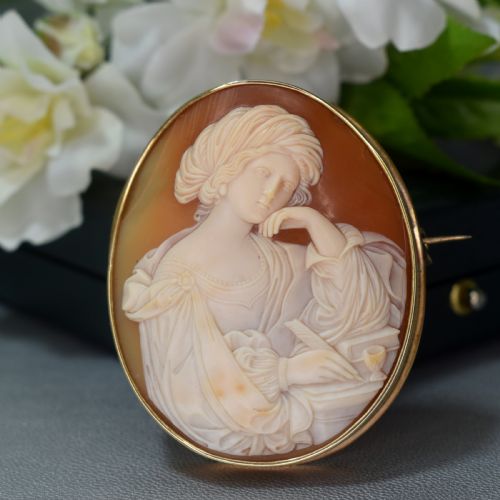


Carved Shell Cameo
These carved shell cameo pieces bring classical portraiture and mythology into wearable form, offering the precise detail that collectors prize.
What carved shell cameo pieces are
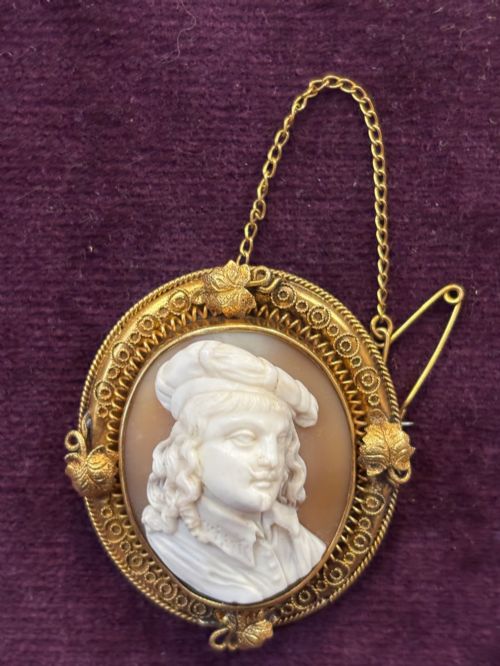
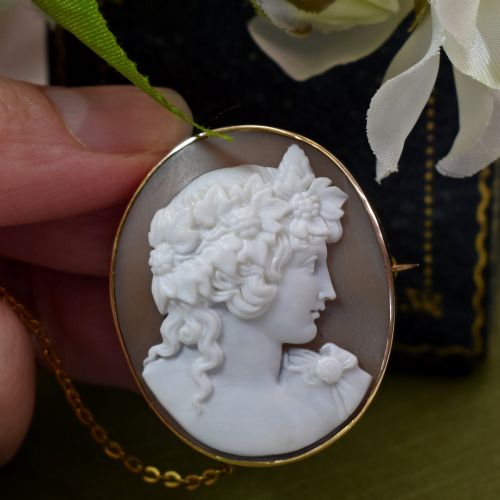
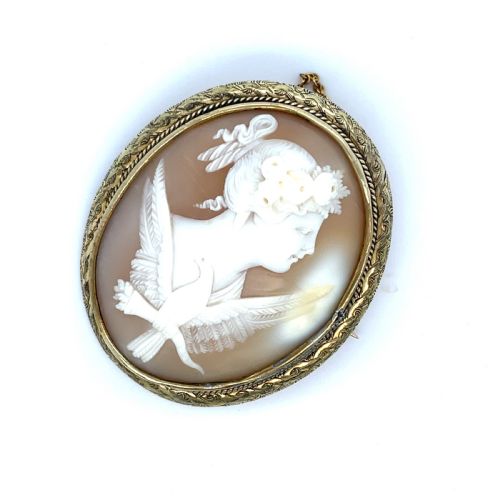
A carved shell cameo is a miniature relief carving created from layers of natural shell, most frequently fashioned as brooches or pendants. Buyers searching for a carved shell cameo will find figural subjects ranging from classical figures such as Bacchus, Venus, Cupid, Psyche, and Menelaus to portraits of ladies and historical figures like Bonnie Prince Charlie. Most examples encountered here hail from the Victorian period, though Edwardian and later twentieth-century iterations also appear.
The format of these ornaments varies from simple frames to elaborate drops, lockets, and rings. Many pieces function simultaneously as brooches and pendants, offering versatile wearability. The subjects draw heavily on classical mythology and historical portraiture, making each piece a miniature narrative worn against the fabric.
How they were made
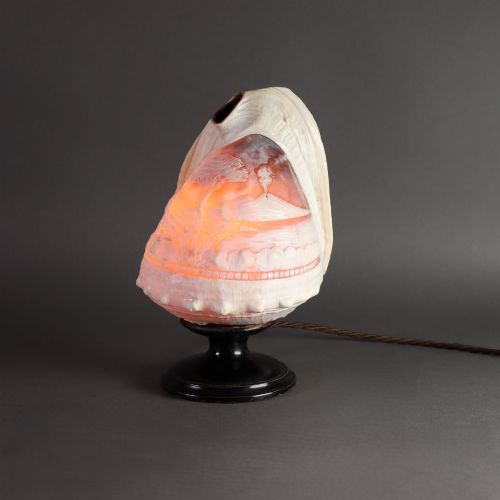
The construction of a carved shell cameo relies on working the naturally layered structure of mollusc shells, such as conch, to achieve a pale relief figure against a darker background. Artisans carved these layers by hand using small gravers and chisels to reveal the contrasting strata. The resulting miniature sculptures demand immense precision from the hand of the carver.
Once carved, the shell plaques were mounted into precious metal settings fashioned from gold, including specific grades like 14K, 15ct, 18ct, 20ct, and 9ct, alongside silver. Frames often featured ornate detailing, wirework, or seed pearl borders. Some iterations incorporated additional materials like Whitby jet or marcasites to enhance the overall ornament.
Retail Price Guide 2026
Typical UK retail prices for carved shell cameo, calculated from the Sellingantiques database of over a million retail prices indexed since 2003. This retail price guide relies exclusively on Sellingantiques data; no external sources or auction records are used, so the figures do not describe the wider market.
The site's archive shows Victorian carved shell cameo pieces mounted in gold ranging from nine to twenty carats.
What varies in quality
The mounting metal and the complexity of the frame also dictate the grade of the piece. Substantial gold frames, intricate silver work, and added elements such as pearls or marcasites elevate the craftsmanship. The overall harmony between the carved shell subject and its precious metal housing separates standard work from master execution.
The Carved Shell Cameo Glossary
- Cameo
- A method of carving an object such as a carved shell cameo where the relief subject stands higher than the background. This technique exploits natural colour variations in the material.
- Relief
- The sculptural projection of a carved figure from its flat background. In cameos, high relief creates stronger shadows and greater dimension.
- Conch
- A type of shell utilised for certain carved shell cameo pieces, often yielding a distinct pink or salmon coloration rather than the traditional white and brown strata.
- Bale
- A loop attached to a carved shell cameo allowing it to be suspended from a chain as a pendant. Many Victorian pieces were fitted with dual pin and bale fittings for versatility.
- Marcasite
- Small faceted pyrite stones set into silver mounts to resemble cut steel, occasionally found bordering a carved shell cameo in Edwardian and later jewellery.
Frequently Asked Questions
How do I wear a cameo brooch?
A carved shell cameo brooch secures to clothing using a traditional pin and C-clasp mechanism found on the reverse. Many period examples also incorporate a hidden loop, allowing the piece to be hung from a chain as a pendant.
When pinning to fabric, choose garments with sufficient weight to support the metal frame without sagging. Heavier gold-mounted pieces sit best on structured lapels, heavy woolens, or dense silks.
What is the difference between shell and stone cameos?
Shell cameos utilise the natural layered shell of molluscs, featuring a lighter relief against a darker background. They tend to have a warmer translucency and show fine hand-carving marks under magnification.
Stone cameos are carved from hardstones like agate or onyx, which offer greater durability and sharper colour banding. Stone variants often date to earlier neoclassical revivals or Roman grand tour workshops.
How do I date an antique cameo?
Dating relies on examining the mounting style, gold purity marks, and the subject matter of the carving. Victorian pieces often feature heavy gold frames with high-carat designations or Birmingham and London hallmarks from the nineteenth century.
Twentieth-century examples, such as those from the 1920s, frequently appear in lighter nine-carat gold rings or simpler geometric silver settings. The hairstyle and costume of carved figures also reflect the prevailing fashion of the maker's era.
Can cameos get wet?
Shell is an organic material composed primarily of calcium carbonate, which makes it sensitive to moisture and harsh chemical exposure. Submersing a carved shell cameo in water can weaken the shell structure and dull the polish over time.
Cleaning should be restricted to gentle dusting with a soft, dry cloth. Keep pieces away from perfumes, hairsprays, and cosmetics to preserve the natural lustre of the shell and metal.