


Victorian Cameo Brooch
These Victorian cameo brooch pieces span the Victorian period, offering carved shell and lava stone figures set in gold and silver.

Identifying the Victorian cameo brooch
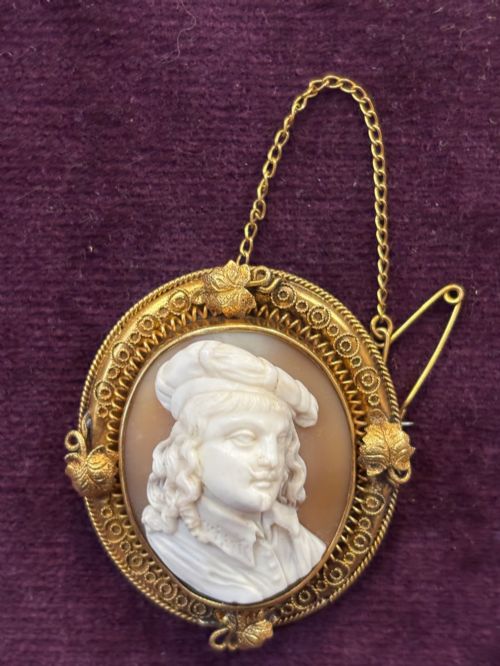
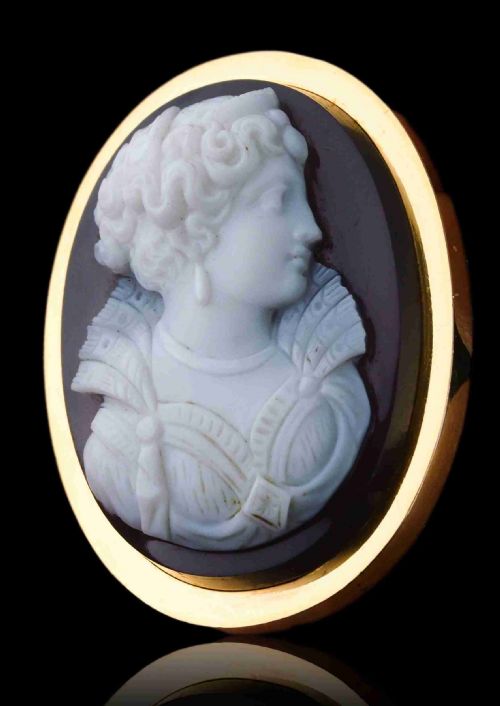
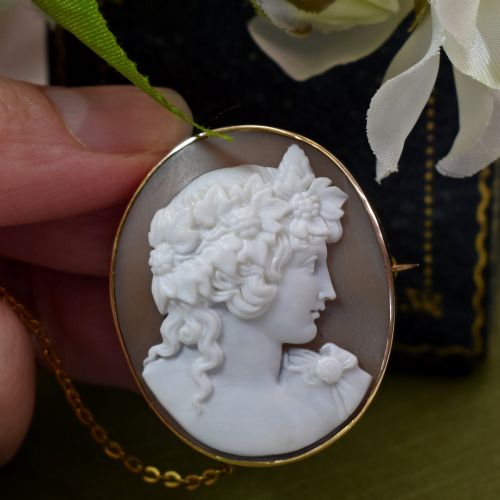
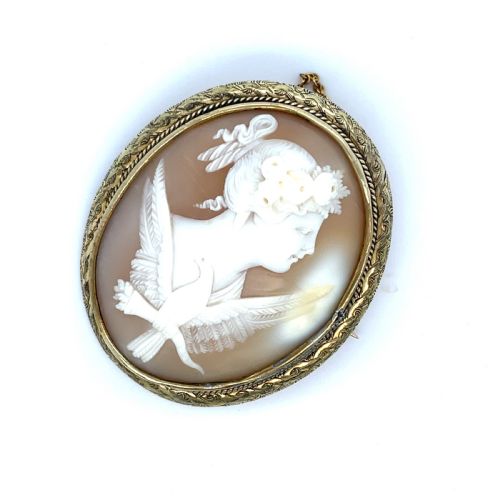
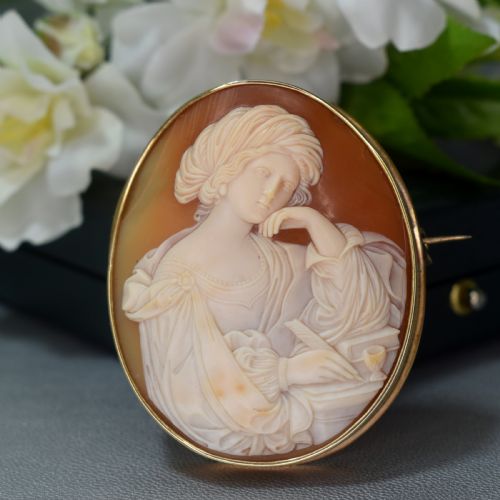
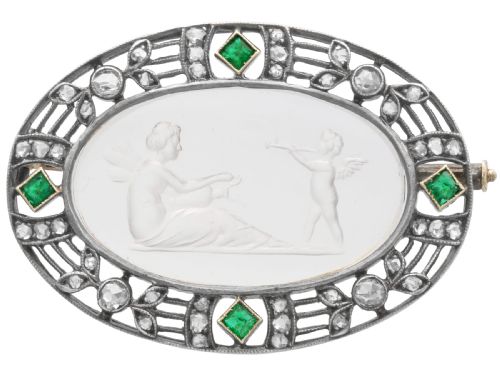
A victorian cameo brooch showcases hand-carved relief figures set in precious metal mounts. The subjects draw heavily on classical mythology and portraiture, depicting deities such as Nike, Demeter, Aphrodite, and Bacchus, alongside portraits of ladies and gentlemen.
Shell and lava stone form the primary carving materials across the selection. Mounts utilise various grades of gold, including 9ct, 15ct, 18ct, and 20ct, as well as silver and gold-plated metals, often shaped as bar brooches or locket combinations.
Materials and construction
Carvers shaped shell and lava stone by hand to create the raised white relief against a darker natural background. Artisans selected layered shells to achieve this contrasting colour effect.
Goldsmiths and silversmiths housed these carvings in bespoke metal frames. Mounts frequently feature detailed wirework, scroll patterns, or convertible mechanisms allowing the piece to function as both a brooch and a pendant.
Retail Price Guide 2026
Typical UK retail prices for victorian cameo brooch, calculated from the Sellingantiques database of over a million retail prices indexed since 2003. This retail price guide relies exclusively on Sellingantiques data; no external sources or auction records are used, so the figures do not describe the wider market.
Listings feature shell and lava stone mounted in 9ct, 15ct, 18ct, and 20ct gold, alongside silver and plated options.
Assessing quality
The weight and purity of the metal mount also influence the piece. Substantial gold frames, particularly those marked at 15ct or 18ct and above, paired with large-format carvings, represent the higher tier of the range.
The Victorian Cameo Brooch Glossary
- Cameo
- A method of carving where a design is raised above a background. This technique relies on layered materials like shell or hardstone to create contrast.
- Lava stone
- A porous volcanic rock utilised for dark, matte carvings during the nineteenth century. It provides an alternative to shell for sculptural portraiture.
- Bacchante
- A female follower of Bacchus, frequently depicted in classical Greek and Roman art. These mythological figures appear carved in relief on period brooches.
- Locket
- A hinged compartment built into the reverse of certain brooches. This addition allowed the wearer to store a small photograph or lock of hair.
Frequently Asked Questions
How do I wear a antique cameo brooch?
These pieces pin securely to heavy fabrics like wool coats, velvet lapels, or thick scarves. Their substantial weight requires sturdy garment support to keep the pin straight.
Many examples feature built-in loops or hinged Bails on the reverse. This allows the brooch to transform into a pendant hung from a neck chain.
What subjects appear on these brooches?
Greek and Roman mythology dominates the carved scenes. Common subjects include goddesses like Nike, Aphrodite, and Hebe, alongside mythological figures such as Bacchus and Menelaus.
Profile portraits of anonymous ladies and gentlemen also appear frequently. These miniature portraits capture Victorian fashion and hairstyles accurately.
How are shell and lava cameos different?
Shell cameos feature a translucent inner layer of marine shell carved to reveal a white figure against a warm amber or brown ground. They have a polished sheen.
Lava stone cameos offer a solid, absorbent matte texture in grey or brown tones. The carving appears softer due to the granular nature of the volcanic material.
How do I date a Victorian brooch?
Hallmarks stamped on the gold or silver mounts provide the most reliable dating evidence. British standards for 9ct, 15ct, and 18ct gold help narrow down the production decade.
Stylistic clues like the depth of the metal scrollwork and the fastening mechanism also aid identification. Simple C-clasps and tubular hinges point to nineteenth-century manufacture.