
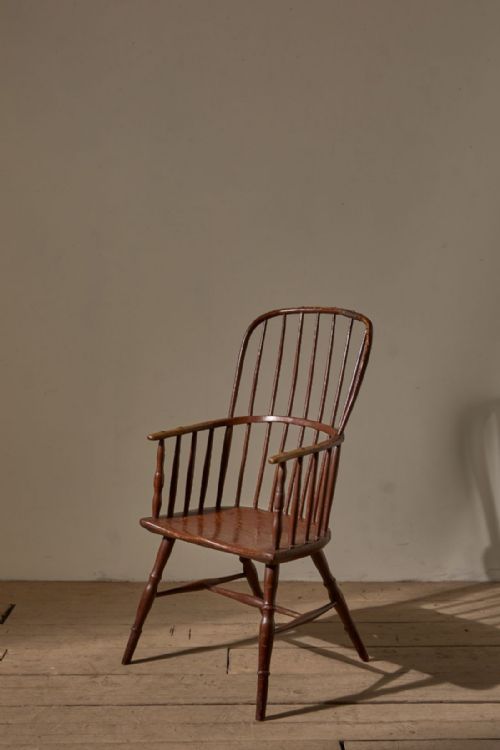


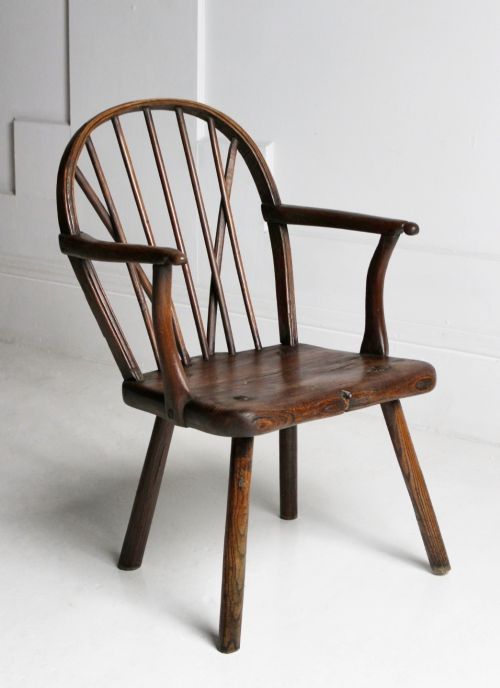


Vernacular Stick Chair
These vernacular stick chair examples embody honest domestic utility, offering buyers a tactile connection to centuries of regional British country furniture-making traditions.
Vernacular Stick Chair
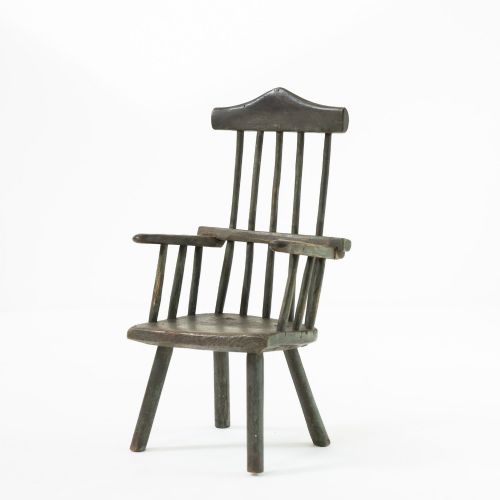
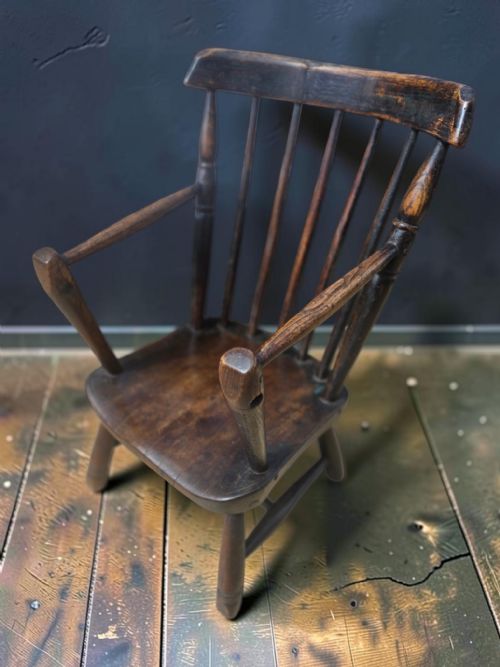
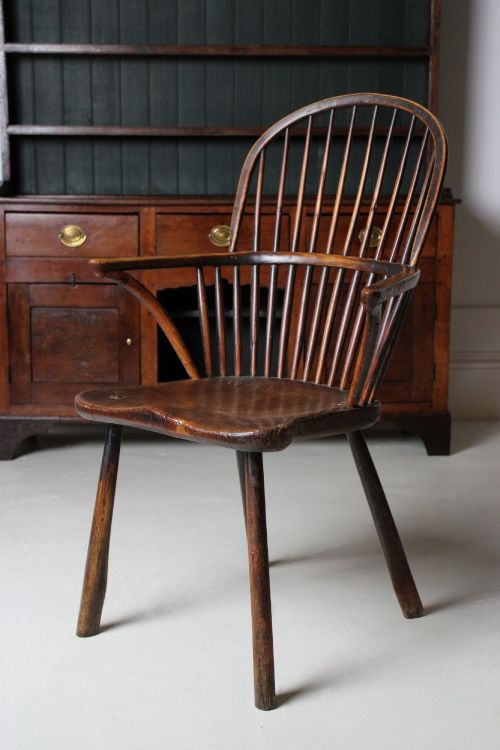
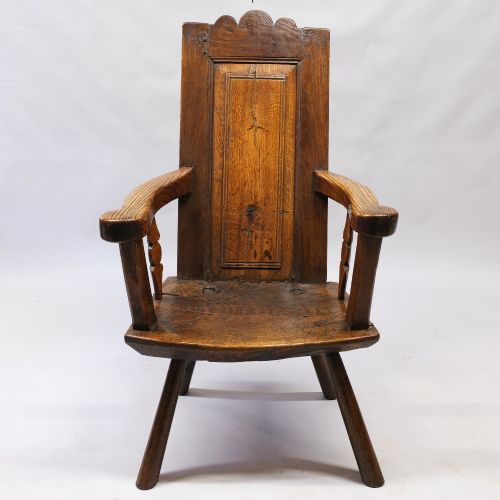
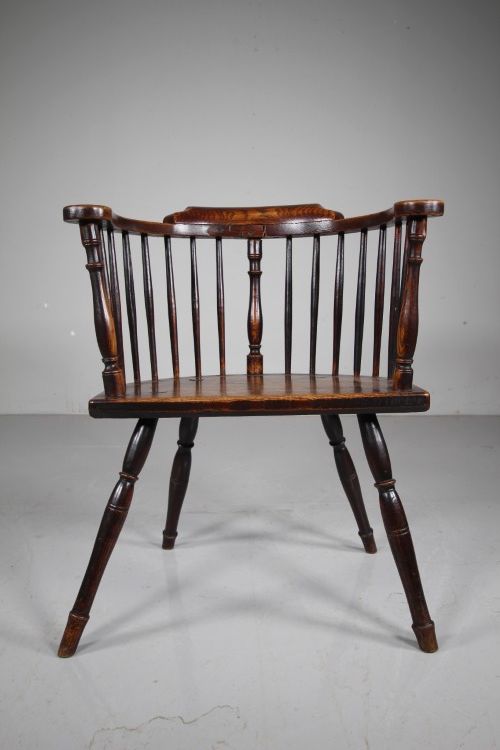
When you search for a vernacular stick chair, you encounter utilitarian seating created by regional carpenters and local makers rather than urban workshops. These pieces span the eighteenth and nineteenth centuries, taking the form of armchairs, low chairs, and children's high chairs.
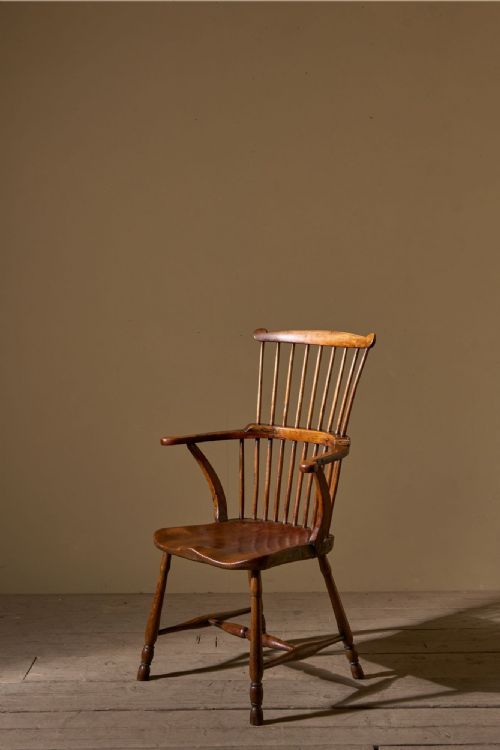
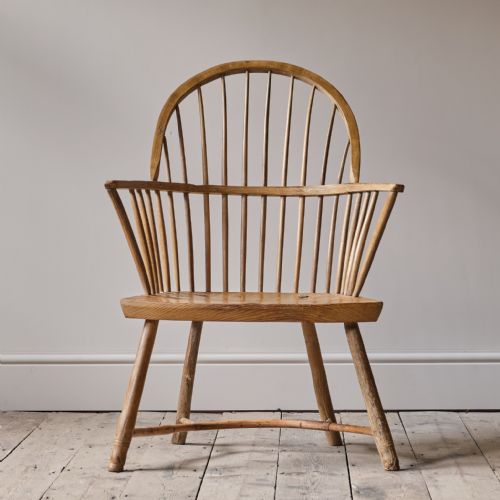
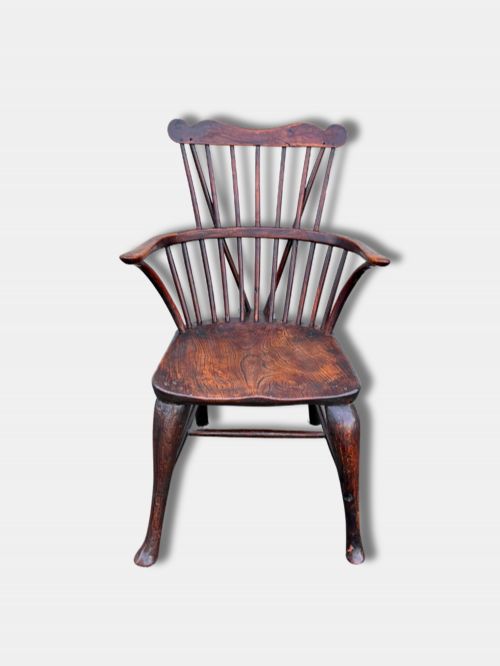
The selections on this page heavily feature traditional regional variations, including Welsh, West Country, and Thames Valley forms. You find comb-backs, hoop-backs, and panel-backed seating designed for daily domestic service in country houses and cottages.
Most entries showcase regional idioms where local timbers dictate the structural character of the chair. Whether you examine a child's primitive armchair or a robust kitchen Windsor, the focus rests entirely on unpretentious, functional construction.
How they were made
Maker practices relied on combining contrasting native timbers to maximise structural strength, typically pairing elm seats with ash spindles and steam-bent hoops. Fruitwood, yew, oak, and beech also appear frequently across the framework, chosen from local timber supplies.
Construction involved boring solid plank seats to receive wedged legs and upright sticks, utilising simple pole lathes and hand tools. Surfaces often retain original brown paint or the natural grain of burr elm, fruitwood, and laburnum.
Listings incorporate multiple native timbers including elm, ash, oak, yew, beech, and fruitwood across eighteenth and nineteenth-century forms.
What varies in quality
The distinction between ordinary and exceptional examples lies in the harmony of proportion, the boldness of the turnings, and the character of the timber selection. A well-balanced comb-back with expressive graining demonstrates superior regional craftsmanship compared to a stiffly proportioned counterpart.
Original surface preservation heavily influences the standing of a piece, particularly where untouched patination or early paint remains intact. Alterations to undercarriages or replaced spindles diminish the historical integrity that collectors value.
The Vernacular Stick Chair Glossary
- Comb back
- A chair back featuring a high crest rail supported by vertical sticks that resemble the teeth of a comb, often integrated into eighteenth-century designs.
- Hoop back
- A continuous bentwood bow forming the armrest and backrest support, typically secured directly into the solid wood seat.
- Windsor
- A chair style characterised by a solid wooden saddle-shaped seat into which the legs and back sticks are independently tenoned.
- Vernacular
- Furniture designed and built by local tradesmen using regional traditions and materials, prioritising utility over high-style academic fashion.
- Primitive
- Describing early country pieces with straightforward, unadorned construction methods that reflect basic domestic needs.
Vernacular Stick Chair: Frequently Asked Questions
What is a vernacular stick chair?
A vernacular stick chair is a practical seat produced by regional country makers using local woods and traditional construction techniques.
These pieces reflect the specific vernacular styles of areas such as Wales, Yorkshire, and the West Country rather than following metropolitan fashion.
How do I date an old stick chair?
Dating relies on examining tool marks, timber combinations, structural wear patterns, and regional design evolution across the eighteenth and nineteenth centuries.
Early examples often feature heavier undercarriages, burr elm components, and comb-back profiles characteristic of mid-eighteenth-century rural production.
Where were these chairs originally used?
These seats served everyday functions in country kitchens, farmhouses, cottages, and regional domestic settings throughout Britain.
Their robust construction made them suitable for heavy daily use by families living outside major urban centres.
How do I care for antique wood furniture?
Preserving these pieces requires maintaining stable indoor humidity and protecting surfaces from direct sunlight and extreme temperature shifts.
Applying occasional natural wax helps nourish dry timber and maintains the historic patinated finish without harming the wood.