
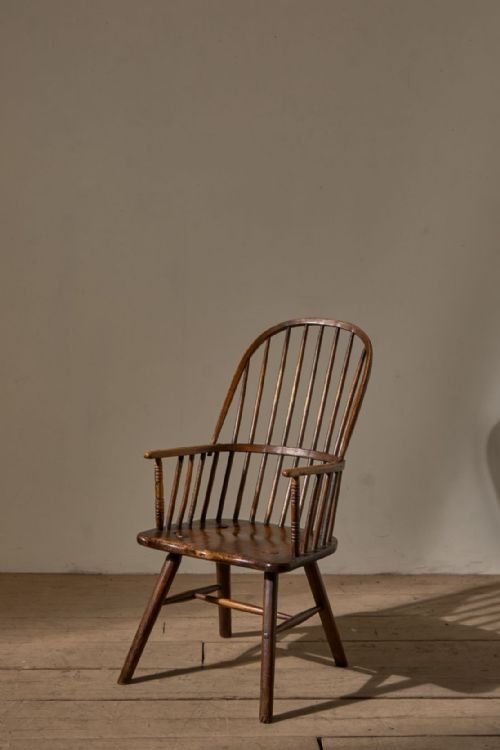

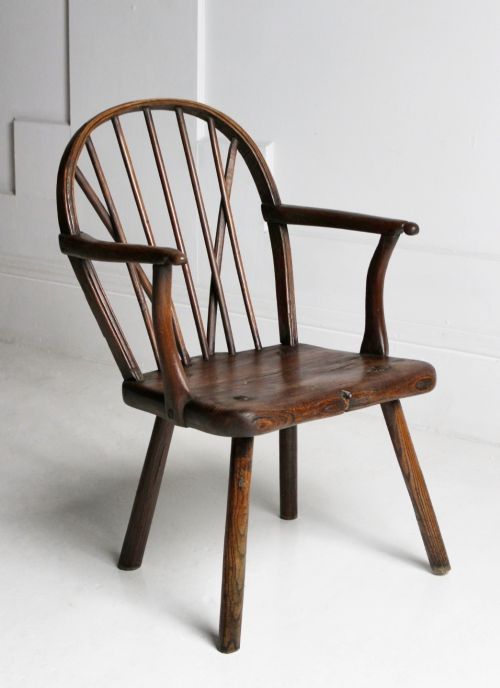

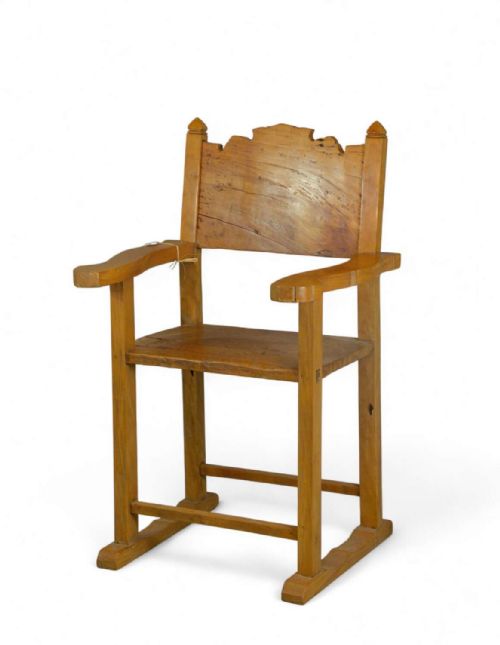


Rustic Timber Armchair
These rustic timber armchairs are honest vernacular seats built for everyday utility, offering a direct connection to early country craftsmanship.
Identifying rustic timber armchairs
A rustic timber armchair is a vernacular seating form constructed in British workshops during the eighteenth and nineteenth centuries. These chairs rely on local woods and straightforward construction methods rather than urban joinery fashions.
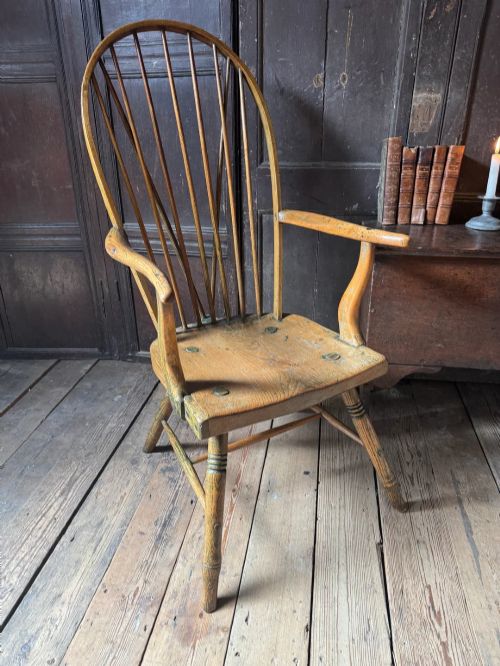
The pieces listed span the Georgian period, the Victorian era, and the year eighteen hundred. Regional variations emerge clearly, from West Country high hoop-back Windsors to Nottinghamshire workshop examples and vernacular stick-back kitchen chairs.
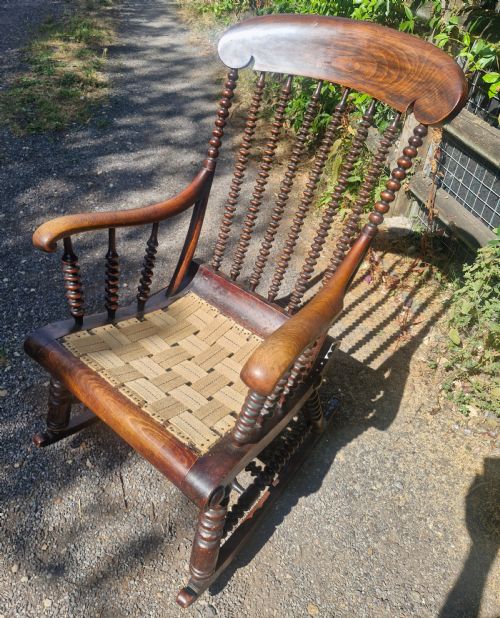
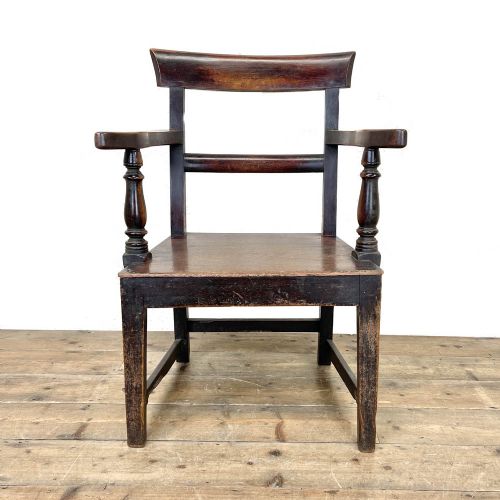
Forms include high-back Windsor armchairs with shaped seats alongside simpler stick-back and dining chair variants. Most surviving examples emphasise sturdy comfort and functional practicality over ornamental flourish.
Materials and construction
Makers utilised a combination of native timbers such as elm, ash, oak, yew, and beech within a single piece. Elm frequently formed the solid carved seat, while ash, yew, or beech provided the resilient bentwood hoops, spindles, and legs.
Construction follows traditional Windsor and vernacular stick-back methods where turned or shaved spindles and legs are wedged directly into bored seats. This socketed assembly created resilient joints capable of withstanding heavy daily use in kitchens and farmhouses.
Retail Price Guide 2026
Typical UK retail prices for rustic timber armchair, calculated from the Sellingantiques database of over a million retail prices indexed since 2003. This retail price guide relies exclusively on Sellingantiques data; no external sources or auction records are used, so the figures do not describe the wider market.
Many an elm seat bears the smooth, glossy indentation of generations of farmers sitting down to a hearty kitchen supper.
Assessing quality and character
Quality rests in the harmony of the timber selection and the fluency of the turning and steam-bending. Chairs combining contrasting woods like yew and elm demonstrate superior workshop ambition compared to utilitarian pine or mixed softwood alternatives.
Proportion and wear define the finer pieces, where decades of friction have burnished the timber surfaces into a rich patina. The depth of the carved seat and the grace of the back splat or hoop separate standard utility seating from refined vernacular art.
The Rustic Timber Armchair Glossary
- Vernacular
- Describing objects built by local tradesmen for domestic or agricultural use rather than following strict metropolitan stylistic dictates. These pieces reflect regional traditions and available materials.
- Windsor
- A chair type characterised by a solid wooden seat into which the legs and back spindles are directly fitted. The back often incorporates a bentwood hoop or comb piece.
- Hoop-back
- A chair back formed from a continuous piece of steam-bent timber looped around to anchor into the seat. This design offers robust structural support while allowing lighter framing members.
- Stick-back
- A minimalist chair construction where turned or cleft spindles form the back rest without a central solid splat. It represents an efficient vernacular building method.
- Patina
- The deep surface sheen and colour developed by aged wood through decades of handling, polishing, and natural oxidation. It serves as a visual indicator of age and careful custodianship.
Frequently Asked Questions
What is a rustic timber armchair?
A rustic timber armchair is a traditional country seat built from native British hardwoods using vernacular construction methods. These chairs typically feature solid timber seats with spindle or hoop backs.
They emerged from regional workshops to serve practical domestic purposes in kitchens, farmhouses, and cottages across the eighteenth and nineteenth centuries.
How do I date an old armchair?
Dating relies on examining construction techniques, tool marks beneath the seat, and the wear patterns on the timber. Georgian and Victorian examples show distinct turning styles on the legs and spindles.
Comparing the timber combinations and regional design traits against documented vernacular types helps narrow down the period of manufacture.
Are these chairs comfortable for daily use?
Most rustic armchairs feature ergonomically scooped wooden saddles carved into solid elm or other dense hardwoods. Their robust braced frames make them remarkably sturdy for regular seating.
Placing a simple wool or linen squab cushion on the seat can add extra comfort while preserving the historic timber surface.
What woods were used for country chairs?
Makers selected native British hardwoods based on their specific mechanical properties and local availability. Elm was preferred for carved solid seats because it resists splitting.
Ash, beech, and yew provided the necessary flexibility and strength for steam-bent hoops, turned legs, and slender back spindles.