




Venetian Carved Torchere
A venetian carved torchere brings theatrical Italian drama into a room, combining practical display with striking sculptural presence.
Venetian Carved Torchere
A venetian carved torchere is a decorative stand or figural pedestal designed to hold lights, plants, or small objects. These pieces range from grand architectural columns to elaborate figural supports intended to draw the eye.
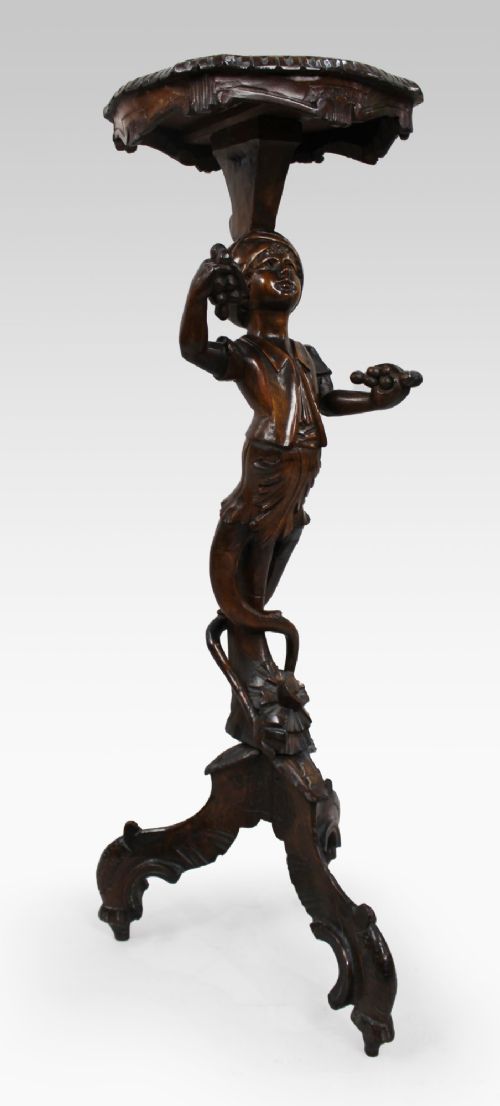
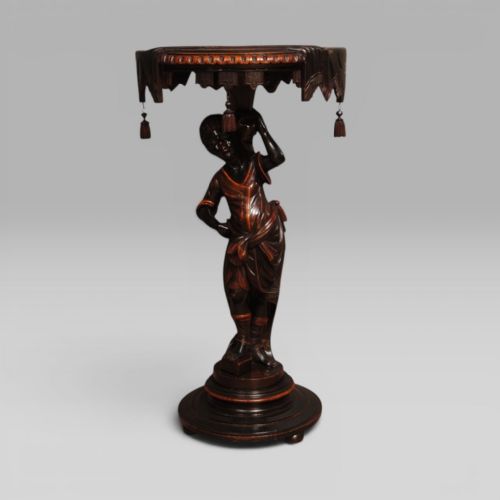
The versions most common here are nineteenth-century figural stands, frequently taking the form of elaborately dressed figures holding trays or sconces. They belong to historical revivals of Venetian Baroque and Rococo styles, reflecting a taste for theatrical furnishings.
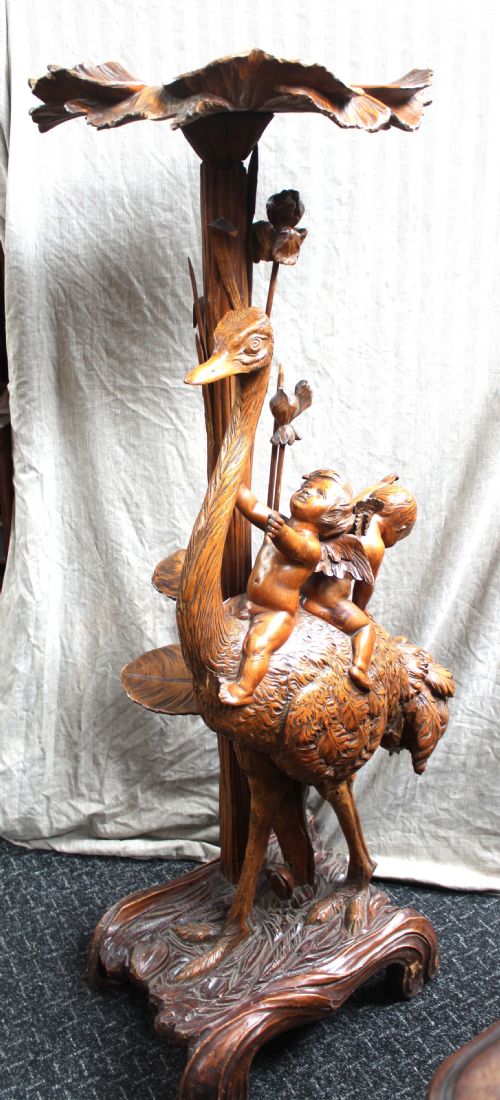
Makers produced these works in forms that double as sculpture and furniture, including torcheres, pedestals, and small tables. Their primary role historically was to illuminate dark corners or serve as decorative focal points in grand interiors.
How they were made
Carvers shaped these pieces primarily from carved wood, utilising walnut or softer timbers that accepted intricate detail. Artisans built up surface decoration using gesso to create crisp edges before applying gold leaf and polychrome paint.
Listings feature works from the nineteenth century, including specific dates from 1850 to 1920 alongside Edwardian and Victorian examples.
What varies in quality
The standard of carving defines the hierarchy among these pieces, separating fluid, expressive drapery from stiff, mechanical cutting. Superior examples display careful attention to anatomical proportion and facial expression in the figural work.
Surface preservation dictates the desirability of a piece, particularly the survival of original polychrome paint and gold leaf beneath later wear. Patination earned through age adds depth, whereas heavy overpainting obscures the underlying craftsmanship.
The Venetian Carved Torchere Glossary
- Torchere
- A tall stand or ornamental candlestick designed to carry a light source or display an object.
- Polychrome
- Decoration employing multiple distinct colours applied to wood, gesso, or stone surfaces.
- Gesso
- A plaster-like mixture applied to wood as a smooth base for gilding and paint.
- Giltwood
- Timber coated with thin sheets of gold leaf or gold dust over a prepared ground.
- Parcel-gilt
- Partially gilded, leaving portions of the underlying wood or paint exposed for contrast.
Venetian Carved Torchere: Frequently Asked Questions
What is a venetian carved torchere used for?
These pieces function primarily as decorative stands to hold candles, lamps, or small display items in a room.
Historically, they also served as sculptural lighting supports in grand reception rooms and hallways.
How do I care for polychrome and gilt surfaces?
Keep these pieces away from direct sunlight and steady moisture to protect the underlying gesso and paint layers.
Dust them gently with a dry, soft brush rather than using liquid polishes or abrasive cloths.
Are these pieces wired for electricity?
Some examples arrive adapted for modern lighting, while others remain in their original form as stands or candleholders.
Buyers often choose to wire them as floor lamps or standard lamps depending on the specific construction.
How can I tell the period of a torchere?
Dating relies on examining the tool marks, the composition of the gesso, and the ageing of the paint layers.
Nineteenth-century pieces often reflect Renaissance Revival or Baroque tastes through their specific decorative vocabulary.