


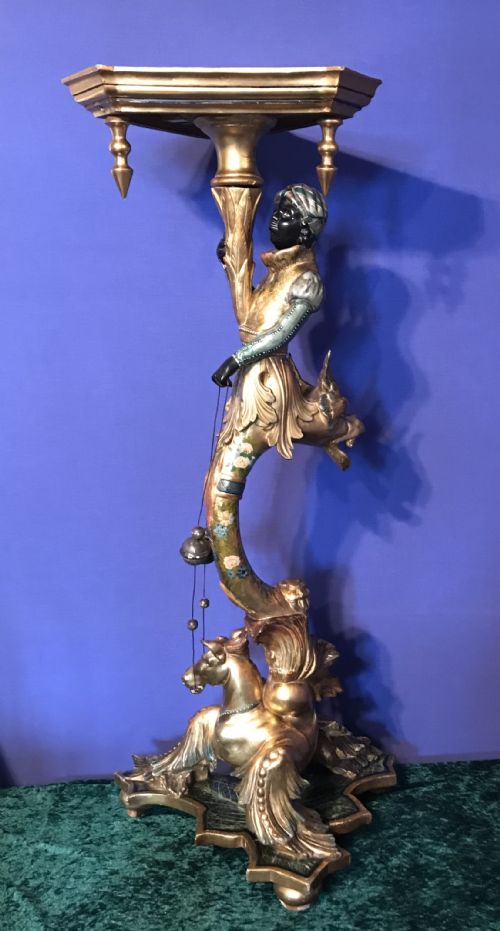
Venetian Blackamoor Figure
A venetian blackamoor figure brings dramatic Italian theatre into a room, offering functional sculpture carved to hold lights, plants or trays.
Venetian Blackamoor Figure
A venetian blackamoor figure takes the form of an exotic carved human figure, frequently rendered as a gondolier or attendant and adapted into useful household objects. These pieces appear as floor lamps, torchere stands, pedestals, candelabras and small tables, mostly originating from the nineteenth and early twentieth centuries.
The aesthetic draws heavily on Venetian Baroque and Rococo styles, reflecting a long-standing Italian tradition of decorative figurative carving. Buyers most commonly meet examples finished with painted polychrome surfaces and gilt highlights, functioning simultaneously as sculpture and furniture.
Forms range from single statues to matched pairs supporting candle arms or serving trays. Their domestic utility spans centuries of interior decoration, moving from grand halls to eclectic modern spaces.
How they were made
Makers shaped these pieces primarily from carved wood, utilising walnut and soft timbers that accepted intricate detail. Craftsmen built up surfaces using gesso before applying layers of polychrome paint and gold leaf to create rich, textured finishes.
Many examples combine carved woodwork with cast brass elements, particularly in candelabras and smaller decorative accessories. The application of original paint and parcel-gilt details required skilled hand-finishing to achieve the characteristic Venetian theatrical effect.
Listings span the nineteenth and early twentieth centuries, featuring materials such as carved wood, gesso, gold leaf, walnut and cast brass.
What varies in quality
Surface preservation marks the other major distinction, as original polychrome paint and gold leaf hold significantly more aesthetic and historical weight than later overpainting. The integration of functional elements, such as torchere trays or candle branches, should feel balanced and proportionate to the carved body.
The Venetian Blackamoor Figure Glossary
- Torchere
- A tall ornamental stand or candlestick. These pieces frequently double as plant stands or display pedestals.
- Giltwood
- Wood carved and prepared with gold leaf or gold paint. It provides the brilliant metallic highlights typical of Venetian decorative arts.
- Gesso
- A plaster mix applied to wood surfaces as a base for painting and gilding. It allows for sharp, crisp detailing before the final colour goes on.
- Parcel-gilt
- Partly gilded. This technique leaves areas of natural wood or painted colour visible alongside the gold leaf.
Venetian Blackamoor Figure: Frequently Asked Questions
Where should I place a blackamoor figure?
These pieces suit entrance halls, drawing rooms or corners where their vertical presence fills empty space. They function well as lamp stands, plant pedestals or small side tables.
Allow enough surrounding space for the figurative carving to be viewed clearly from multiple angles without feeling crowded by surrounding furniture.
How do I care for polychrome and gilt surfaces?
Dust gently using a soft, dry brush to protect fragile gesso and paint layers from abrasion. Avoid commercial cleaning liquids or excessive moisture.
Keep the pieces away from direct sunlight and steady heat sources to prevent the wood from splitting and the paint from flaking over time.
Are these figures functional or purely decorative?
They serve both purposes, combining sculptural presence with practical utility as torchere stands, candelabras, tables and waiters. Many were built specifically to hold lights or display objects.
Check the weight distribution and platform stability if you plan to place heavy items, such as large lamps or ceramic planters, on the stands.
How can I tell nineteenth century pieces apart?
Examine the wear patterns on the polychrome paint, the oxidation of the underlying gesso, and the tool marks left by the carver. Nineteenth century examples often display deep patination and hand-mixed pigments.
Compare the stylistic details against Venetian Baroque and Rococo revivals popular during the Victorian era and the early twentieth century.