

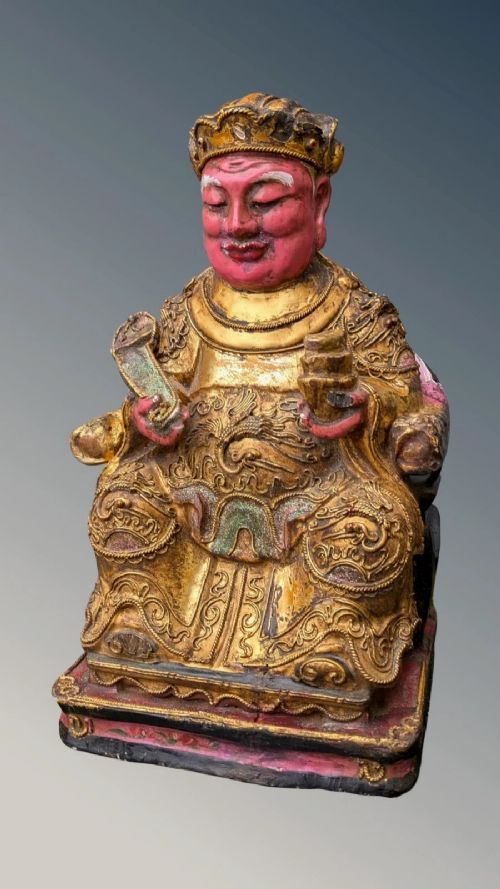
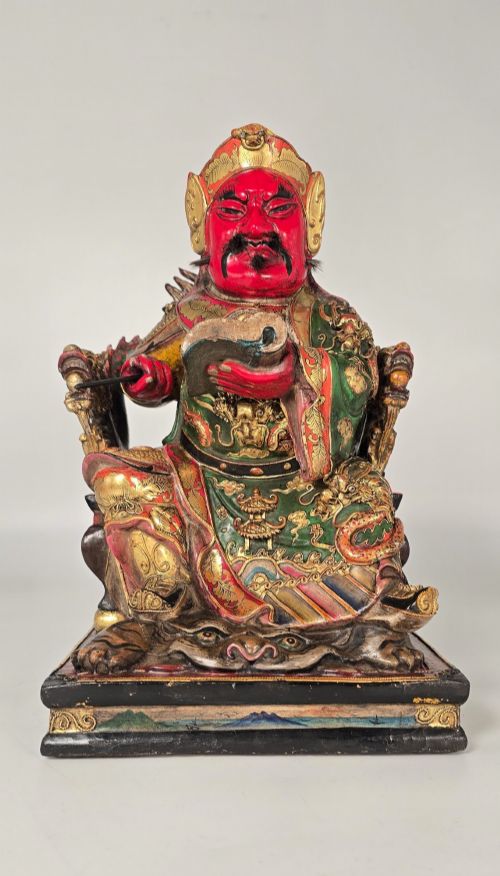


Gilded Carved Wood Statue
A gilded carved wood statue brings centuries of devotional and decorative craft into a room through layered gold leaf and carved timber.
Gilded Carved Wood Statue
A gilded carved wood statue encompasses figural sculptures, religious figures, temple guardians, and decorative animals originating from European, Asian, and British traditions. Buyers encounter representations of saints, Buddhas, angels, deities, and animals spanning from the sixteenth century through the twentieth century.
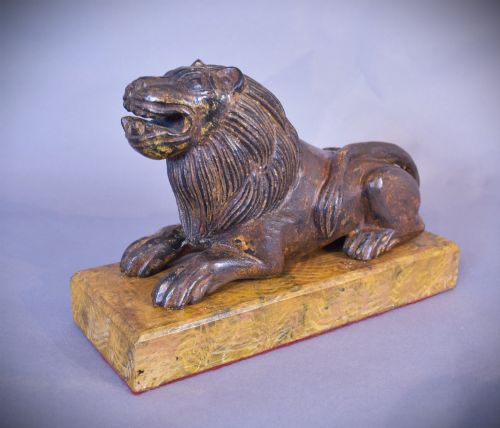
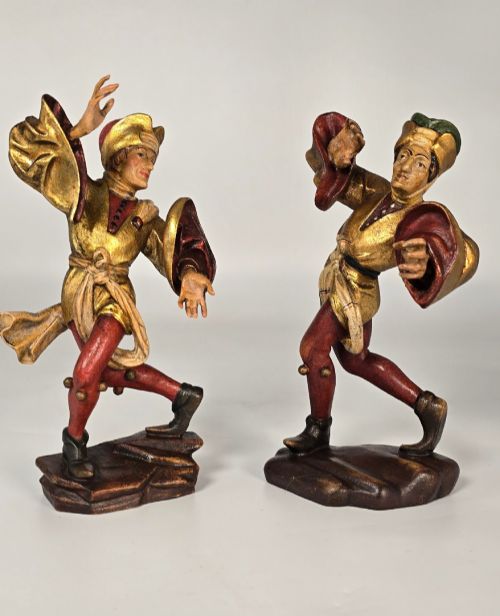
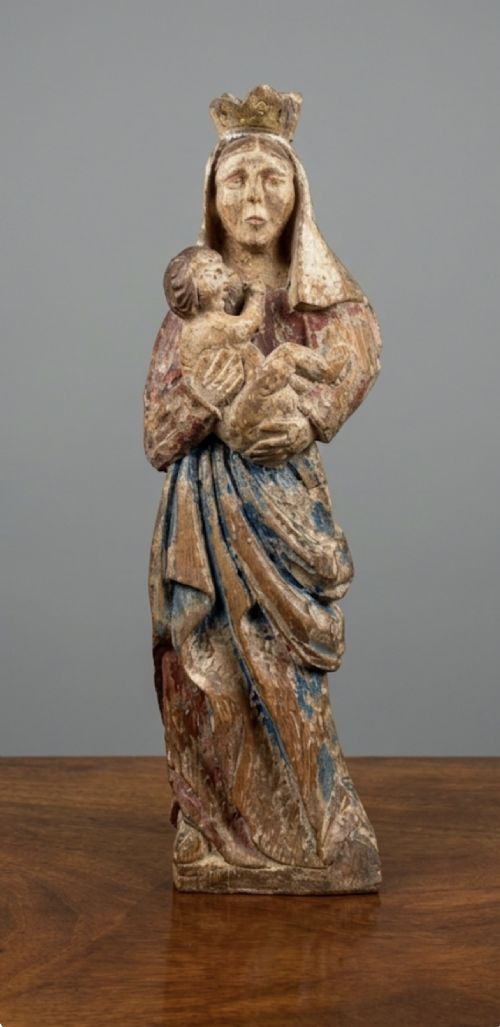
Religious figures, including altarpiece angels, saints, and temple deities, form a substantial portion of the available pieces. Secular decorative carvings, such as lions, eagles, swans, and human figures on stands, appear alongside these devotional items across various periods.
Origin points range widely from Italian, German, and Spanish workshops to Chinese dynasties, Venetian studios, and Burmese temples. Each geographic tradition applies distinct sculptural conventions to wood carving and surface decoration.
What varies in quality
The precision and depth of the initial wood carving distinguish superior sculpture from simpler production. Master carvers render drapery folds, facial expressions, and anatomical proportions with high naturalism or controlled stylistic convention.
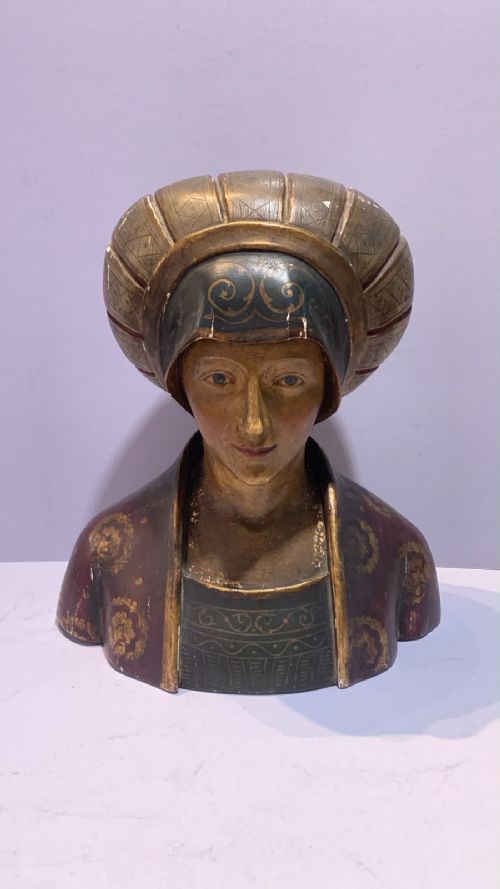
The preservation of original surface treatments determines the visual integrity of a piece. Intact historic gilding, original polychrome pigments, and undisturbed patination carry greater historical coherence than later overpainting or re-gilding.
Listings feature wood substrates including oak, limewood, and pine, finished with gold leaf, gesso, and polychrome paint.
The Gilded Carved Wood Statue Glossary
- Giltwood
- Wood that has been treated with gold leaf or metallic powder applied over a prepared gesso ground. This technique provides a luminous metallic surface that catches interior light.
- Gesso
- A plaster mixture applied to wood surfaces as a smooth base for gilding and paint. It seals the timber and allows fine detail work in relief.
- Santos figure
- A devotional sculpture used in domestic or church settings, particularly within Spanish and Latin traditions. These pieces often depict saints or religious personages.
- Torchere
- A stand or decorative support designed to hold a light source or display a figure. Examples often incorporate carved and gilded wooden columns or figural shafts.
Gilded Carved Wood Statue: Frequently Asked Questions
How do I clean a gilded carved wood statue?
Dust surfaces gently using a soft, dry artist's brush or a clean microfiber cloth. Avoid applying water, chemical cleaners, or liquid polishes, which can dissolve water-soluble gesso and lift historic gold leaf.
Keep pieces away from direct sunlight, heating vents, and high humidity to prevent the underlying timber from expanding, contracting, or splitting over time.
How can I tell the age of these statues?
Dating relies on stylistic markers associated with periods like the Baroque, Renaissance, or Qing Dynasty, alongside tool marks left by the carver. Examination of the wood type, the composition of the gesso ground, and the ageing of the surface patination provide further chronological context.
Comparing construction methods with documented examples from specific regions helps narrow down the origin decade or century.
Where were these statues originally placed?
Religious sculptures stood in domestic shrines, altars, European churches, and Asian temples as objects of devotion. Many figures served a liturgical or protective function within sacred architecture.
Secular decorative carvings and architectural elements were designed for grand rooms, halls, and furniture displays in aristocratic homes.