





Venetian Decorative Pedestal
These venetian decorative pedestal pieces bring striking Italian character and sculptural presence into a room.
Venetian Decorative Pedestal
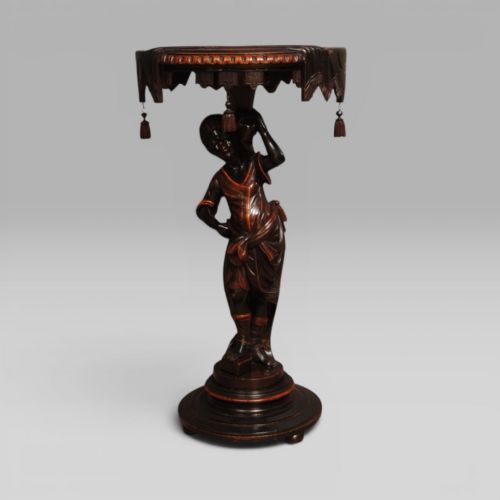
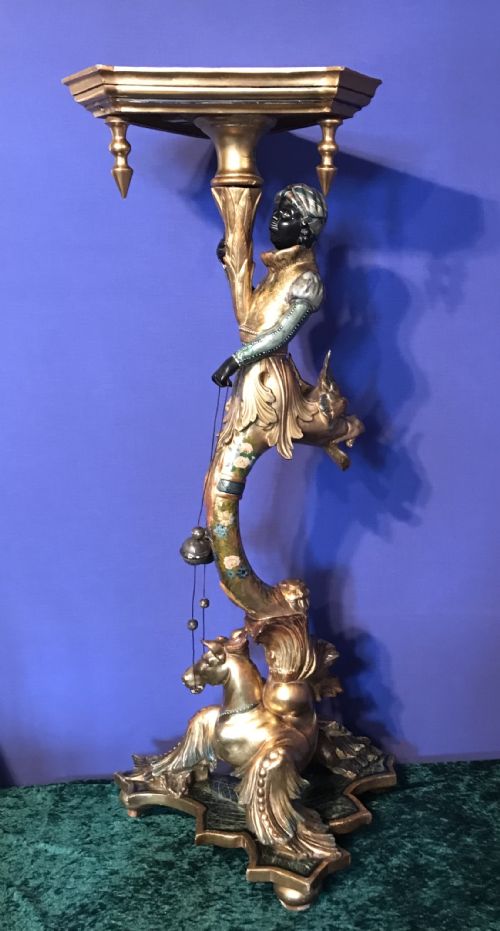
A venetian decorative pedestal typically takes the form of a carved wooden figure, blackamoor, gondolier, or torchere designed to support a surface or stand alone as a statue. These works appear primarily in nineteenth century pieces, encompassing Victorian dates alongside specific years such as eighteen fifty, eighteen sixty, eighteen seventy, and nineteen ten.
The objects serve multiple interior functions, functioning as plant stands, side tables, floor lamps, or standalone sculptures and statues. Buyers encounter forms ranging from pairs of carved figures to large individual statues of young women and exotic torchere pedestals.
Originating predominantly from Italian and Venetian workshops, the selection bridges historical revival aesthetics with decorative domestic furniture. They combine figurative sculpture with functional display elements, creating distinct focal points for traditional interiors.
How they were made
Surfaces received elaborate decorative treatments involving polychrome paint, gesso, gold leaf, and giltwood. Many examples preserve their original gilt polychrome finishes, combining pigmented paints with applied metallic leaf to enhance the theatrical Venetian aesthetic.
Venetian Decorative Pedestal Retail Price Guide 2026
Typical asking prices for venetian decorative pedestal among the pieces listed under this phrase on Sellingantiques today, from the lower quarter to the upper quarter. They describe what is for sale here now, not the wider market.
Listings feature items from eighteen fifty, eighteen sixty, eighteen seventy, nineteen ten, and the broader Victorian period.
What varies in quality
The sophistication of the carving dictates much of the visual success, separating masterwork anatomical execution from simpler regional production. Finer pieces demonstrate lively posture, expressive detailing in the faces, and deeply undercut drapery that catches the light.
Preservation of the surface decoration significantly impacts the character of each piece. Examples retaining their original polychrome paint and gold leaf without heavy overpainting offer a more authentic historical appearance than those with modern restorations.
Valentino Besarel
The Venetian Decorative Pedestal Glossary
- Polychrome paint
- Decoration utilising multiple colours applied to the surface of wood or gesso. This technique brings life and theatrical realism to figurative carvings.
- Giltwood
- Wood that has been coated with a thin layer of gold leaf or powder. It provides a luminous metallic finish characteristic of Venetian decorative arts.
- Torchere
- A tall ornamental stand designed to carry a light, plant, or decorative object. In these listings, they function as pedestals and floor lamps.
- Gesso
- A plaster-like mixture applied to wood surfaces to prepare them for painting or gilding. It creates a smooth base for intricate surface decoration.
- Blackamoor
- A European decorative art genre depicting figures in exoticized attire, often functioning as supports or stands. These pieces date from the nineteenth century.
Venetian Decorative Pedestal: Frequently Asked Questions
What rooms suit a venetian decorative pedestal?
These pieces fit grand hallways, formal drawing rooms, or studies where their sculptural presence commands attention. They serve as dramatic focal points rather than quiet background furniture.
Pronounced vertical lines allow them to occupy corners or empty wall spaces effectively without impeding movement through the room.
How were these stands used originally?
Historically, affluent households utilised these carved figures as torcheres to hold lighting fixtures or as decorative plant stands. They combined utility with theatrical display in reception rooms.
Some iterations incorporated small table surfaces, allowing them to function as side tables for holding small decorative objects.
How do I identify nineteenth century pieces?
Nineteenth century examples often display specific revival styles such as Venetian Baroque or Italian Renaissance influences. Examination of the wood and the layering of gesso and polychrome paint helps confirm age.
Wear patterns on the gold leaf and paint layers provide physical evidence of historical handling and natural ageing.
How should I care for original polychrome and gilt surfaces?
Maintenance requires gentle dusting with a soft, dry cloth to prevent abrasive particles from damaging the delicate paint and gold leaf. Moisture and chemical cleaners must be avoided entirely.
Keeping the pieces away from direct sunlight and fluctuating humidity protects the gesso and wood substrate from cracking or lifting.