





Antique Venetian Plant Stand
An antique venetian plant stand brings dramatic figurative carving and rich polychrome surface decoration into a room, offering both a functional display surface and a striking sculptural presence.
Antique Venetian Plant Stand
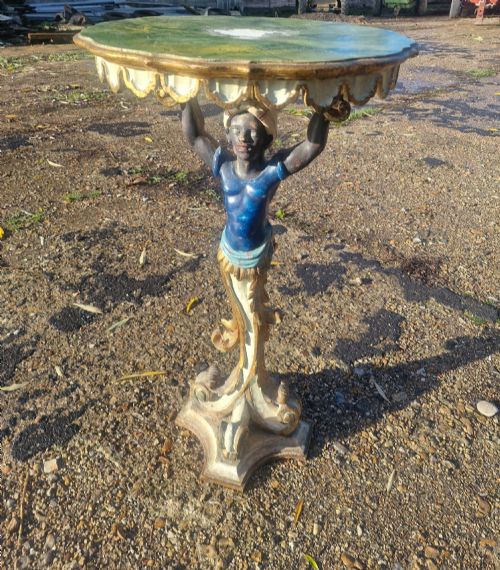
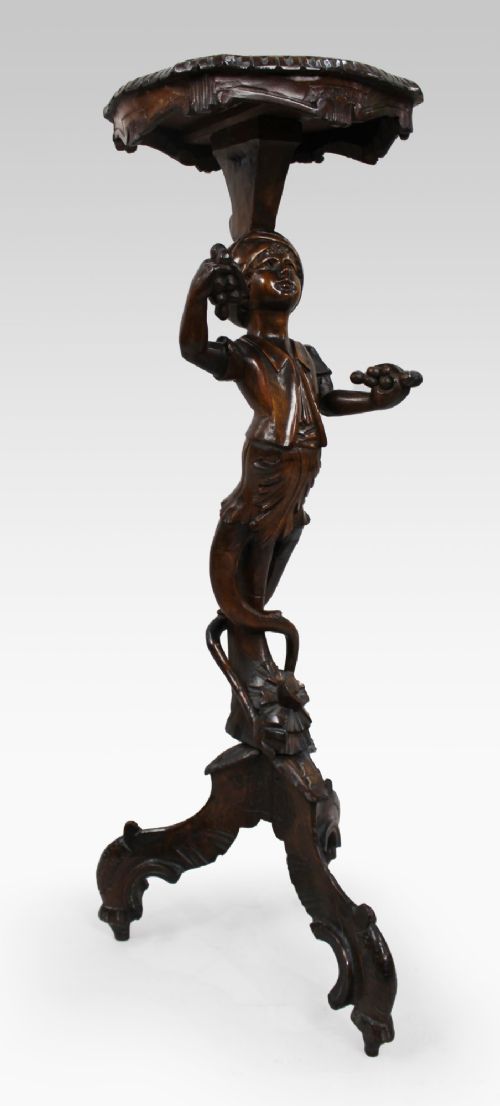
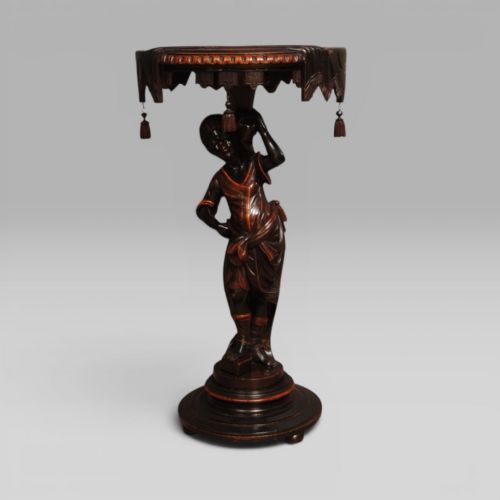
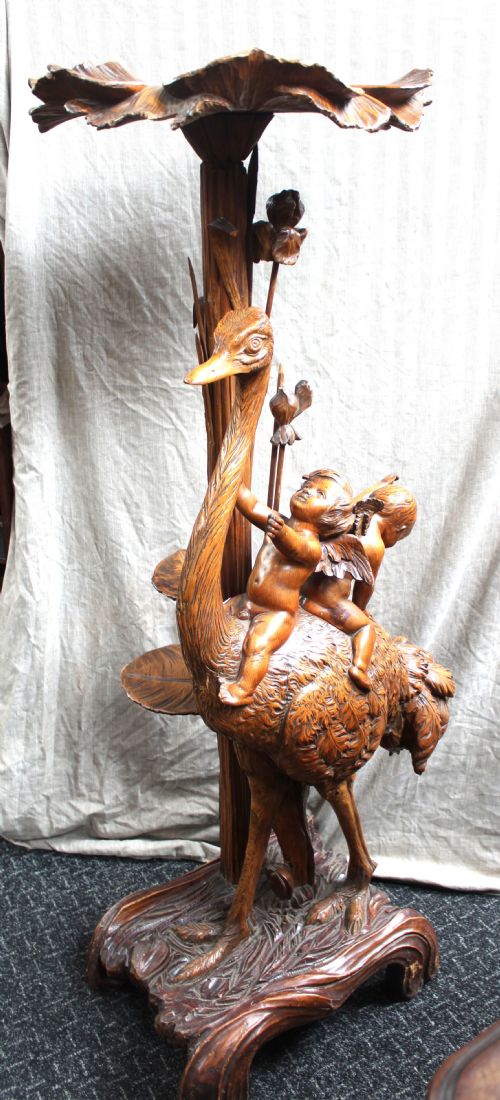
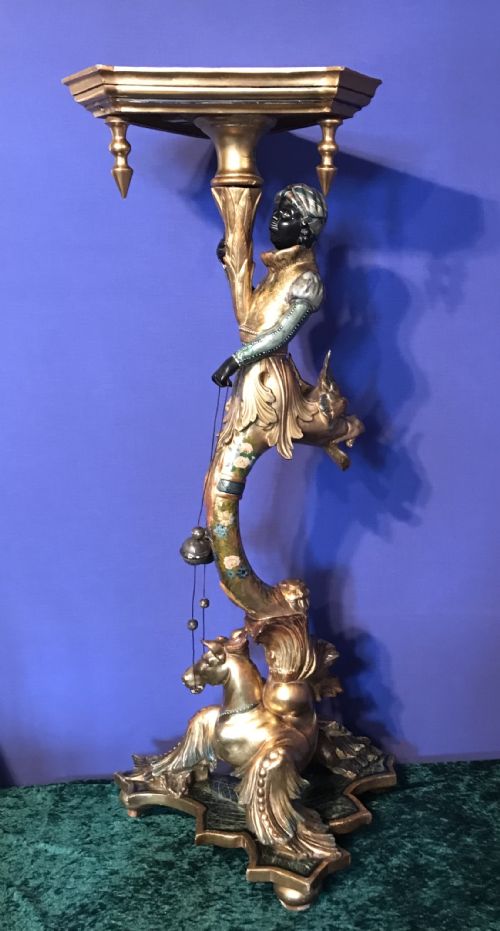
When you search for an antique venetian plant stand, you encounter a distinctive category of pedestals, torchere stands, and small side tables that often incorporate figurative elements such as Blackamoors and gondoliers. These pieces draw heavily on Venetian Baroque, Venetian Rococo, and Italian Renaissance Revival styles, translating theatrical regional traditions into ornate domestic furniture.
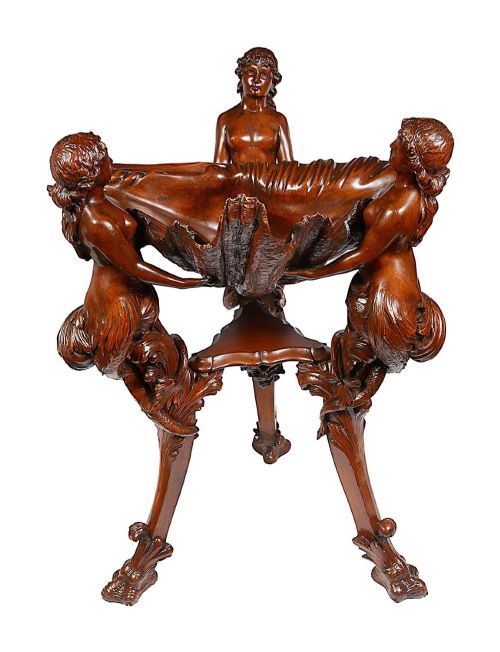
The objects appearing on this page span the nineteenth century and the early twentieth century, including Victorian interpretations and specific dates like eighteen eighty and eighteen ninety. Forms range from classical carved wood pedestals to figural sculptures holding shell planters and display trays.
Most examples originate from Italy, utilising traditional regional motifs and polychrome finishes to create highly decorative focal points. Whether configured as a tall torchere or a lower side table, each piece serves to elevate plants, sculptures, or lighting.
Materials and Construction
Makers constructed these stands primarily from carved wood and carved walnut, shaping solid timber into complex figurative and architectural forms. Artisans then applied gesso to smooth the surfaces before adding elaborate decorative finishes.
Polychrome paint and gold leaf define the visual impact of these items, creating contrasting areas of bright colour and metallic lustre. Gilt and polychrome decoration were layered onto the carved wooden substrates to imitate rich textiles and opulent materials.
Antique Venetian Plant Stand Retail Price Guide 2026
Typical asking prices for venetian plant stand among the pieces listed under this phrase on Sellingantiques today, from the lower quarter to the upper quarter. They describe what is for sale here now, not the wider market.
Listings feature items from the nineteenth century, including specific dates in the eighteen eighties and nineties, alongside early twentieth-century examples.
Assessing Quality and Execution
Surface execution further separates standard items from exceptional ones, particularly in the handling of polychrome paint and gold leaf. Superior pieces retain subtle hand-painted shading and well-preserved gilding that enhances the sculptural contours without appearing flat or uniform.
The Antique Venetian Plant Stand Glossary
- Blackamoor
- A decorative figurative art style depicting exoticized human figures, commonly utilised in Venetian furniture to support tables, trays, and torchere stands. These figures are typically rendered in carved and polychromed wood with gilded details.
- Torchere
- A tall ornamental stand designed to support a candelabrum, lamp, or plant. In Venetian pieces, these take the form of highly carved columns or figural supports.
- Polychrome
- The practice of decorating architectural elements, sculpture, or furniture in a variety of colours. This finish is central to the visual identity of nineteenth-century Venetian decorative arts.
- Gesso
- A plaster-like mixture applied to wood surfaces to prepare them for painting or gilding. It allows carvers to achieve sharp, refined details before the final metallic or pigmented layers are added.
- Renaissance Revival
- A nineteenth-century architectural and decorative arts style that drew inspiration from fifteenth- and sixteenth-century Italian design. Pieces in this idiom emphasise classical symmetry, robust carving, and formal grandeur.
Antique Venetian Plant Stand: Frequently Asked Questions
What is a Venetian plant stand?
A Venetian plant stand is an ornate nineteenth-century pedestal or side table, often featuring carved figurative supports like Blackamoors or gondoliers.
These pieces combine functional display surfaces with rich polychrome paint and gold leaf decoration, reflecting regional Italian revival styles.
How were these stands used historically?
Historically, these stands served to elevate potted plants, sculptures, or lighting fixtures within grand domestic interiors.
Their dramatic height and sculptural presence allowed them to function as focal points in hallways, reception rooms, and parlours.
How do I style an antique plant stand?
You can place a statement pedestal in an empty corner or hallway to display a trailing plant, a bronze sculpture, or a decorative bowl.
Because these pieces carry strong visual weight, they work best when allowed space to command attention without competing with other heavy furniture.
How can I tell the age of these stands?
Dating relies on examining the construction methods of the carved wood, the composition of the underlying gesso, and the wear patterns of the polychrome and gilt surfaces.
Stylistic cues such as Venetian Baroque Revival motifs and nineteenth-century manufacturing traits help narrow the period.