




19th Century Italian Torchere
These 19th century italian torchere pieces bring dramatic sculptural presence and classical drama to a room, offering elevated display space.
19th Century Italian Torchere
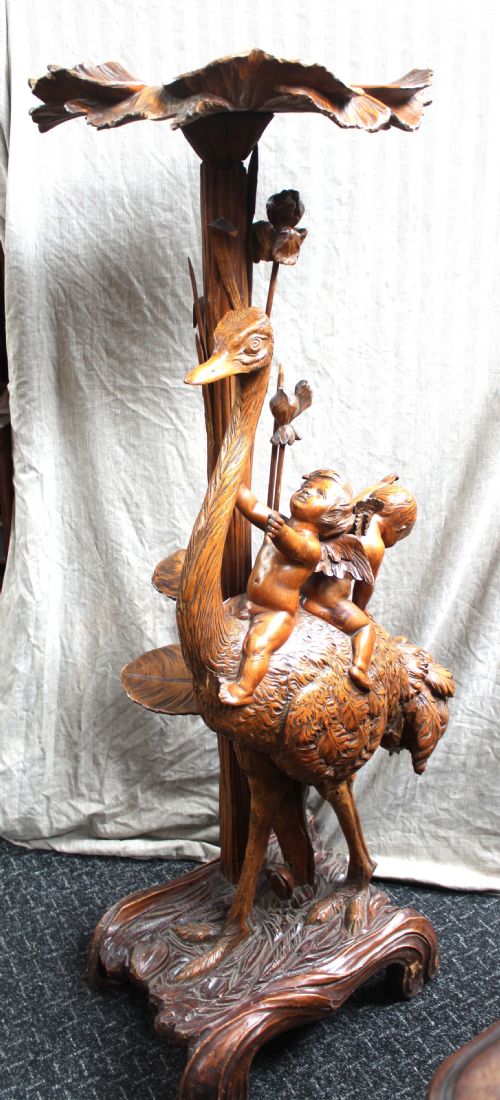
When you search for a 19th century italian torchere, you encounter grand decorative stands designed to hold lamps, plants or sculptures. The examples found here span the Victorian era and the broader nineteenth century, taking the form of pedestals, plant stands and figural supports.
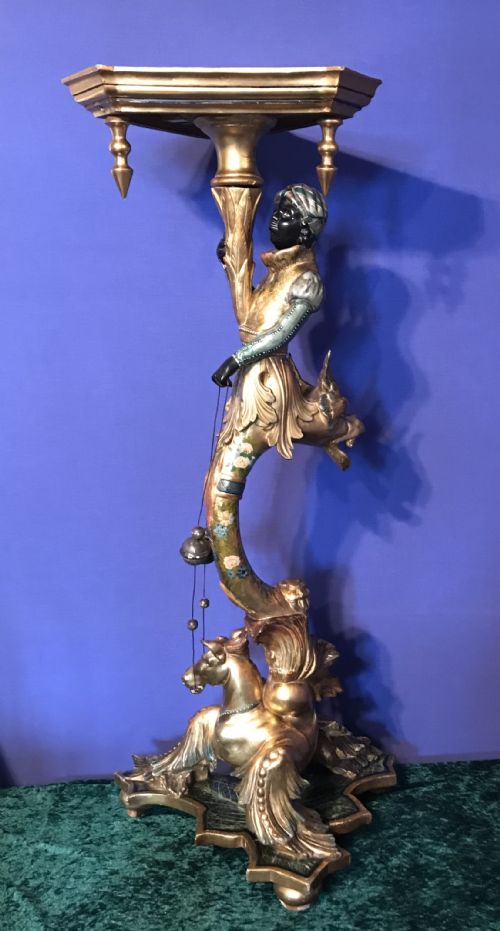
You are most likely to meet Venetian figural works, often rendered as blackamoor or gondolier figures, alongside architectural giltwood pedestals. These pieces reflect regional decorative traditions, merging utilitarian stands with theatrical sculpture.
The forms range from slender columnar pedestals to elaborate carved figures bearing torchieres or serving as side tables. Their original function was to illuminate or elevate, and they retain this decorative authority in modern interiors.
How They Were Made
Carved wood forms the structural core of these works, shaped into intricate human figures, drapery and architectural motifs. Artisans applied gesso to smooth the wood before adding layers of polychrome paint, gold leaf or giltwood to achieve rich surface textures.
Marble also appears, notably carved Carrara marble for columnar torchere stands, offering a cooler and more classical alternative to painted wood. Original polychrome finishes rely on traditional pigment applications that have aged with the wood beneath.
Several figures come equipped to hold your evening candle while dressed in full nineteenth-century gondolier attire.
What Varies in Quality
The preservation of original surface decoration heavily influences the character of each piece. Retaining the original gilt polychrome or gold leaf without extensive repainting marks a higher standard of survival for these nineteenth-century items.
The 19th Century Italian Torchere Glossary
- Torchere
- A tall ornamental stand or candlestick designed to carry a light or hold an object. In nineteenth-century Italian rooms, these functioned as dramatic focal points.
- Polychrome
- Decorated in multiple colours. This technique defines the painted surfaces of Venetian figures and stands.
- Giltwood
- Wood carved and treated with gold leaf or a gold-coloured finish. It provides the reflective surfaces seen on architectural pedestals.
- Gesso
- A plaster mix applied to wood as a base for painting or gilding. It allows for sharp detail before the application of gold leaf.
- Blackamoor
- A term historically applied to European decorative art depicting figures from North Africa or Sub-Saharan Africa, often fashioned as attendants or torchbearers in Venetian design.
19th Century Italian Torchere: Frequently Asked Questions
What is a torchere used for?
These pieces served historically to hold candles, lamps or ornamental objects, providing elevated illumination in large reception rooms.
Today they function as sculptural pedestals for plants, urns or standalone display in hallways and drawing rooms.
How do I identify a Venetian torchere?
Venetian examples often incorporate figural carving, such as gondoliers or attendants, combined with rich polychrome paint and gold leaf.
They lean into theatrical or baroque aesthetics, distinguishing themselves from simpler architectural pedestals.
Are these pieces made of solid wood?
Most pieces utilise carved wood as the primary substrate, shaped and assembled by hand before receiving surface decoration.
Some variations incorporate alternative materials such as Carrara marble for structural columns and stands.
How do I care for giltwood and polychrome surfaces?
Keep these pieces away from direct sunlight and moisture to protect the underlying gesso, paint and gold leaf from lifting.
Dust gently with a dry, soft cloth and avoid modern chemical cleaners that might strip the historic finish.