
Velvet Upholstered Side Chairs
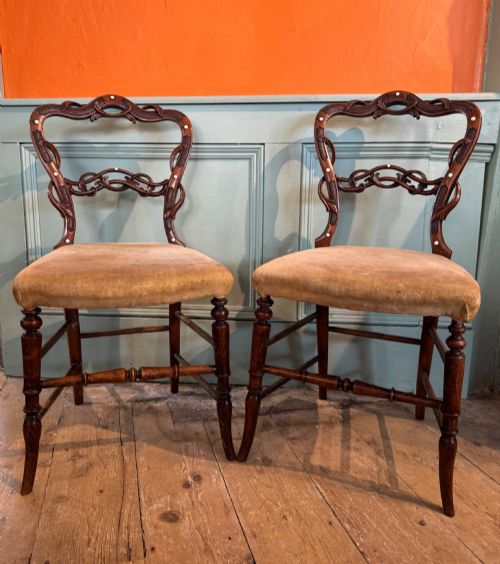
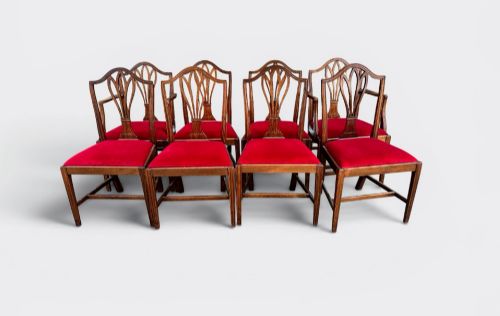
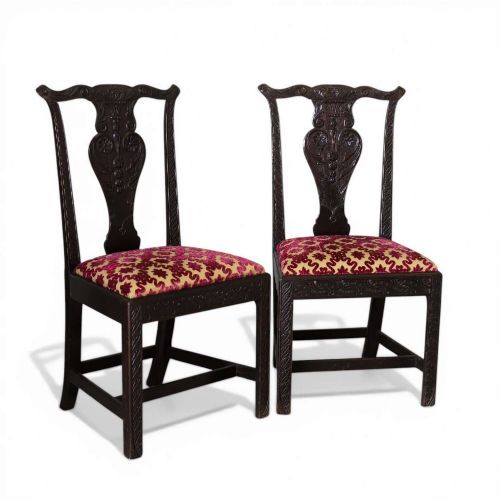
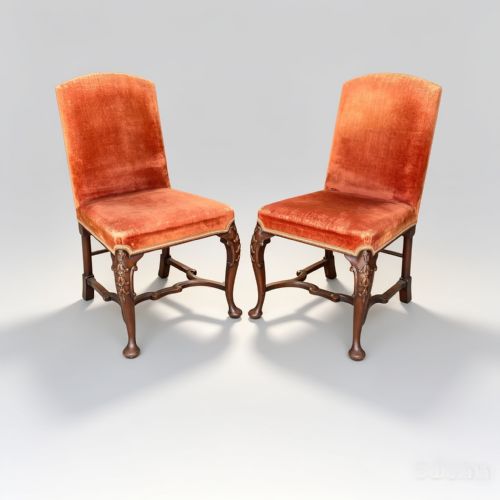
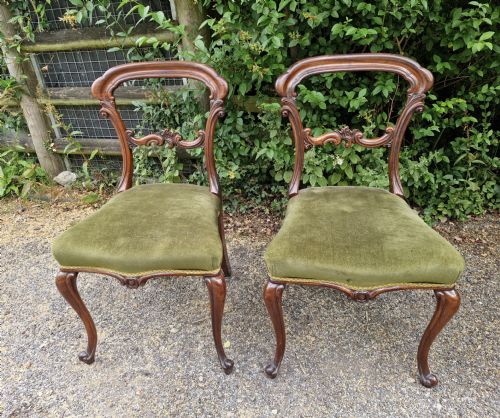
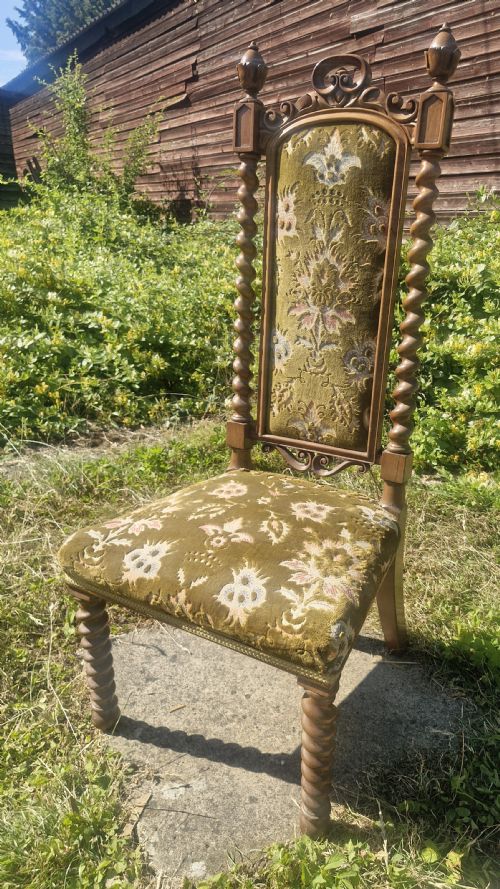
Velvet upholstered side chairs bring tactile depth and period character to a room, ranging from early Victorian rosewood frames to Georgian mahogany forms.
Velvet Upholstered Side Chairs
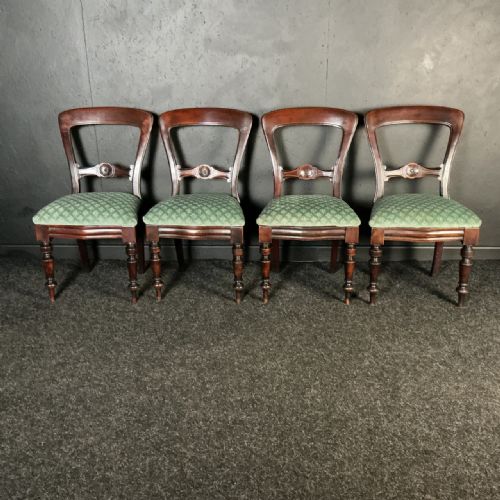
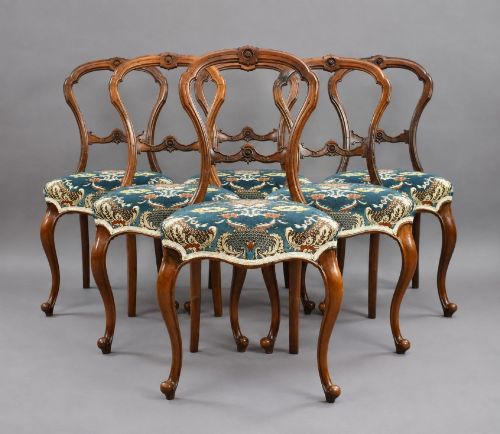
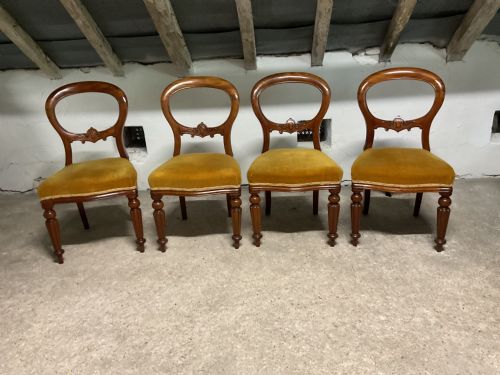
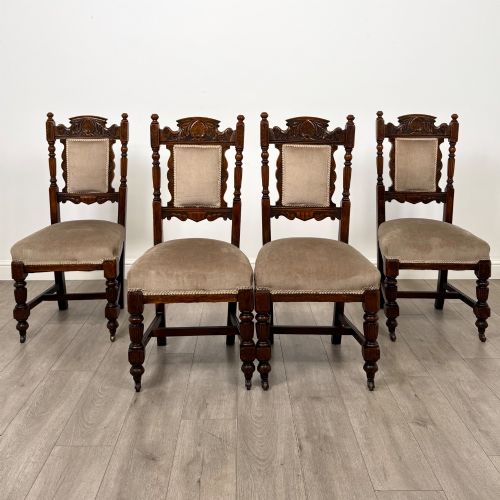
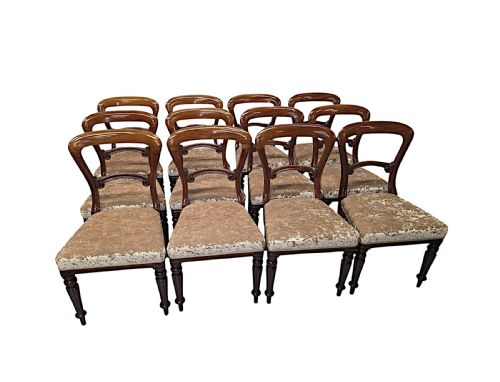
Velvet upholstered side chairs encompass seating designed for dining rooms, bedrooms, and occasional use, often appearing in matching sets or substantial groupings. You will frequently encounter Victorian mahogany balloon back chairs and Edwardian walnut designs on this page, alongside earlier Georgian and Regency examples.
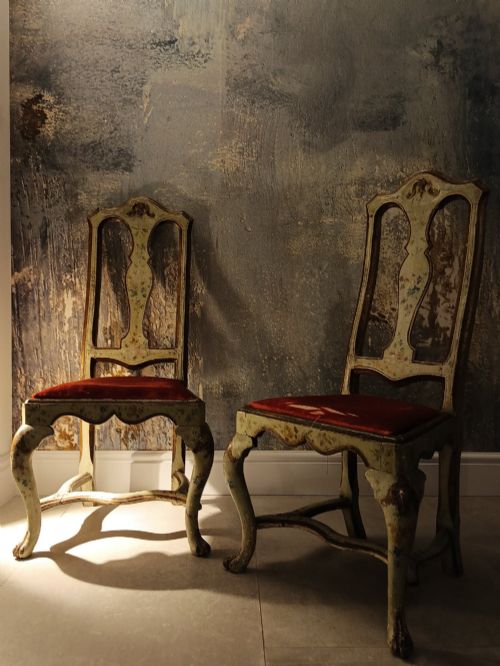
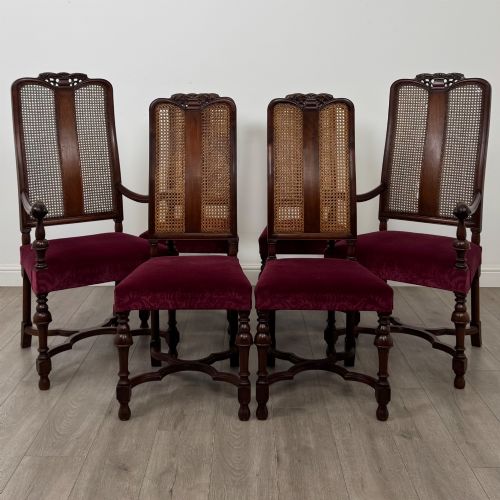
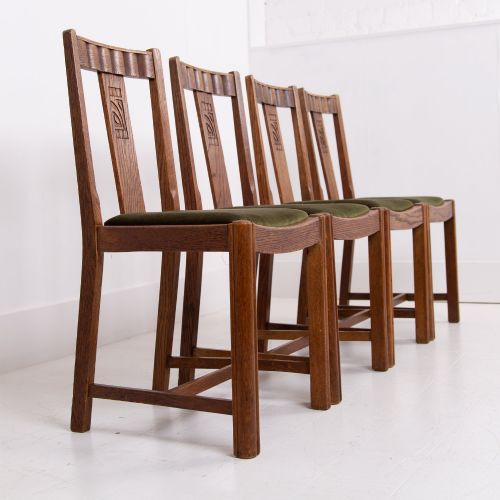
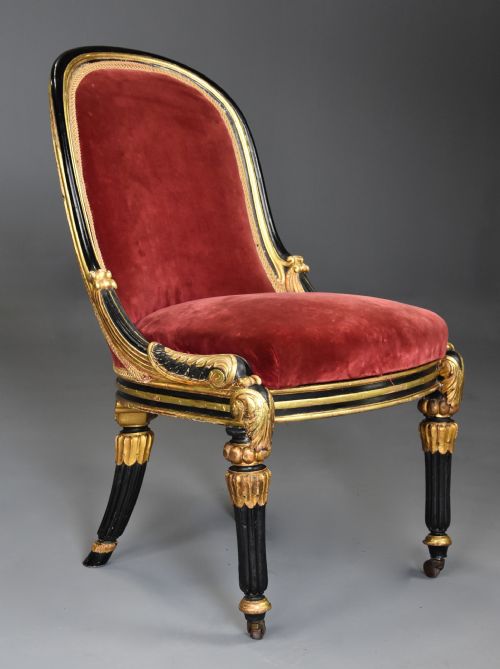
The materials span sturdy timbers such as mahogany, oak, walnut, and rosewood, paired with tactile textile coverings. These pieces cross various historical revivals, including Italian Rococo, Carolean Revival, and Arts and Crafts styles, reflecting the changing tastes of British interiors.
How they were made
Carpenters and cabinet makers shaped these frames from dense hardwoods like mahogany, rosewood, oak, and walnut, frequently employing carving, inlay, and ebonising. Timber selection dictated the structural strength of the chair, supporting intricate balloon backs, tulip legs, and scroll-carved details.
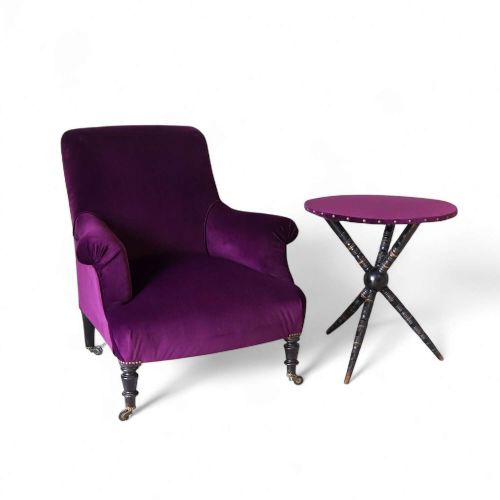
Upholstery involved textile applications ranging from historic cut-silk velvet to contemporary designer fabrics like Zoffany and William Morris velvet. Brass accents and internal webbing or stuffing completed the construction, securing the textile covering tightly to the wooden frame.
Listings feature velvet upholstery paired with traditional timber frames including mahogany, walnut, rosewood, and oak across Victorian and Edwardian eras.
What varies in quality
The refinement of the timber carving and the crispness of marquetry inlay distinguish finer examples from standard production. Cabinet makers who invested extra labour in shaping rosewood, walnut, or mahogany created pieces with superior visual weight and structural integrity.
The choice of textile covering and the execution of the upholstery contribute significantly to the overall standard of a chair. Pieces that retain harmonious proportions between the wooden frame and the velvet seat demonstrate higher levels of period craftsmanship.
Gillows·Blyth & Sons
The Velvet Upholstered Side Chairs Glossary
- Balloon back
- A chair back shaped in a continuous curve resembling a balloon, popular during the Victorian period. This design allowed for comfortable upright seating around dining tables.
- Bergère
- An enclosed armchair with upholstered sides and back, typically featuring an exposed wooden frame. These seats often utilise cane or textile panels.
- Marquetry
- Decorative inlay work where pieces of wood, brass, or other materials are fitted into a veneer to form geometric or floral patterns. This technique ornamented fine cabinet work.
- Carver
- An armchair designed to match a set of single dining chairs, traditionally placed at the head of the table. These seats include supportive armrests.
- Ebonising
- A finishing process that stains light wood to imitate expensive ebony. Makers used this technique on Regency and Victorian frames to create dark, polished surfaces.
Velvet Upholstered Side Chairs: Frequently Asked Questions
What periods do these chairs date from?
The listings span several centuries, with particular concentration in the Victorian and Edwardian eras. You will also discover earlier pieces originating in the Georgian and Regency periods.
Craftsmanship evolved across these eras, transitioning from carved oak and mahogany in the eighteenth century to rosewood and walnut designs later on.
Can I find matching sets of dining chairs?
Many listings offer matching sets ranging from pairs and quartets up to larger collections of six or twelve chairs. These sets often share uniform timber frames and textile upholstery.
Matching sets allow for cohesive seating around dining tables while retaining distinct period characteristics.
What woods were used for the frames?
Cabinet makers utilised a variety of hardwoods depending on the period and style. Mahogany and walnut appear regularly, alongside rosewood and oak.
Some Regency and nineteenth-century examples incorporate ebonised finishes or brass detailing to enhance the timber grain.