


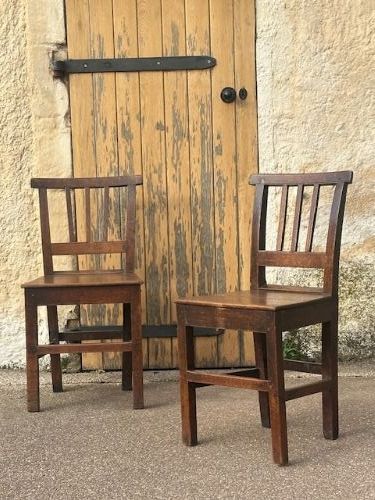

Scottish Oak Side Chairs
These scottish oak side chairs bring rugged utility and vernacular presence into a room, forged from sturdy timber and shaped by generations of cabinet-makers.
Scottish Oak Side Chairs
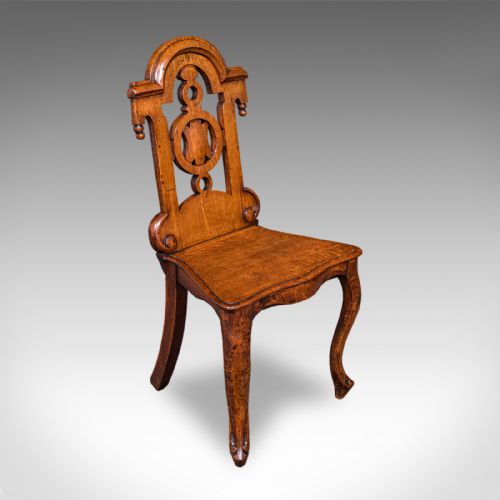
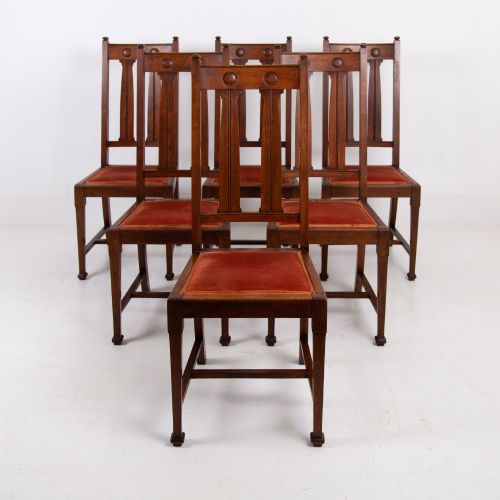
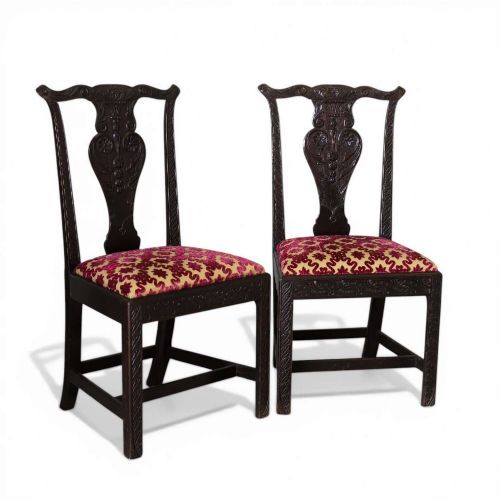
When you search for scottish oak side chairs, you are looking at timber seating solutions spanning several centuries of domestic and formal use. The selection ranges from vernacular joined chairs of the early nineteenth century to grand sets of Victorian dining chairs.
You are most likely to meet Victorian and nineteenth-century examples on this page, often built as hall chairs, reception seats or dining sets. These pieces reflect regional Scottish cabinet-making traditions, utilising native oak and distinct vernacular forms.
The styles shift from seventeenth-century clan chairs and Georgian proportions to Gothic Revival and Arts and Crafts interpretations. Sets of four, six, eight and fourteen dining chairs appear alongside pairs of hall chairs and individual gossip chairs.
Materials and construction
The primary material across these pieces is solid oak, occasionally described as golden oak, fashioned through traditional joinery and carving techniques. Frames are constructed to endure heavy daily use, employing pegged joints and robust stretchers.
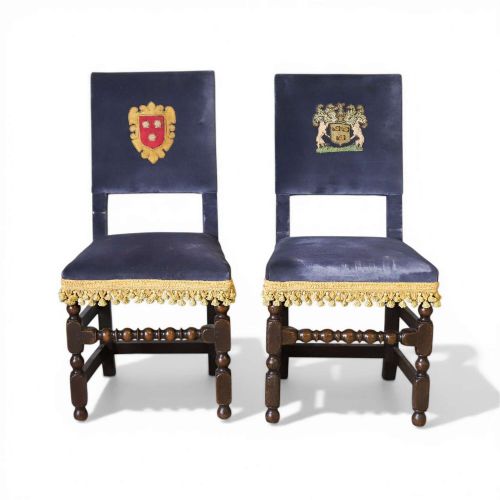
Upholstery varies from exposed timber panels to seats covered in velvet, leather, Zoffany fabric, metallic fringe and heraldic crests. Brass elements sometimes supplement the woodwork on specific period examples.
Clan chairs arrive complete with velvet upholstery and heraldic crests, ready for feudal boardrooms.
Judging the work
Quality in these chairs rests upon the integrity of the oak framing, the crispness of any carved detailing and the retention of original structural components. Pieces showing deep patination and honest timber grain stand apart from lesser items.
The harmony of matched sets and the precision of vernacular joinery dictate the standing of individual pieces within the broader range. Upholstery choices and heraldic additions further distinguish exceptional regional craftsmanship from standard production.
John Taylor and Son·Wheelers of Arncroach
The Scottish Oak Side Chairs Glossary
- Vernacular
- Local or regional building traditions that bypass academic architectural styles. These pieces rely on practical domestic design rather than grand metropolitan fashions.
- Gothic Revival
- An architectural and decorative style drawing inspiration from medieval forms. It introduces pointed arches and heavy carved tracery to nineteenth-century seating.
- Arts and Crafts
- A design movement valuing traditional craftsmanship and simple forms. It emerged strongly in the early twentieth century, prioritising natural materials and visible construction.
- Armorial
- Adorned with heraldic bearings or family crests. Such details often denote clan association or important institutional provenance.
- Joined chair
- An early form of wooden seating constructed by carpenters using mortise and tenon joints secured with wooden pegs. It precedes the widespread adoption of upholstered framed seating.
Scottish Oak Side Chairs: Frequently Asked Questions
How do I date a Scottish oak chair?
Dating relies on examining the construction methods, tool marks and stylistic markers present in the woodwork. Earlier pieces display joined framework and hand-carved details, while later nineteenth-century examples often incorporate machine-cut elements and distinct revival motifs.
Comparing the timber patination and historical upholstery foundations provides further clues to the era of manufacture. Regional traits, such as those found in vernacular pieces from the Northern Isles, help narrow down the specific period.
Were these chairs used for dining?
Many of the pieces recorded here function as dining chairs, often surviving in matched sets of four, six, eight or fourteen. Their robust oak construction made them suitable for daily domestic use around the table.
Other variations serve as hall chairs or reception seats, designed for occasional placement in entranceways rather than prolonged seating during meals.
What is a gossip chair?
A gossip chair is an early twentieth-century form designed for informal conversation, typically featuring an intimate or low-slung profile. These specialised seats offer a distinct alternative to standard upright dining or hall chairs.
Examples from workshops like Wheelers of Arncroach demonstrate regional interpretations of this domestic seating type.
How do I care for antique oak furniture?
Maintaining antique oak involves keeping the timber away from direct heat sources and sudden humidity changes to prevent splitting. Regular dusting with a dry, soft cloth preserves the natural finish and surface patination.
Avoid heavy silicone polishes that build up over time and dull the grain. Professional conservation is recommended for fragile upholstery like historic velvet or metallic fringe.