
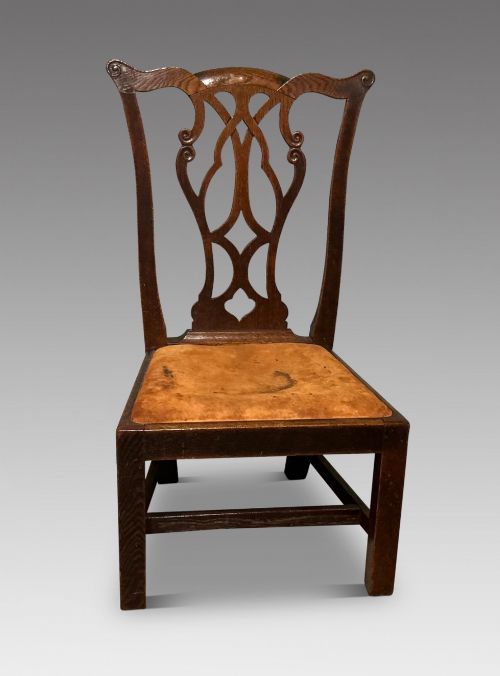
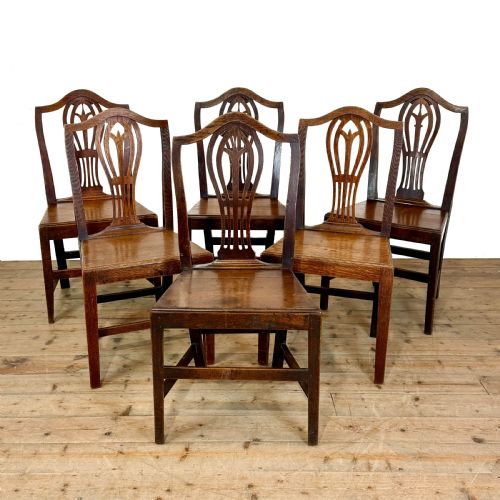


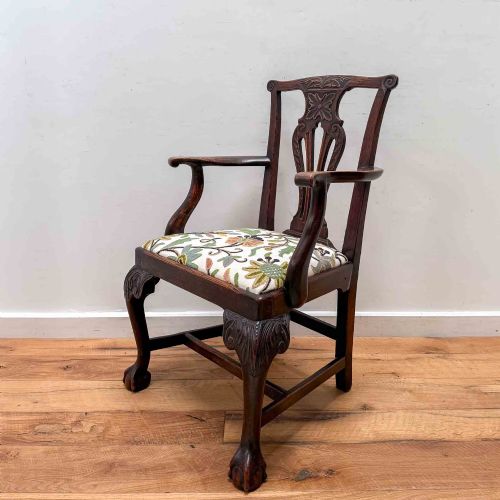


Chippendale Style Oak Chairs
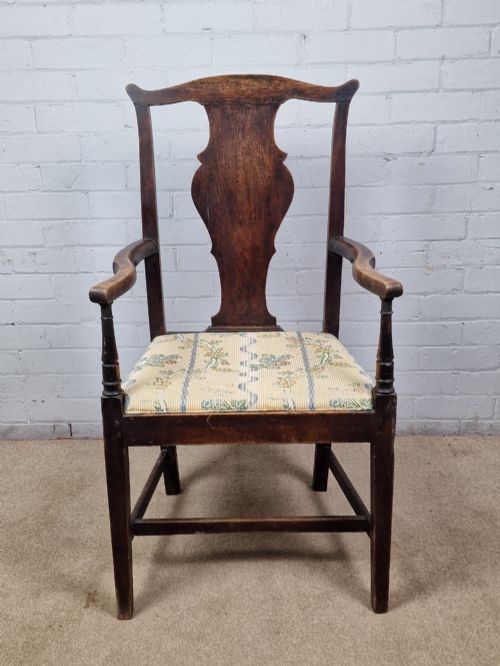
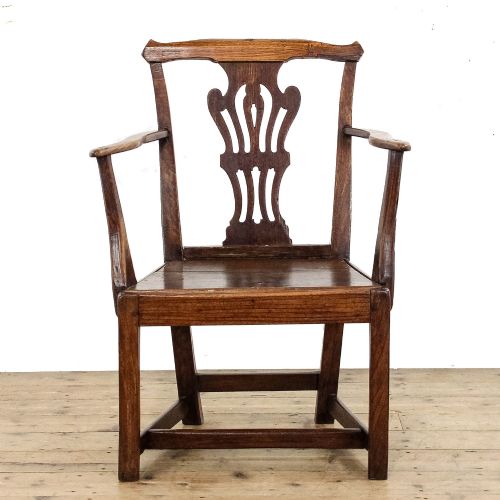
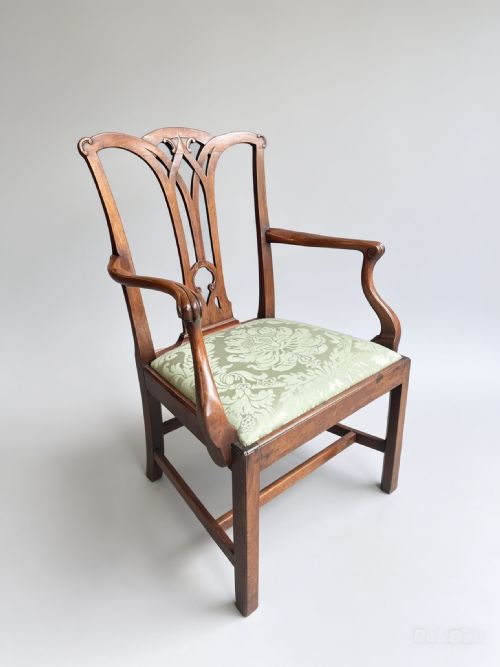
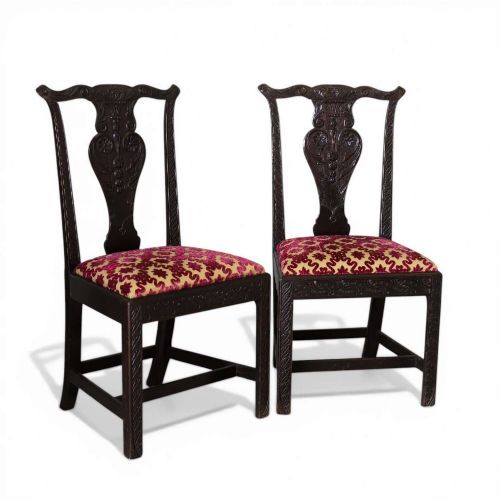
Chippendale style oak chairs combine robust provincial timber with classical eighteenth-century carving, offering both sturdy everyday seating and distinct historical character.
Chippendale Style Oak Chairs
How they were made
Makers utilised solid oak, frequently paired with elm for structural components in country pieces, alongside secondary timbers. Upholstered variants incorporate traditional textiles such as fabric, leather, damask, velvet, suede, and crewel work seats.
Construction relies on traditional joinery methods, featuring hand-carved splats, rails, and frames. The integration of carved ornamentation demonstrates the high level of provincial cabinet-making skill present during the Georgian and revival eras.
Apprentice pieces offer miniature perfection, proving that learning the trade involved making very small chairs for very big ambitions.
What varies in quality
The depth and crispness of the hand-carving define the upper tier of these chairs, separating standard provincial workshop output from exceptional cabinet work. Proportion and timber selection also drive distinction, with uniform grain and heavier timber scantlings marking superior examples.
Completeness alters the standing of multi-piece sets, where surviving matched groups maintain greater integrity than assembled suites. The quality of the original frame construction and the preservation of early surface patination determine the relative standing of individual items.
Waring
The Chippendale Style Oak Chairs Glossary
- Chippendale Revival
- A late nineteenth and early twentieth-century period marked by the re-creation of eighteenth-century furniture designs. This movement produced numerous dining sets and individual chairs emulating Georgian forms.
- George III
- The period spanning the reign of the third king of that name, associated with established neoclassical and rococo design influences in furniture. Pieces from this era often exhibit refined proportions and detailed carving.
- Side chair
- A chair without arms, designed primarily for use at a dining table. These items form the numerical majority in both historical and current dining sets.
- Apprentice piece
- A smaller or experimental item created by a craftsman to demonstrate skill. These objects frequently show exceptional attention to detail in their construction.
Chippendale Style Oak Chairs: Frequently Asked Questions
How do I identify a Georgian chair?
Examine the construction methods, timber patination, and carving details to determine the likely period of manufacture. Georgian pieces display hand-tooled joinery and timber characteristics consistent with eighteenth-century workshop practices.
Compare the proportions and splat design against documented pattern books from the era. Regional variations often appear in country pieces, showing local interpretations of metropolitan styles.
Can I use these chairs daily?
Solid timber construction makes these chairs fundamentally robust for regular seating use. Ensuring joints remain stable is key to safe daily habitation.
Consider the condition of the upholstery and internal webbing before heavy usage. Professional conservation can reinforce structural integrity without altering historical surfaces.
What is a gossip chair?
A gossip chair is an occasional seat type appearing in Edwardian production. These forms feature compact dimensions suited to specific domestic rooms.
Their presence alongside Georgian dining sets illustrates the broad span of dates found within this furniture category. They provide a lighter, more intimate seating alternative to heavy dining furniture.
How are large dining sets matched?
Large sets often comprise a mixture of armchairs and side chairs built to a unified design. Makers frequently produced configurations such as ten side chairs paired with two armchairs.
Evaluating the consistency of the oak grain and carving style helps determine if a set originated together. Minor variations in hand-carved details are normal in provincial furniture.