


Velvet Upholstered Settee
A velvet upholstered settee brings texture and nineteenth-century presence to a room, offering deep seating paired with tactile fabric.
Velvet Upholstered Settee
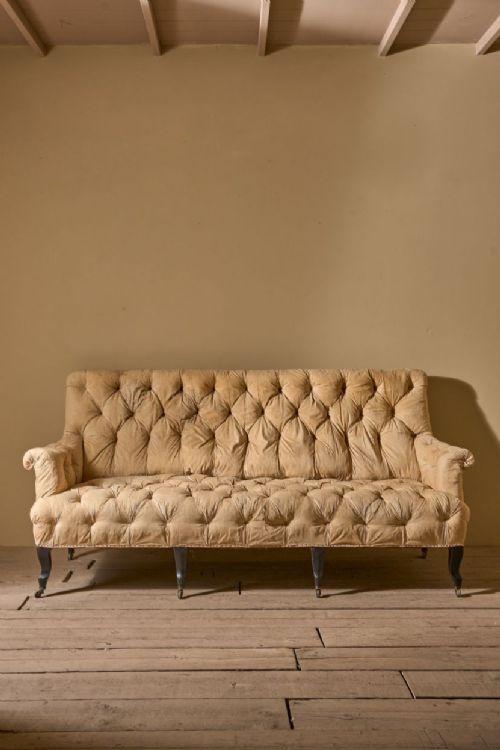
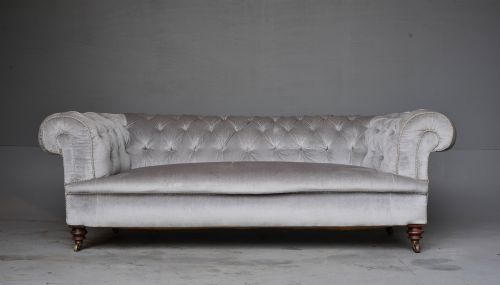
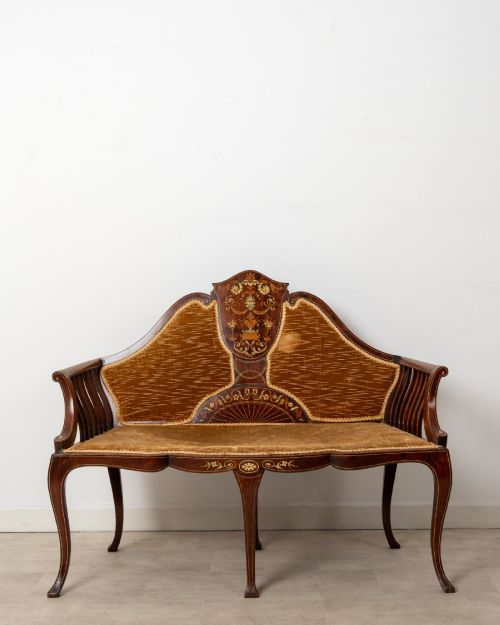
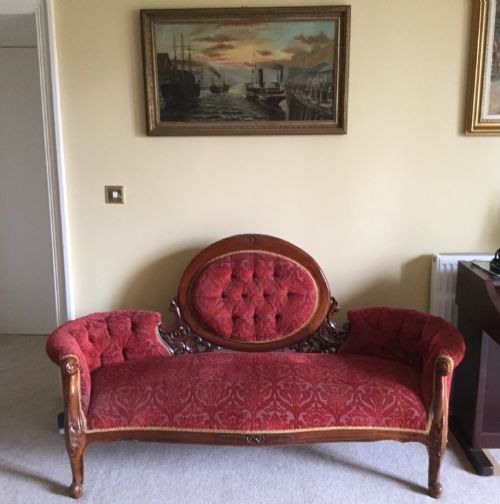
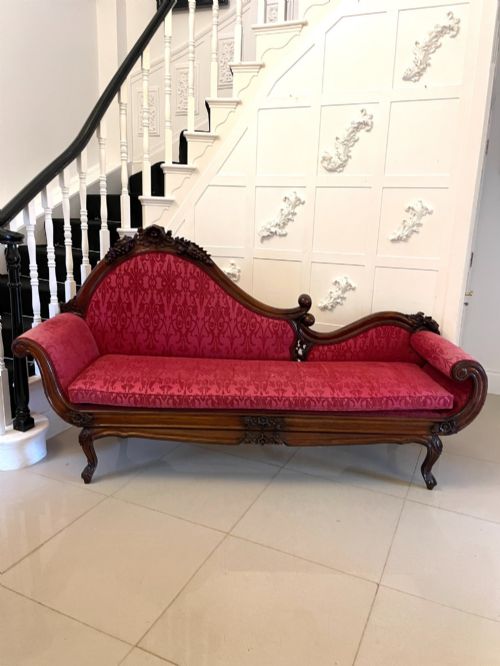
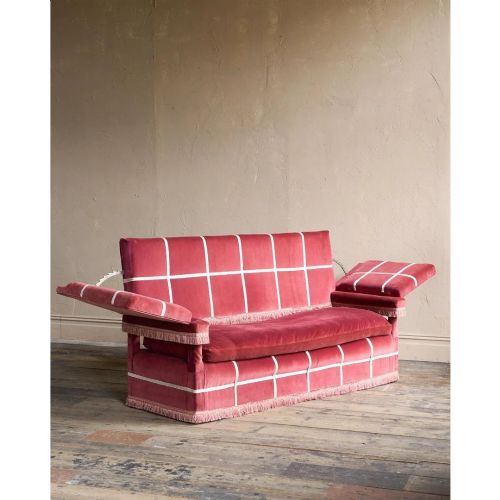
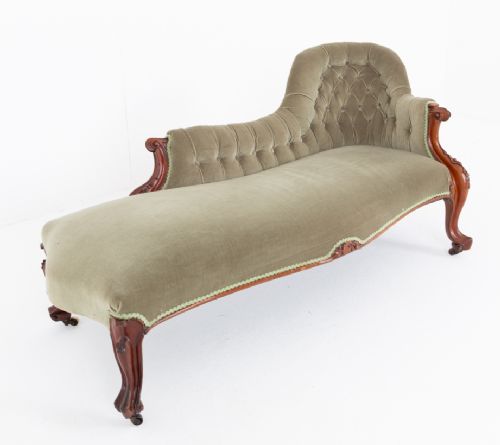
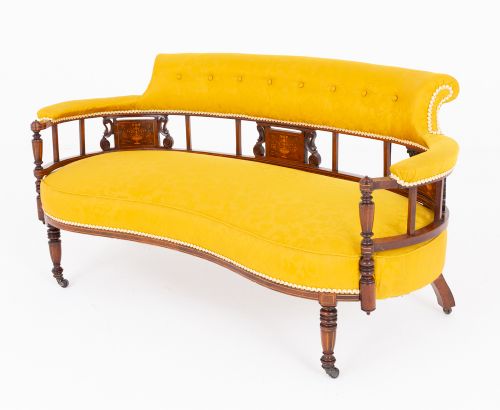
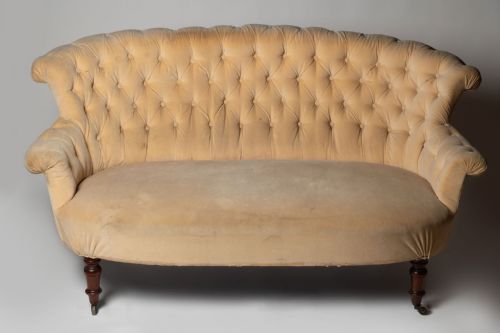
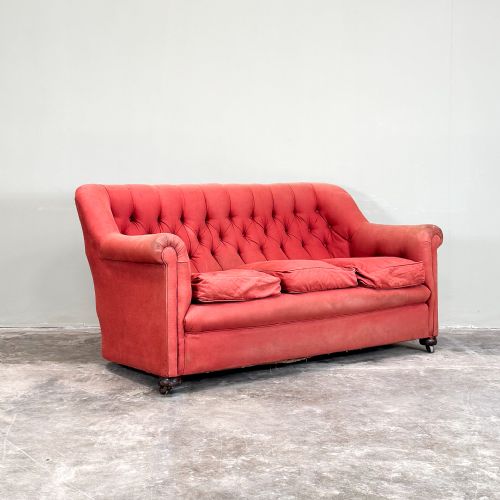
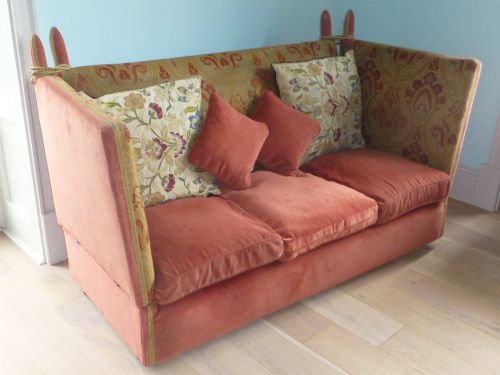
A velvet upholstered settee encompasses a range of nineteenth-century and early twentieth-century forms, including Victorian button-backed frames, Edwardian mahogany frames, and French couches. These pieces appear as double-ended sofas, chaise longues, Knole sofas, and window seats.
Materials and Construction
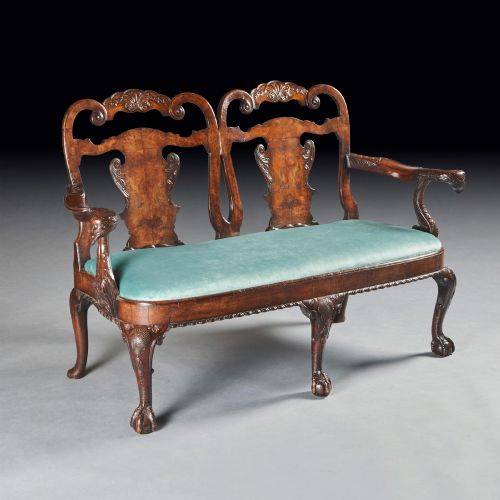
Frames rely on timbers such as mahogany, walnut, rosewood, and painted wood, occasionally accented with brass fittings or ball and claw legs. Wood carvers shaped structural elements in styles ranging from Victorian rococo revival to Chinese Chippendale.
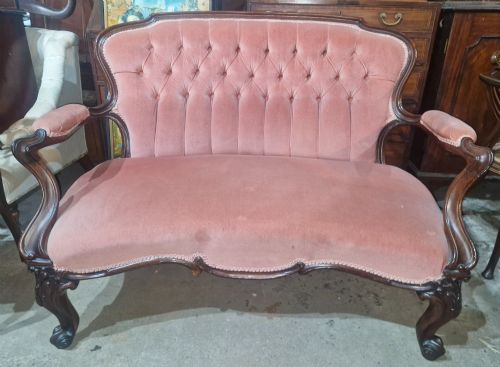
Upholstery incorporates velvet, brocade, and fabric trims, often supported by sprung settee bases or deep-seated padding. Drop arms and buttoned backs appear across nineteenth-century and early twentieth-century examples.
Distinctions in Execution
The distinction between standard examples and top-tier pieces rests on the carving of the wooden frame and the execution of historical styles such as the George II design or Howard style. Richly figured rosewood and walnut framing lift certain pieces above simpler painted or timber structures.
Original details like gilt finishes, tassel trims, and specialised upholstery choices such as deep pile brocade distinguish finer historical seating. Carved mahogany and walnut frames with substantial proportions represent the upper end of the range.
Howard and Sons
The Velvet Upholstered Settee Glossary
- Knole Sofa
- An early seating form featuring adjustable or drop arms tied with cords, designed to keep draughts at bay in large historic houses.
- Chaise Longue
- An upholstered long chair or day bed designed for reclining, combining the backrest of a sofa with an extended seat.
- Banquette Sofa
- An upholstered long bench seat, frequently associated with French seating and formal nineteenth-century interior arrangements.
- Camelback
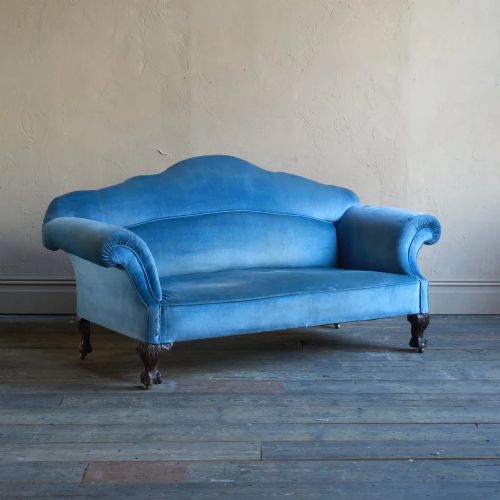
- A sofa backrest shape rising in a smooth, continuous convex curve reminiscent of a camel's hump, popular in Georgian and revival pieces.
- Buttoned Back
- An upholstery technique where depressions are secured with deep buttons arranged in a grid pattern, creating padded diamond shapes.
Velvet Upholstered Settee: Frequently Asked Questions
What periods do these settees come from?
The listings span the nineteenth and early twentieth centuries, capturing Victorian, Edwardian, and Napoleon III eras.
Revival styles from the Georgian and Chinese Chippendale periods also appear frequently among the selection.
How do I identify a Knole sofa?
A Knole sofa is recognizable by its high back and characteristic hinged or drop arms held in place by decorative braids and tassels.
This form originated for practical warmth in large historic reception rooms.
What woods were used for the frames?
Cabinetmakers utilised dense hardwoods including mahogany, walnut, and rosewood for structural durability and rich grain appearance.
Some pieces also feature ebonised timber, painted surfaces, or simpler domestic woods.
Where were chaise longues placed?
Large chaise longues served grand nineteenth-century reception salons, while smaller versions suited private bedrooms and window seats.
Their elongated seats allowed for reclining during daytime rest.