


Blue Upholstered Couch
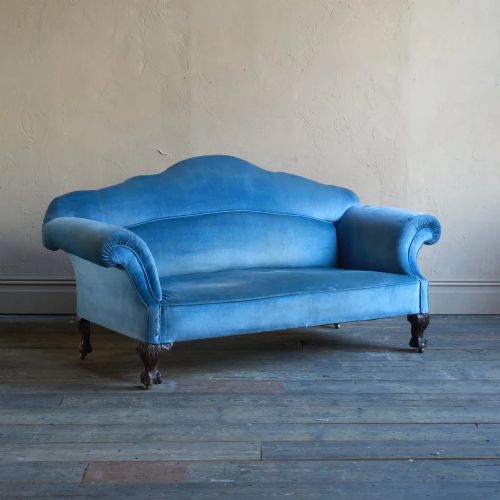
A blue upholstered couch brings warmth and character to a room, offering deep seating shaped by Victorian, Edwardian, and nineteenth-century hands.
Blue Upholstered Couch
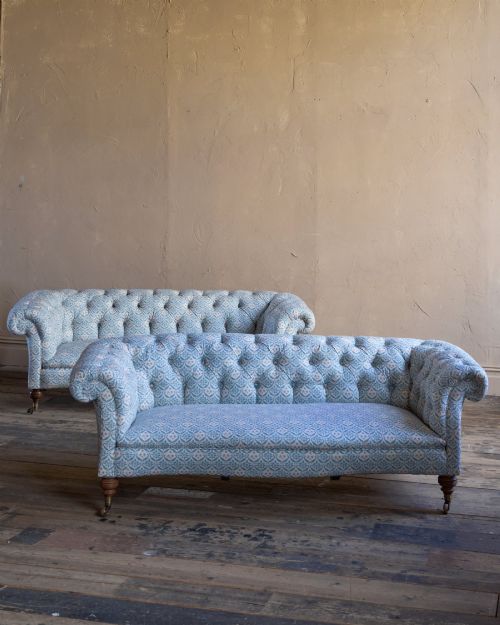
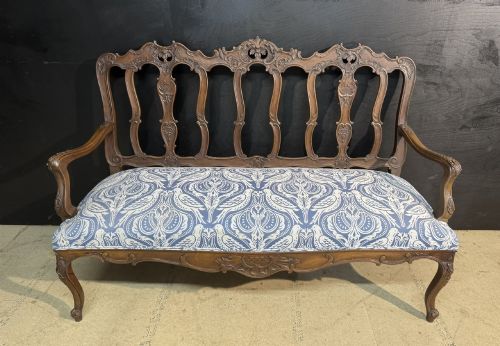
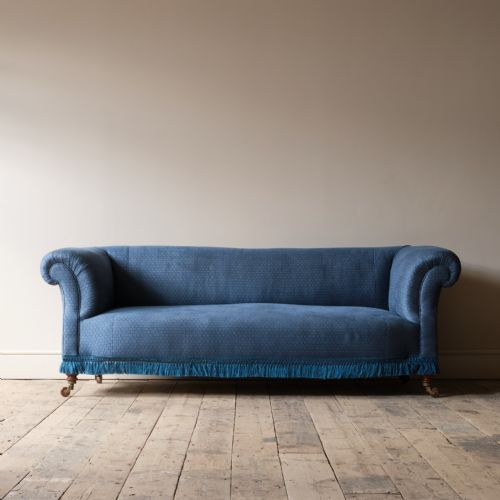
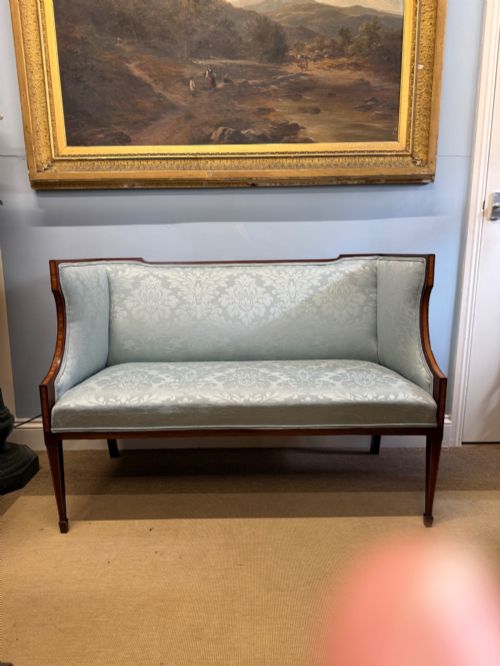
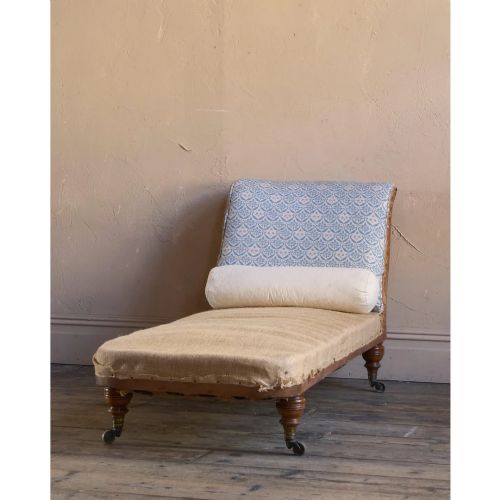
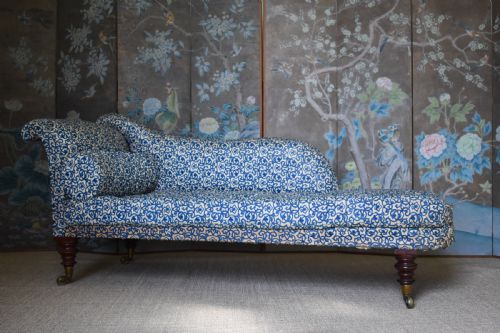
A blue upholstered couch encompasses nineteenth-century settees, Chesterfield sofas, day beds, and chaise longues surfaced in velvet, damask, fabric, and cotton. These seating forms originate primarily from Victorian and Edwardian periods, carrying traditional English, Rococo Revival, and Chinese Chippendale influences.
The version most commonly met on this page is the nineteenth-century Victorian or Edwardian sofa, often featuring carved walnut, mahogany, or timber frames. Such pieces range from button-back canapes and drop-arm settees to sprawling chaise longues resting on turned legs and original castors.
How they were made
Frames rely on solid timbers such as mahogany, walnut, beech wood, and satinwood, frequently shaped with ball and claw legs or carved details. Upholstery utilises tactile textiles like velvet, cotton, and damask, sometimes finished with tassel trim or button backs.
Structural support integrates traditional joinery alongside brass components, wood framing, and turned legs fitted with castors. Makers shaped these couches to accommodate formal drawing rooms and country house interiors alike.
Listings feature nineteenth-century and Edwardian pieces built from mahogany, walnut, and beech wood.
What varies in quality
The refinement of the timber carving and the architectural grace of the frame separate standard seating from exceptional works. Finer examples display meticulous joinery, balanced proportions, and sophisticated stylistic revivals such as Rococo or Chinese Chippendale.
The integrity and character of the underlying frame, alongside the execution of the woodwork, dictate the standing of each piece. Superior items retain their original structural elements and distinct period silhouettes.
Howard and Sons·Hampton and Sons·Miles and Edwards
The Blue Upholstered Couch Glossary
- Chesterfield sofa
- A deep-buttoned upholstered couch traditionally characterised by arms and back of the same height. It remains a staple of nineteenth-century seating.
- Chaise longue
- An upholstered sofa shaped like a chair with a long seat large enough to support the legs. These pieces appear frequently in nineteenth-century forms.
- Canape
- An ornamental upholstered sofa with an exposed wooden frame, often associated with French styles. Victorian examples showcase carved walnut structures.
- Day bed
- A couch that functions as a seat during the day and a bed for resting. Late Victorian variants often sit upon turned legs with original castors.
Blue Upholstered Couch: Frequently Asked Questions
What is a blue upholstered couch?
A blue upholstered couch is a nineteenth or early twentieth-century seating piece covered in velvet, damask, or fabric. These include Chesterfields, settees, and chaise longues.
They reflect periods such as the Victorian and Edwardian eras, combining timber frames with traditional upholstery methods.
How do I date a blue upholstered couch?
Dating relies on identifying structural clues like turned legs, wood types such as mahogany or walnut, and specific revival styles. Nineteenth-century pieces often display hand-carved details and original castors.
Looking at the silhouette, whether a camelback or a button-back canape, helps connect the piece to Victorian or Edwardian traditions.
Where were these couches used?
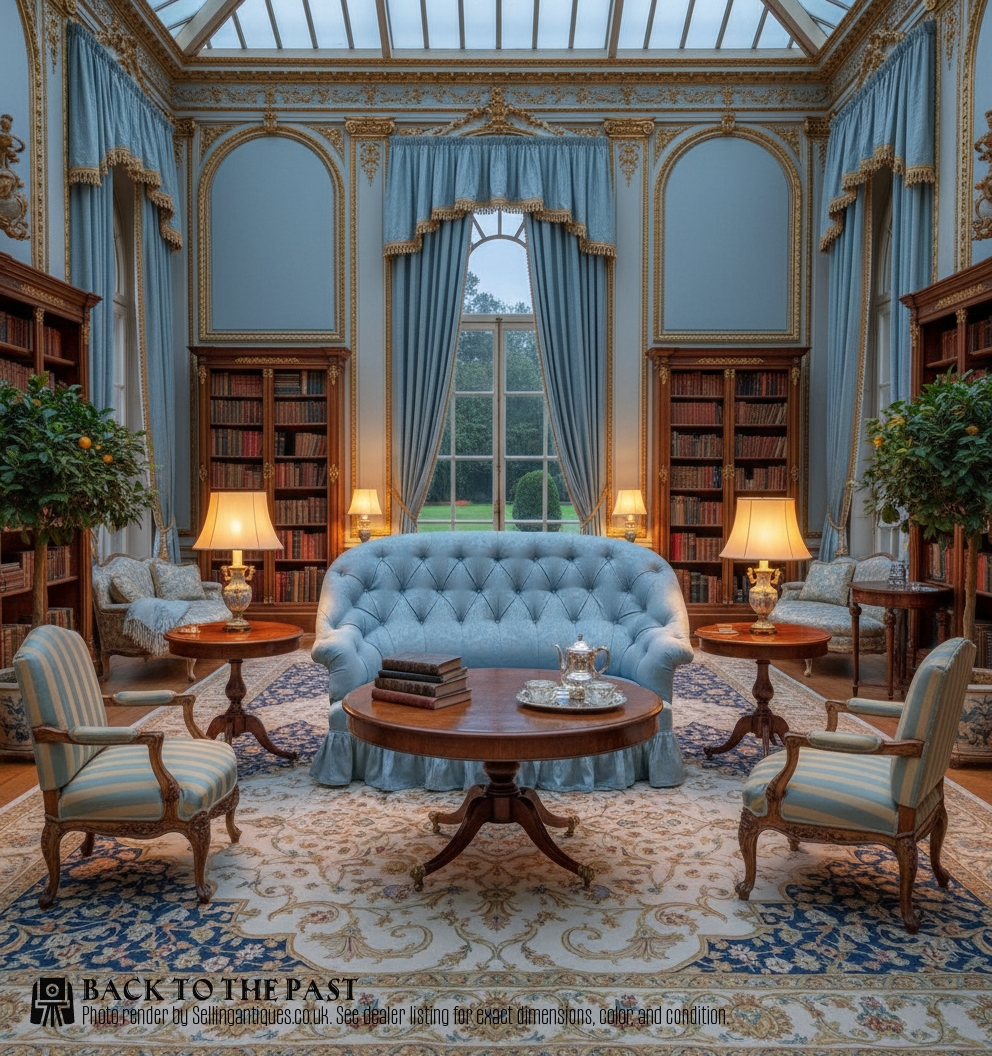
These couches were traditionally placed in formal drawing rooms, libraries, and bedrooms of English country houses. They served as comfortable spots for reading, resting, or receiving guests.
Day beds and chaise longues were particularly popular for afternoon relaxation in private chambers.
How do I care for antique upholstery?
Preserving velvet, cotton, and damask upholstery involves gentle vacuuming with a soft brush attachment to remove dust. Keeping the fabric away from direct sunlight prevents fading.
Wooden frames benefit from occasional polishing with suitable wax to maintain the timber and walnut surfaces.