
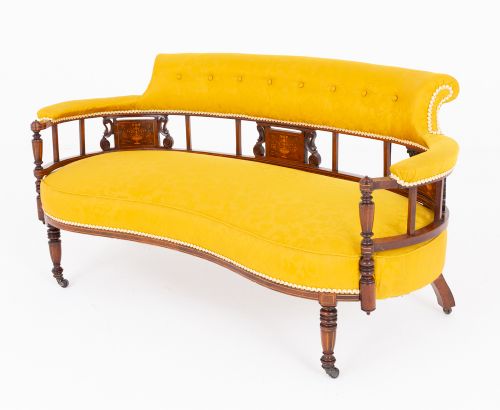


Edwardian Velvet Sofa
When you want an edwardian velvet sofa, you are looking at upholstered seating that brings period texture and timber frames into a modern room.
Edwardian Velvet Sofa
An edwardian velvet sofa covers a range of upholstered seating forms including settees, double ended sofas, salon suites, and day beds. The pieces seen span multiple periods from the nineteenth century through the early twentieth century, alongside specific revivals like Chinese Chippendale and Queen Anne. You will find compact petite frames alongside larger conversation seats and day beds.
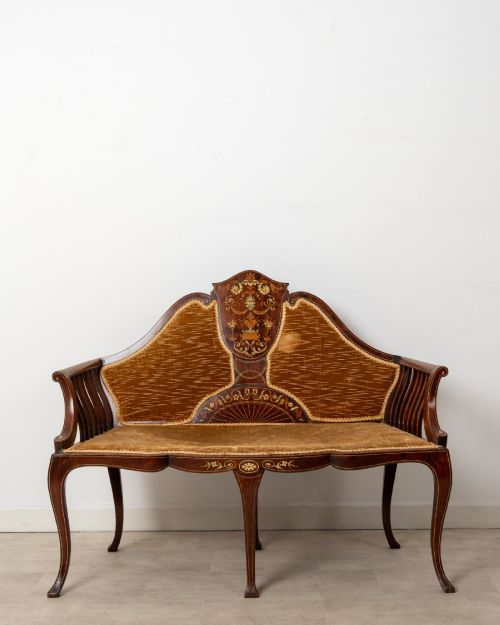
The materials recorded across these items combine timber frames in mahogany, walnut, rosewood, and satinwood inlay with soft pile fabric and velvet upholstery. Brass hardware and decorative trim frequently appear on frames and edges. These seating pieces were built for formal drawing rooms and sitting spaces.
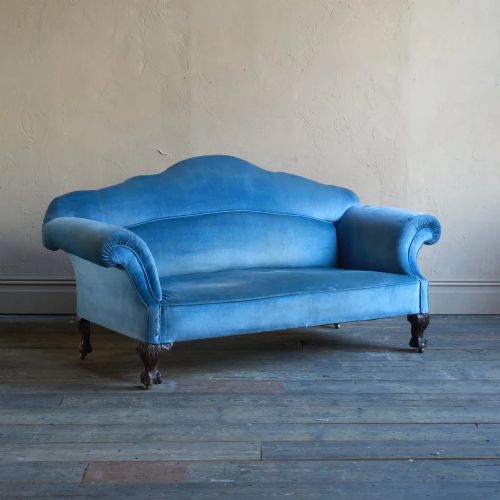
The specific version most common in this selection is the mahogany inlaid settee or sofa, often retaining its velvet or deep pile brocade covering. Frames range from straightforward wood constructions to elaborate carved revival styles with ball and claw legs. Many examples maintain their original sprung bases or buttoned backs.
How they were made
Makers constructed these frames from solid hardwoods like mahogany, walnut, and rosewood, frequently incorporating satinwood inlay and detailed carving. Joinery relied on traditional methods to support heavy sprung seat bases and upholstered bodies. Timber surfaces were polished or painted depending on the stylistic demands of the period.
Upholstery techniques involved deep buttoning, sprung bases, and tight pile fabrics such as velvet, brocade, and leather. Edges often featured trimming, contrasting fabric panels, or exposed polished wood frames. Skilled artisans combined interior webbing and springs with dense stuffing to shape the backrests and seats.
The furniture styles span Edwardian, Victorian, Chippendale Revival, Arts and Crafts, and Belle Epoque periods.
What varies in quality
The degree of refinement in the timber carving and inlay work dictates the visual distinction of each piece. Simpler painted or plain mahogany frames sit at one end, while elaborate rosewood surfaces with delicate satinwood inlay represent higher workmanship. The intricacy of the frame carpentry directly reflects the original ambition of the piece.
The execution of the upholstery and the choice of covering material define the finish of the seating. Original velvet, deep buttoning, and specialised textiles like brocade require high skill to maintain tension and shape over time. Pieces retaining branded maker details or documented workshop origins show distinct build standards.
Howard and Sons·William Birch·Hampton and Sons·James Shoolbred
The Edwardian Velvet Sofa Glossary
- Settee
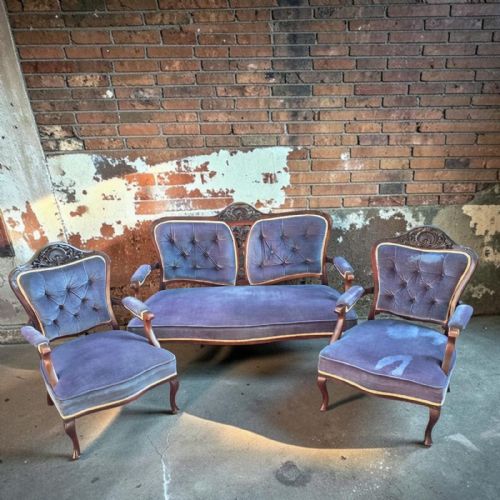
- A long upholstered seat with a back and arms, designed for more than one person. These seating forms often match salon chairs in formal room suites.
- Knole sofa
- A traditional English sofa style featuring hinged or adjustable high arms tied with cords. This form appears covered in velvet with deep upholstery.
- Chaise longue
- An upholstered long chair intended for reclining, combining the backrest of a sofa with the seat length of a day bed. Examples frequently feature carved wooden frames and buttoned velvet.
- Satinwood inlay
- Decorative woodwork where contrasting light satinwood is fitted flush into darker timber surfaces like mahogany or rosewood. This technique decorates the crest rails and frame borders of Edwardian salon pieces.
- Buttonback
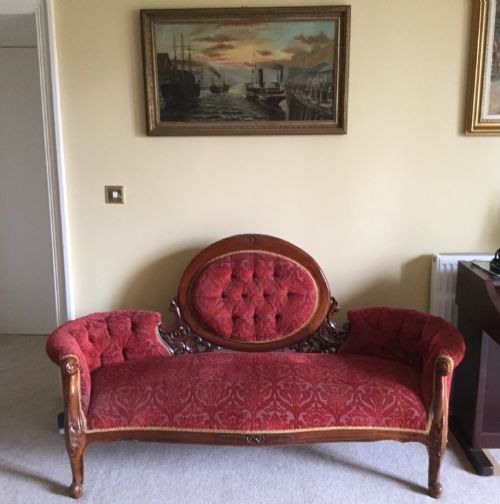
- An upholstery method where tufting buttons are pulled deep into the padding to create a diamond pattern. This technique secures the interior filling while providing texture to velvet surfaces.
Edwardian Velvet Sofa: Frequently Asked Questions
What is an edwardian velvet sofa?
An edwardian velvet sofa is a piece of period upholstered seating typically constructed with a hardwood timber frame and covered in a soft pile textile. These items include salon settees, day beds, and compact couches originating from the early twentieth century and late nineteenth century.
They combine functional seating with decorative woodwork such as mahogany frames and satinwood inlay. Many examples retain traditional buttoning, sprung bases, and velvet upholstery.
How do I identify an edwardian sofa?
You can identify an edwardian sofa by examining its timber frame, decorative inlay, and overall silhouette. These pieces often feature lighter mahogany or rosewood construction compared to heavy Victorian furniture, alongside subtle inlaid details and tapered or ball and claw legs.
Checking for maker stamps on the timber frame or upholstery webbing can also confirm the period and origin. The presence of salon suite matching chairs often indicates the same date and provenance.
How do I care for antique velvet?
Care for antique velvet by keeping the fabric away from direct sunlight to prevent fading and colour loss. Regular gentle brushing with a soft bristle tool helps maintain the pile direction and removes dust.
Avoid using water or chemical cleaners directly on delicate old textiles to protect the fibres. Professional textile cleaning is recommended for addressing deeper marks or stains.