


Queen Anne Settee
A queen anne settee brings fluid walnut lines and deep seating into a room, offering the graceful curves that define early eighteenth-century seating forms.
Queen Anne Settee
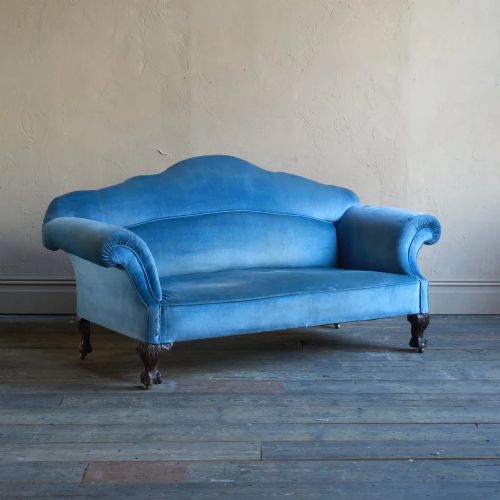
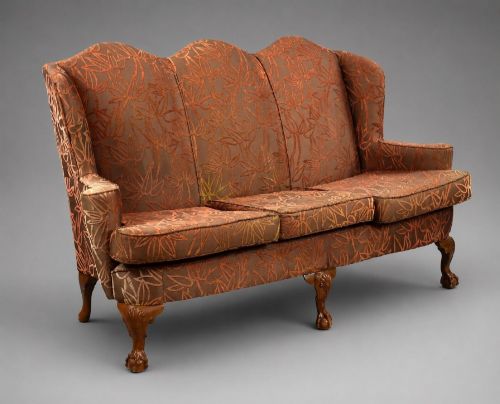
When you search for a queen anne settee, you are looking at upholstered seating forms shaped by the distinct design vocabulary of the early eighteenth century. These pieces emerge in walnut and mahogany timbers, taking the form of two-seat and three-seat settees, wingbacks, and chair-back designs.
You are most likely to meet revival pieces from the late nineteenth and early twentieth centuries on this page, alongside period examples. These later interpretations adopt the characteristic double chair-backs, cabriole legs, and pad or ball and claw feet associated with the original aesthetic.
The evidence shows variations including bergere seating, decorative japanned finishes, and window seats. These items range from compact two-seaters to longer three-seat sofas carrying revival styles such as George II and Chippendale influences.
How they were made
Cabinetmakers built these frames primarily using walnut and mahogany, shaping the timber to create smooth, unbroken lines along the stiles and rails. Woodcarving appears on knees and splats, while brass hardware secures internal joinery and decorative elements.
Upholstery forms a major part of the construction, utilising traditional webbing, stuffing, and coverings in velvet, leather, and various fabrics. Frames frequently incorporate bergere panels or pad feet to ground the upholstered body.
Materials recorded across the archive include mahogany, walnut, leather, velvet, brass, and traditional upholstery fabric.
What varies in quality
The distinction between a standard revival piece and a finer construction lies in the depth of timber carving and the integrity of the frame. Superior examples display crisply turned cabriole legs and well-proportioned chair backs that reflect careful adherence to period proportions.
Upholstery choices and finish application also divide the range, from simple fabric coverings to intricate japanned surfaces and leather upholstery. The cohesion between the wooden frame and the upholstered elements determines the overall success of the piece.
The Queen Anne Settee Glossary
- Cabriole leg
- A furniture leg that bends outward in a convex curve and tapers inward in a concave curve, ending in a foot. This form mimics animal limbs and appears on many eighteenth-century and revival settees.
- Bergere
- An enclosed upholstered armchair or settee with an exposed wooden frame and woven cane panels on the sides or back. This style offers lighter visual weight than fully padded upholstery.
- Pad foot
- A simple, rounded foot at the base of a cabriole leg that rests flat on the floor without a separate platform. It represents an early form found on walnut seating.
- Splats
- The vertical wooden strip down the centre of a chair or settee back, often vase-shaped or pierced. It provides structural support and lumbar comfort.
Queen Anne Settee: Frequently Asked Questions
How do I identify a period piece versus a revival piece?
Period pieces date back to the eighteenth century, showing natural wood ageing, hand-cut joinery, and wear patterns consistent with extended use over centuries.
Revival pieces originate from later periods like the Edwardian era or the 1930s, utilising machine-assisted construction methods and twentieth-century hardware while copying earlier aesthetic forms.
What woods are commonly used in these settees?
Walnut is the primary timber seen in earlier examples and revival pieces, valued for its rich grain and suitability for carved details. Mahogany also appears frequently in later revival forms.
Frames incorporate secondary woods for internal bracing, while surface treatments sometimes include japanned finishes over the primary timber.
How were these settees used historically?
These settees served as formal seating in reception rooms and parlours, accommodating multiple people before the dominance of the modern sofa. Wingback versions provided protection from drafts in unheated spaces.
Shorter two-seat forms and window seats functioned as movable seating positioned near windows or conversational groupings within large interiors.
What upholstery materials should I expect?
Listings feature velvet, leather, and various textiles, alongside traditional stuffed upholstery methods. Some items incorporate woven cane panels within wooden frames.
Upholstery fabrics often reflect the era of the settee's creation or subsequent re-upholstering projects undertaken by previous owners.