


Curved Back Bench
These curved back bench pieces offer sweeping lines and intimate seating, combining historical joinery with practical comfort for any room.
Curved Back Bench
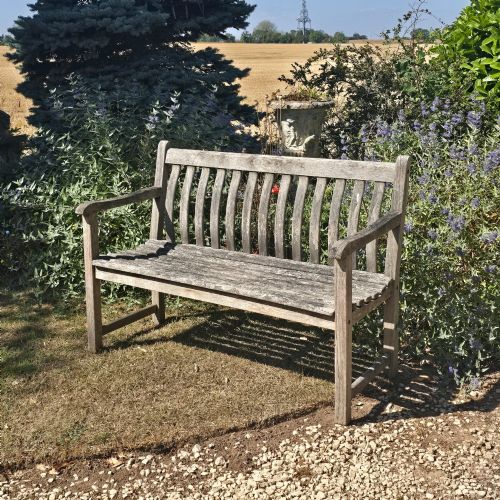
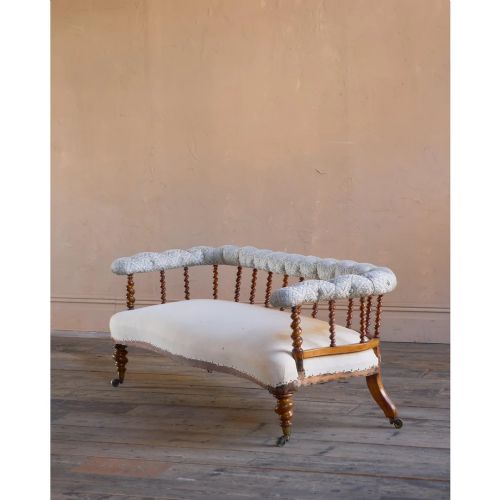
When you search for a curved back bench, you encounter forms that span intimate indoor seating and sturdy garden furniture.
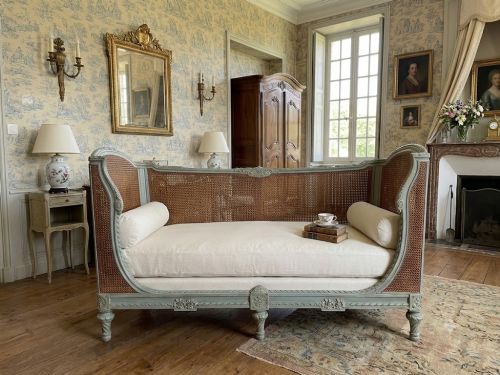
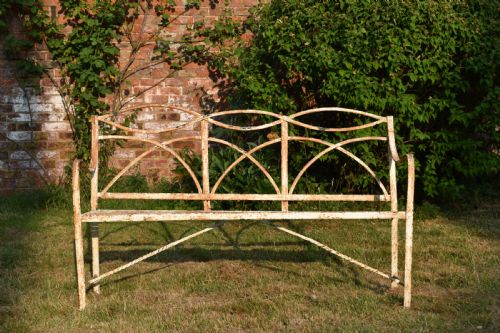
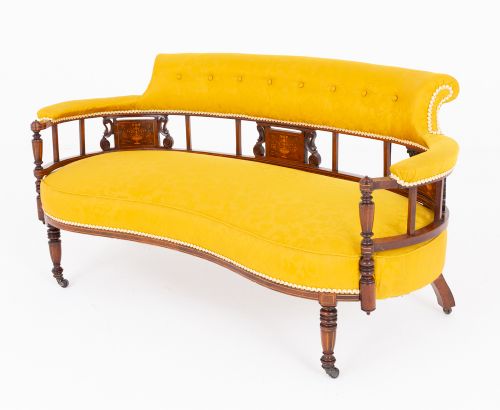
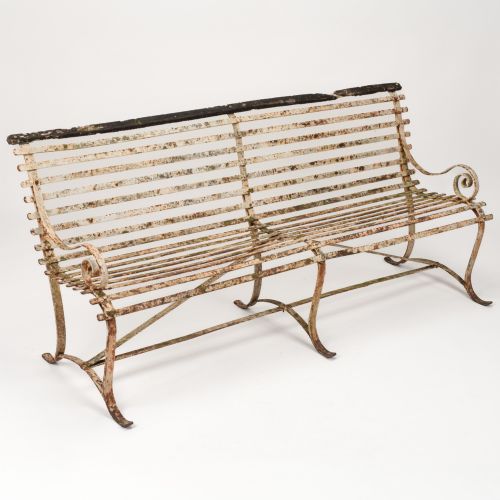
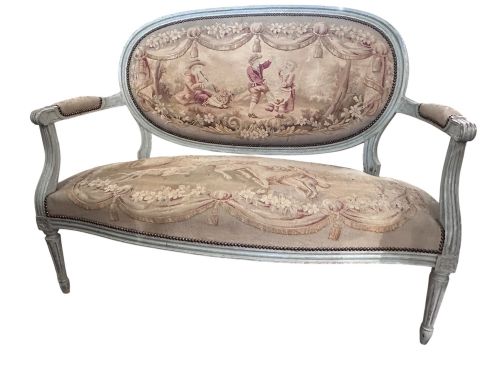
The pieces on this page range from early oak and pine barrel settles to Regency wrought iron garden benches and refined Edwardian or Louis XVI style settees.
You are most likely to meet wooden settles with concave panelled backs or iron garden seats shaped to follow the body.
How they were made
Timbers such as oak, mahogany, pine and beech form the structural frames, often shaped with steam or joined through traditional panelling.
Metalwork relies on wrought iron strapwork for outdoor garden benches, while indoor seating frequently incorporates cane, brass accents and upholstered fabric.
Surface treatments include traditional wax finishes, paint layers and intricate wood inlay.
Several pieces wrap entirely around the sitter, proving our ancestors took their cosiness very seriously indeed.
What varies in quality
The standard of a curved back bench rests on the integrity of its curved wooden members or the precision of its iron strapwork.
Examples from the Georgian and Regency periods demonstrate sophisticated joinery and careful proportion, while later revival pieces rely on stylistic decorative carving and painted detail.
The choice of primary timber and the survival of original surface finishes, whether cane, paint or polished mahogany, define the standing of each piece.
C. Hindley & Sons·Thonet
The Curved Back Bench Glossary
- Settle
- A wooden bench with a high solid back, armrests and often a closed base to block draughts. These pieces frequently feature curved or barrel backs designed for domestic warmth.
- Strapwork
- Ornamental work consisting of flattened interlaced bands, frequently seen in metal on Regency garden benches. This technique adds structural rigidity alongside decorative rhythm.
- Canapé
- An upholstered French sofa, typically featuring exposed carved woodwork and an elongated seat. Such pieces often display Louis XVI style characteristics.
- Barrel back
- A semicircular enclosing backrest that curves forward to form armrests. This construction wraps around the sitter for comfort and shelter.
Curved Back Bench: Frequently Asked Questions
Where were barrel settles used?
Barrel settles were traditionally placed near hearths in large halls and farmhouses to shield occupants from cold draughts.
The high wooden panels trapped heat from the fire while the curved back created a private, enclosed seating area.
How do I care for iron garden benches?
Wrought iron garden benches require regular inspection for moisture and rust to preserve the metal strapwork.
Keeping the surface painted and storing the piece under cover during harsher months protects the original material.
What is the difference between a settle and a settee?
A settle is traditionally constructed from solid wood with high panelled backs designed for draughty hallways or kitchens.
A settee is typically an upholstered indoor seat built with cushions, fabric and exposed wooden frames for parlours and salons.
How do I identify a Regency garden bench?
Regency garden benches are distinguished by geometric iron strapwork, scroll arms and classical proportions reflecting the early nineteenth century.
They are built to withstand outdoor elements while maintaining the architectural styling of the period.