
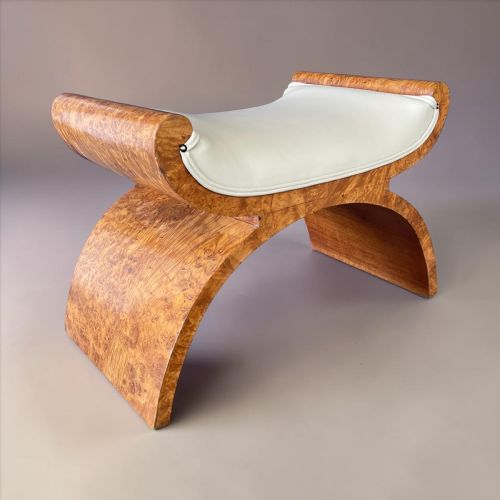
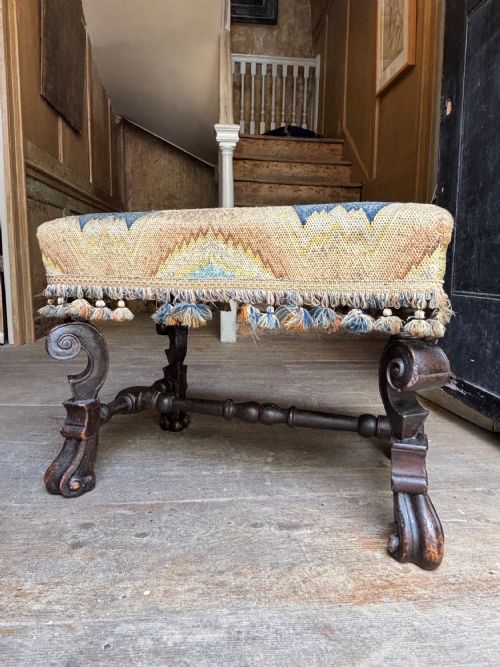


Walnut Upholstery Bench
These walnut upholstery bench pieces span centuries of seating design, offering practical comfort paired with rich timber frames for the discerning interior.
Walnut Upholstery Bench
A walnut upholstery bench encompasses a broad spectrum of seating forms, ranging from compact stools and footstools to expansive settees and sofas. Buyers exploring this category encounter pieces rooted in the seventeenth century up through the art deco period.
The selections on this page demonstrate considerable stylistic variety, drawing upon Victorian, Queen Anne, Louis XV, and Arts and Crafts traditions. Stools and settees dominate the offerings, frequently incorporating elaborate carved woodwork alongside textile or leather seats.
Origins span English and continental workshops, reflecting regional preferences in furniture construction from the 17th Century to the 1930s. Each object balances structural timberwork with soft upholstery to create functional seating.
Materials and construction methods
Makers utilised solid walnut and burr walnut for the primary framework, often applying carved ornamentation to the legs, rails, and crests. Timber selection dictates the grain pattern and structural integrity of each bench or settee.
Upholstery relies on traditional textiles, velvet, fabric, tapestry, and leather, occasionally complemented by cane panels inserted into the wooden frames. These materials are secured to support systems designed for domestic seating.
The listings here feature walnut frames paired with velvet, leather, and cane across several centuries of design.
Assessing quality in walnut seating
Distinction across the range rests upon the crispness of the carved detail in the walnut timber and the sophistication of the period style. Pieces exhibiting exuberant baroque forms or refined revival details demonstrate superior craftsmanship.
The integrity of the frame construction and the fidelity of the upholstery materials further differentiate standard production from finer examples. Selection of burr walnut and integration of antique textiles elevate the execution of the piece.
Harry and Lou Epstein
The Walnut Upholstery Bench Glossary
- Carolean
- Pertaining to the reign of Charles II, known for lavish baroque woodcarving and rich upholstery.
- Burr walnut
- A prized timber veneer sourced from walnut tree growths, valued for its swirling grain patterns.
- Caned
- Woven plant material forming breathable panels within wooden chair and bench frames.
- Tapestry
- Heavy hand-woven or machine-woven textile frequently employed for historic seat coverings.
- Louis XVI Revival
- A nineteenth-century design movement emulating neoclassical French furniture forms and straight tapered legs.
Walnut Upholstery Bench: Frequently Asked Questions
What periods do these walnut benches represent?
The inventory encompasses examples stretching from the seventeenth century through to the art deco era of the 1930s. Victorian, Edwardian, and various revival styles also appear frequently.
Each period contributes distinct carving techniques and upholstery styles that help identify the date of manufacture.
How do I care for antique walnut frames?
Maintain the timber by keeping pieces away from direct sunlight and sudden temperature shifts to prevent wood splitting. Regular dusting with a dry cloth preserves the finish.
Avoid harsh chemical polishes and consult a specialist for cleaning antique textiles or leather upholstery.
Are these settees suitable for daily seating?
Many of these benches and settees were constructed for domestic use and remain structurally sound for regular sitting. Upholstery condition varies and may require professional restoration for heavy daily application.
Assessing the frame stability before use ensures the antique timber supports weight safely.
How are stools and settees distinguished?
Stools function primarily as footrests or single seats without backs, whilst settees and sofas provide extended seating with backrests and arms. The evidence includes both compact footstools and larger three-seater formats.
Dimensions and back construction serve as the primary indicators for classification.