
Uzbek Suzani Textile
When you examine an uzbek suzani textile, you find hand-embroidered Central Asian artistry created for domestic interiors and ceremonial dowries.
Uzbek Suzani Textile
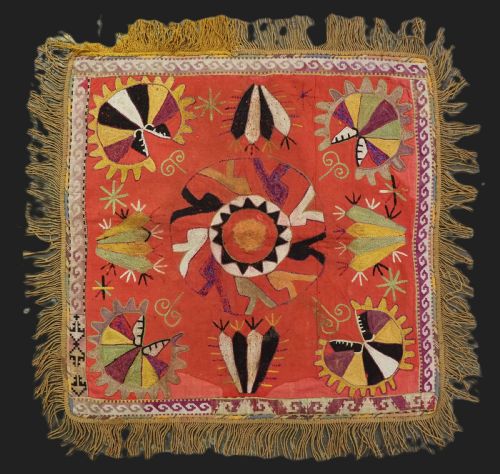
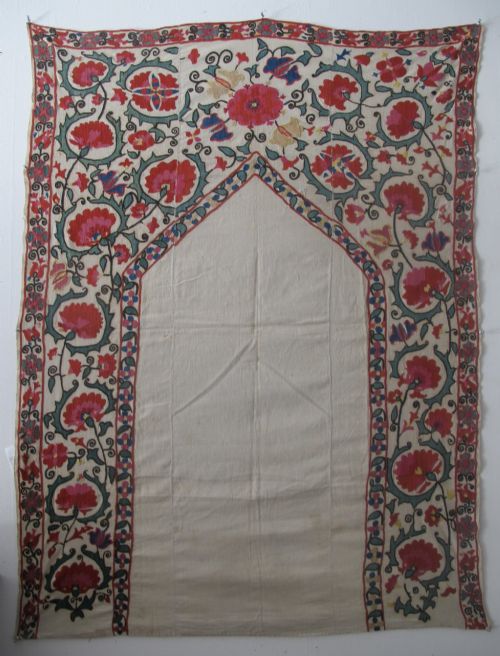
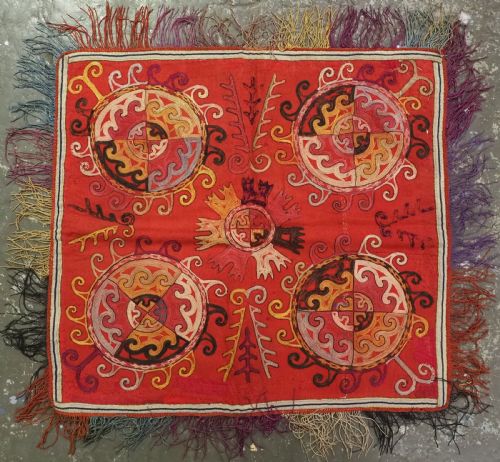
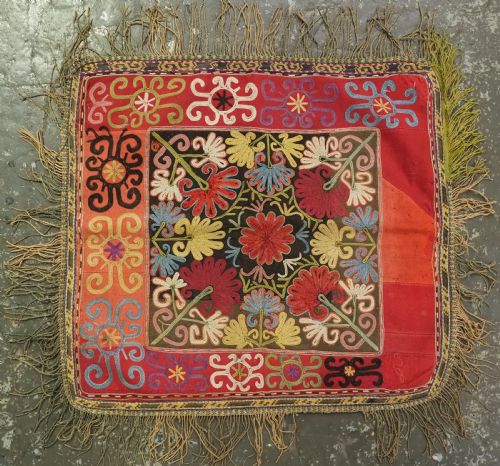
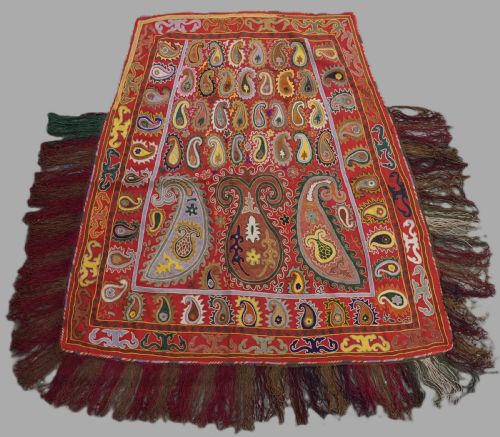
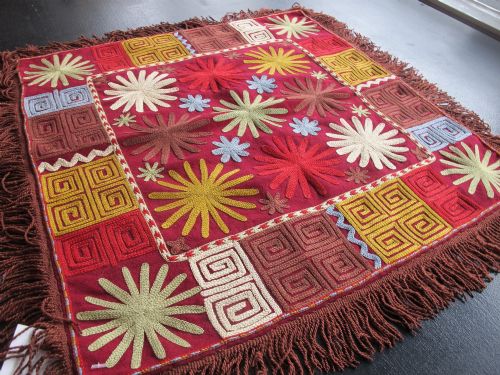
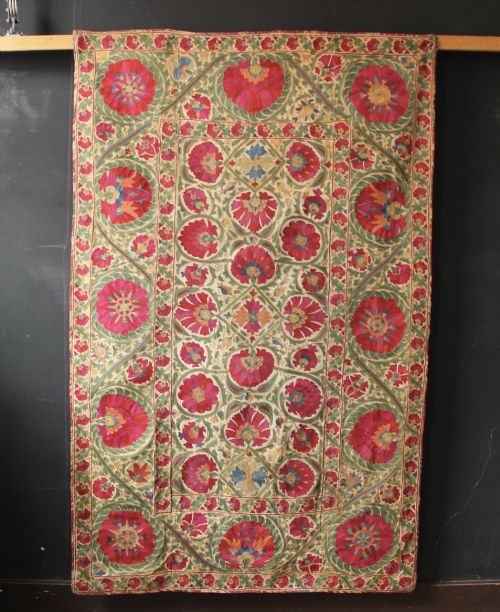
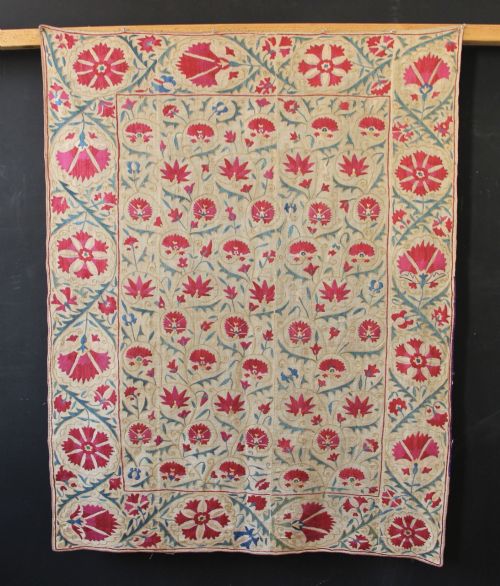
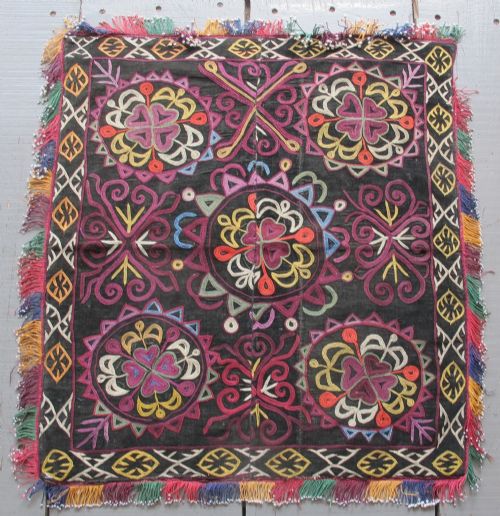
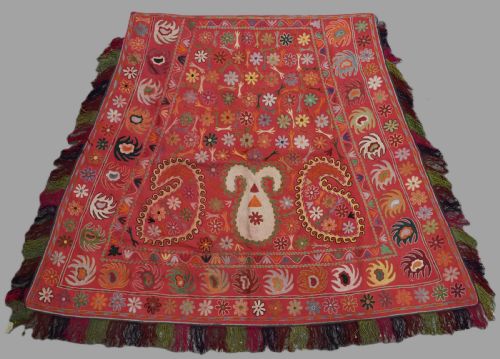
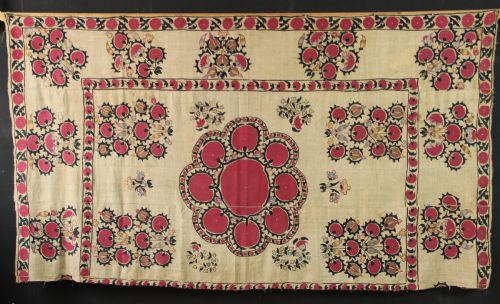
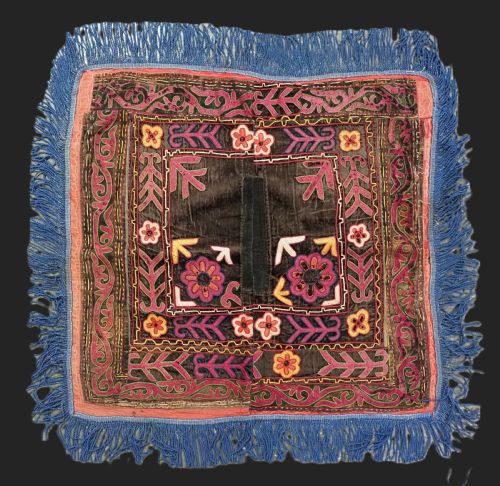
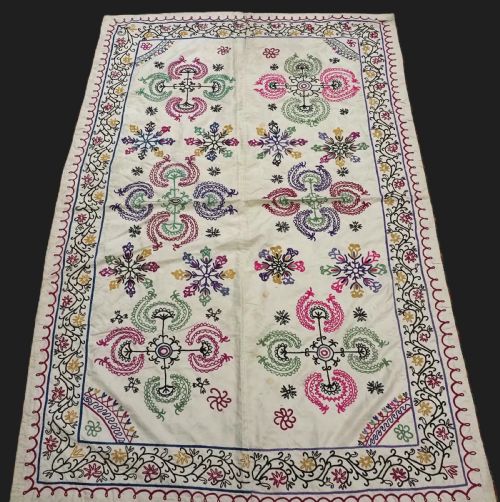
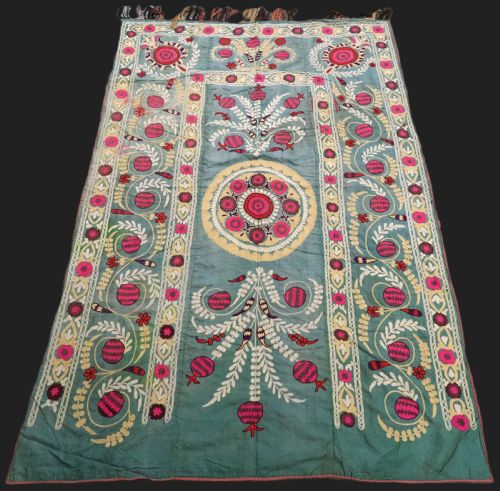
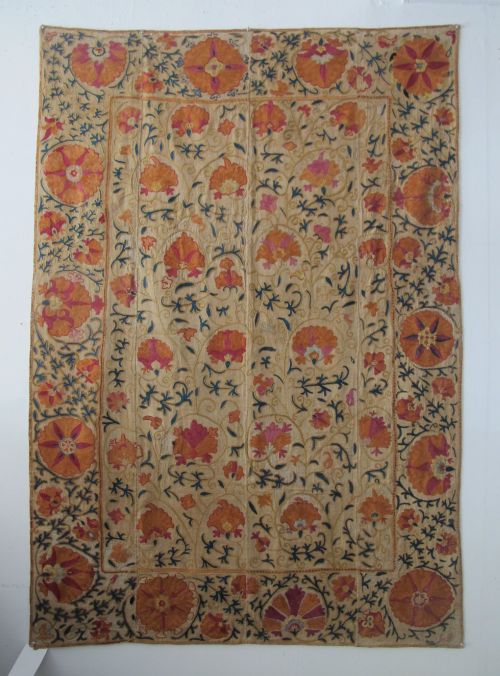
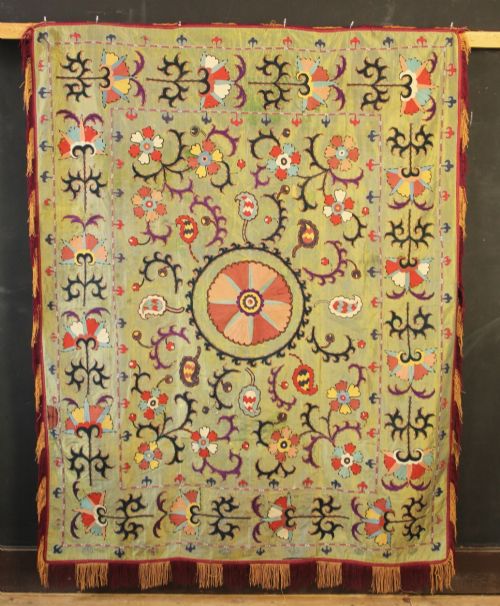
An uzbek suzani textile encompasses embroidered wall hangings, bed covers, mirror covers, and ceremonial horse or saddle covers originating from Central Asia. These works include regional variants such as Bokhara, Nurata, Ura Tube, and Shakrisabz pieces, alongside distinct tribal works attributed to the Lakai and Tajik communities. The selection covers formats ranging from large medallion panels down to smaller nim suzani panels and dowry embroideries.
Makers produced these textiles across the nineteenth and early twentieth centuries, spanning periods from eighteen hundred through to nineteen thirty. The pieces serve primarily as decorative textiles, wall hangings, and functional domestic furnishings created within Central Asian traditional workshops and tribal groups. Buyers on this page will frequently encounter nineteenth-century needlework alongside pieces from the early twentieth century executed in regional Central Asian styles.
What Varies in Quality
The density and precision of the silk embroidery work determine the refinement of the piece, with finer needlework indicating greater artisan skill. The condition and integrity of the foundation fabric, whether cotton, wool, or adras, also affect the overall standard of the textile.
The complexity of the design, such as architectural elements, prayer formats, or large medallion variants, separates standard decorative panels from more intricate examples. Additionally, the vibrancy of the remaining ground colours and the preservation of the original silk threads influence the visual impact of the piece.
The Uzbek Suzani Textile Glossary
- Suzani
- An embroidered Central Asian textile panel historically created as part of a bride's dowry. These pieces typically display large floral or medallion motifs stitched in silk on cotton or wool grounds.
- Lakai
- A Central Asian Turkic tribe known for distinctive, dynamic embroidery styles. Their work often appears on small decorative covers, horse trappings, and specific dowry items known as ilgich.
- Nim Suzani
- A smaller version of the standard suzani textile format. These half-sized panels were easier to produce and integrate into domestic spaces.
- Ilgich
- A specific form of Central Asian dowry embroidery created for wall hanging. These pieces frequently originate from tribal groups such as the Lakai.
- Ru-i-jo
- A traditional Central Asian bed cover suzani designed for domestic use. These large textiles served functional roles within the household before entering the collector market.
Uzbek Suzani Textile: Frequently Asked Questions
What is an uzbek suzani textile?
An uzbek suzani textile is a hand-embroidered panel created in Central Asia using silk thread on a cotton, wool, or silk-cotton foundation. These pieces functioned as wall hangings, bed covers, and ceremonial dowry items.
Craftsmen and women across regions like Bokhara, Nurata, and Shakrisabz produced these works throughout the nineteenth and early twentieth centuries using traditional Central Asian motifs.
How were these textiles used originally?
Central Asian families used these embroidered pieces primarily as domestic furnishings, including wall hangings, decorative bed covers, mirror covers, and saddle rugs. Many formed part of a bride's dowry.
Tribal groups also utilised specific embroidered covers for ceremonial horse trappings during community events and celebrations.
How do I hang a suzani safely?
Mounting a textile requires distributing the weight evenly across the entire upper edge rather than suspending it from localized points. Professional conservation framing or attaching a supportive cotton sleeve to the back allows safe display.
Keeping the piece away from direct sunlight prevents the natural silk threads and dyed ground fabrics from fading over time.
How do I distinguish regional suzani styles?
Regional styles appear through distinct colour palettes, ground materials, and motif arrangements. Pieces from Bokhara often feature architectural designs or fine medallion layouts, while Shakrisabz works display different floral compositions.
Tribal Lakai embroideries use dense, geometric silk stitching on wool or cotton grounds, differing significantly from urban workshop productions.