
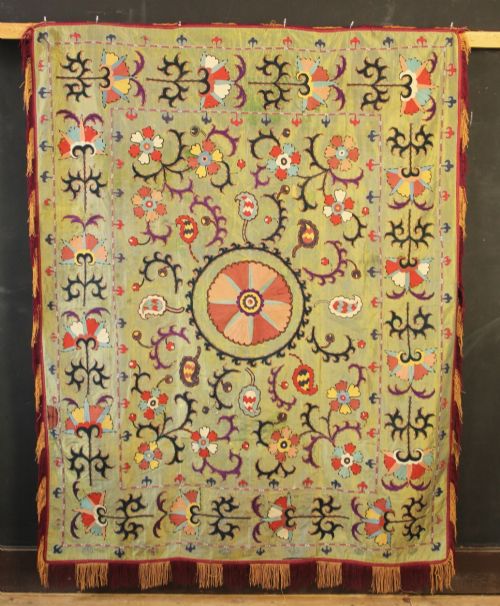


Uzbek Embroidered Panel
When you examine an uzbek embroidered panel, you encounter the vibrant textile traditions of Central Asia created for domestic and ceremonial use.
Uzbek Embroidered Panel
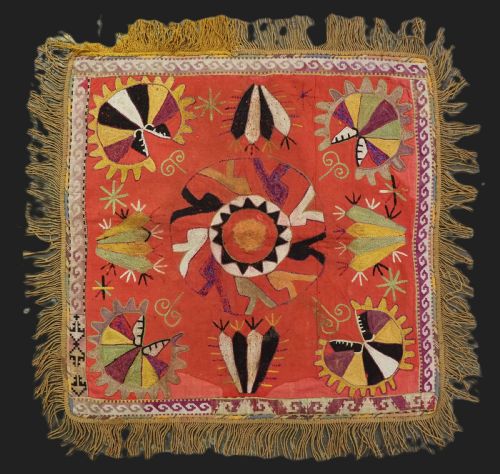
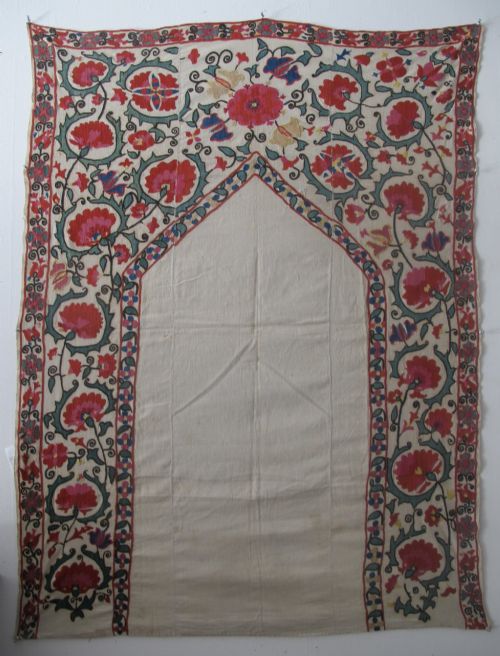
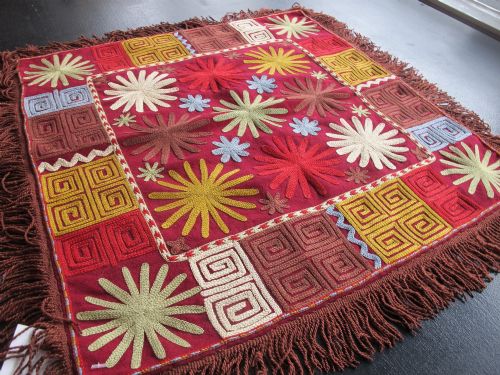
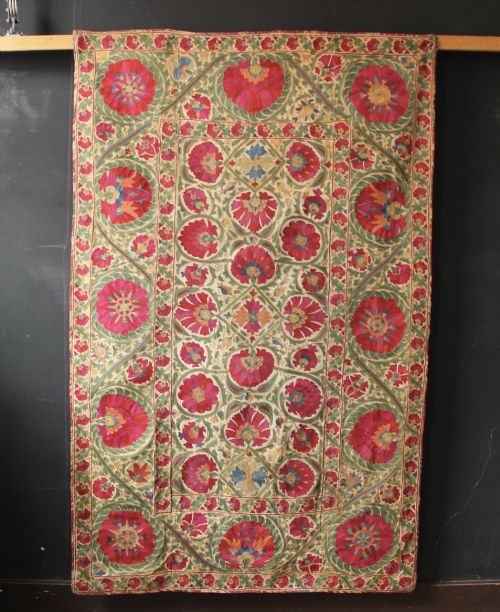
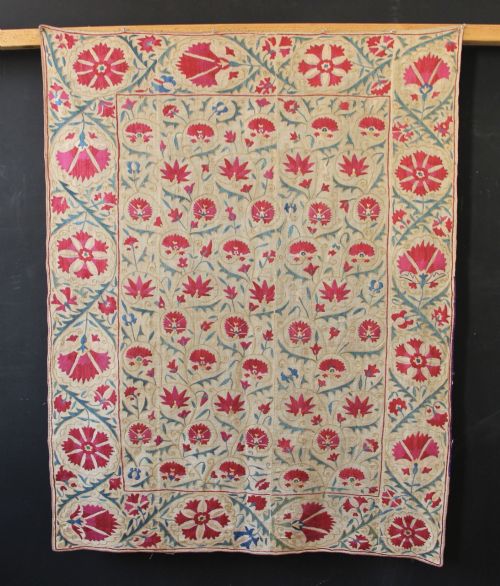
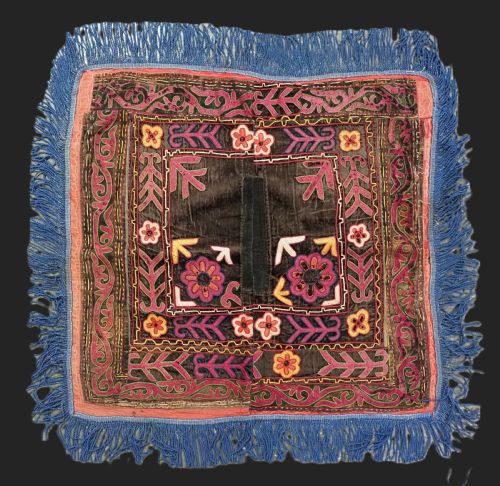
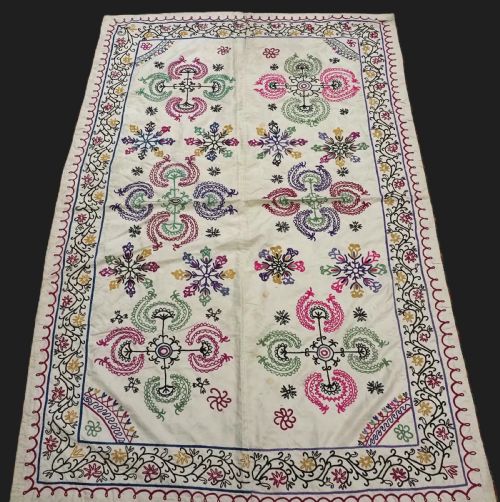
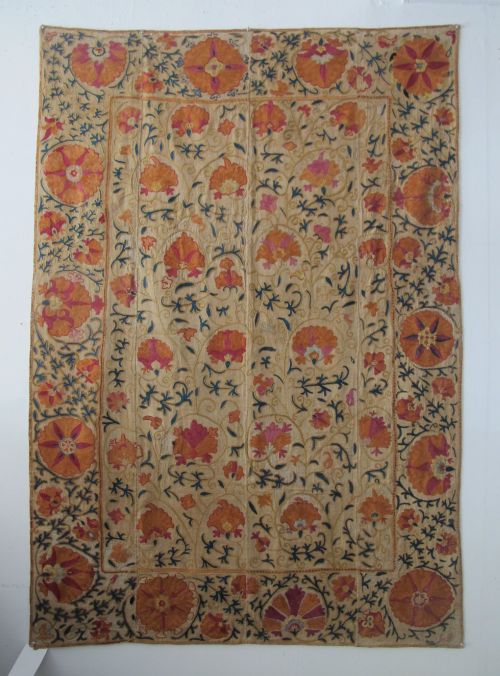
An uzbek embroidered panel encompasses traditional Central Asian wall hangings, dowry pieces, and domestic textiles created by regional tribes and urban workshops. When exploring this selection, buyers frequently encounter Suzani embroideries, Lakai ilgich pieces, and specialised regional formats originating from centres such as Bokhara, Shakrisabz, Tashkent, and Samarkand. These items range from large full-scale hangings to smaller domestic covers and utilitarian bags.
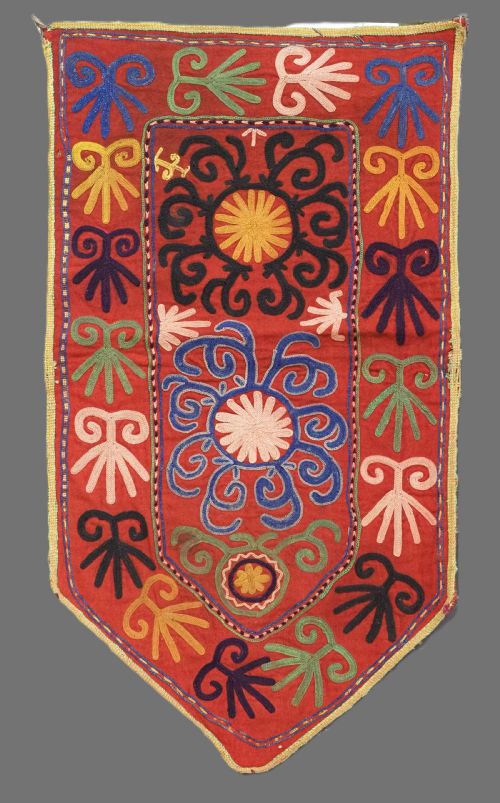
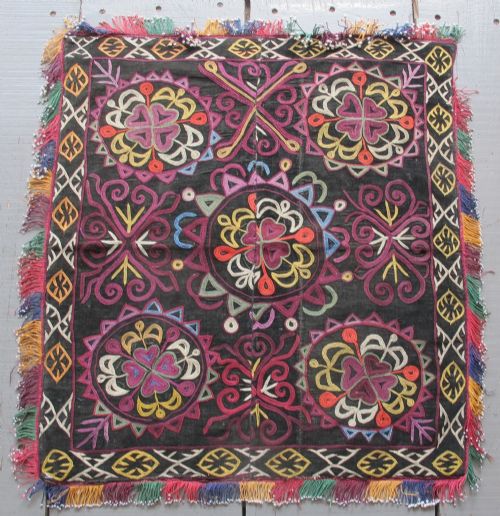
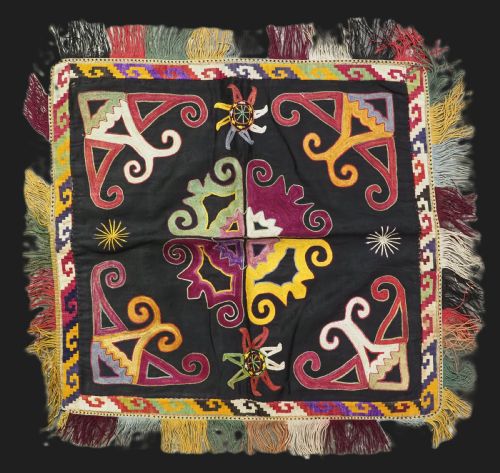
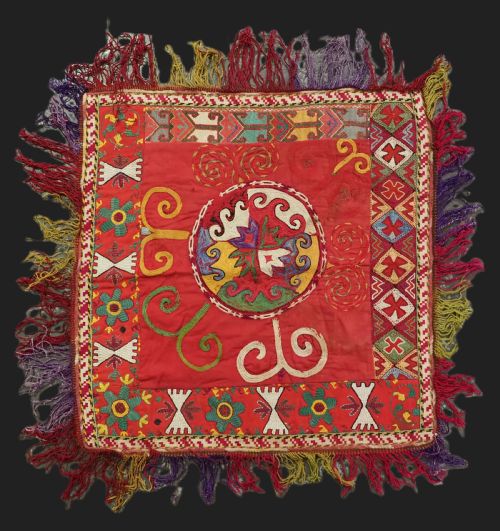
The material forms vary considerably across the selection, featuring full embroideries alongside nim suzanis, prayer formats, and architectural or floral designs. Many pieces serve specific historical functions, including dowry embroideries, ceremonial horse or saddle covers, and mirror covers. Collectors often find works attributed to the Lakai tribe alongside pieces associated with Tajik makers.
What Varies in Quality
Quality depends upon the density and precision of the needlework, with fully embroidered palak panels and finely worked suzanis representing the upper tier of execution. The complexity of the design layout, the vibrancy of the remaining colour palette, and the fineness of the silk thread contribute significantly to a piece's visual impact. Ground fabrics also differ in weight and material quality, ranging from standard cotton to rich adras and Mogul red wool.
The integrity of the structural composition and the preservation of the original borders influence overall standing. Works displaying imaginative tribal geometry, such as specific Lakai ilgich pieces, show distinct regional characteristics that set them apart from standard domestic productions.
The Uzbek Embroidered Panel Glossary
- Suzani
- A large, embroidered Central Asian wall hanging typically worked in silk thread on a cotton or linen ground. These textiles were traditionally made as part of a bride's dowry.
- Ilgich
- A specific type of embroidery or hanging produced by the Lakai tribe of Uzbekistan. These pieces often feature energetic tribal motifs and geometric compositions.
- Nim Suzani
- A half-size or smaller version of a standard suzan wall hanging. They offer versatile scaling for domestic interior display.
- Adras
- A traditional woven fabric made from a blend of silk and cotton yarns. It serves as a textured foundation ground for various embroideries.
- Palak
- A fully embroidered Tashkent suzan style featuring a dense central star motif surrounded by exuberant botanical designs. The needlework covers virtually the entire ground fabric.
Uzbek Embroidered Panel: Frequently Asked Questions
What is an uzbek embroidered panel used for?
These textiles historically served multiple domestic and ceremonial functions within Central Asian households. They were created as wall hangings, dowry items, prayer covers, and decorative furnishings.
Specific formats like torba ilgich pieces and horse covers functioned within nomadic tribal traditions. Today, collectors primarily display them as wall art or textile tapestries in modern interiors.
How do I tell a suzani from a Lakai ilgich?
Suzanis generally originate from urban or regional centres like Bokhara, Samarkand, and Tashkent, featuring expansive floral or architectural layouts. They often employ fine silk chain stitch on large cotton or linen grounds.
Lakai ilgich pieces stem from nomadic tribal traditions and typically display bold, compressed geometric motifs with high visual energy. Their formats frequently include smaller utilitarian bags and dowry embroideries.
What materials are used in these embroideries?
The primary medium is hand-spun silk thread applied to various woven foundation fabrics. Common grounds include plain cotton, linen, wool, and adras silk-cotton blends.
Selected regional examples incorporate specialised elements such as velvet borders and glass bead embellishments. The foundation colours frequently span deep reds, yellows, greens, and blacks.
How should I care for an antique textile?
Protect antique embroideries from direct, prolonged sunlight to prevent natural dye fading. Professional mounting onto a supportive backing helps distribute the weight evenly when hung.
Avoid folding old textiles for extended periods to prevent stress fractures along the creases. Gentle vacuuming through a mesh screen can help manage surface dust without damaging the silk threads.