
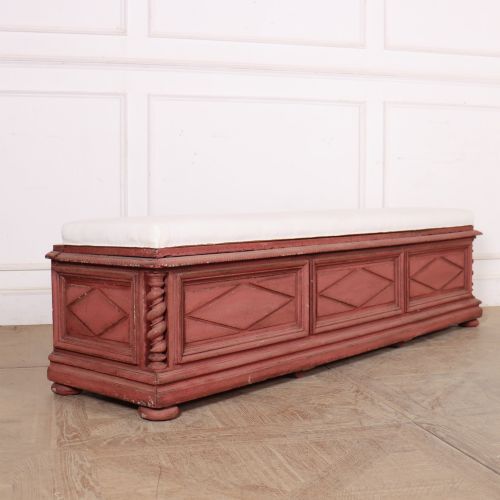
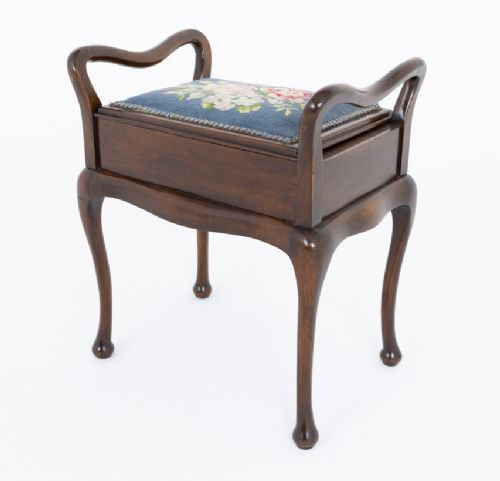
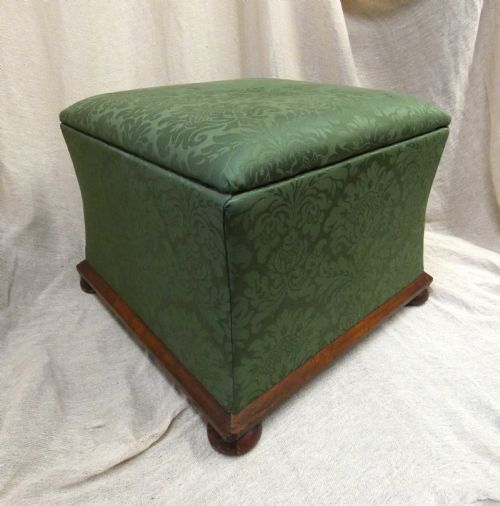


Upholstered Storage Box
An upholstered storage box brings together concealed capacity and padded comfort, taking forms from the Regency period through to the Edwardian era.
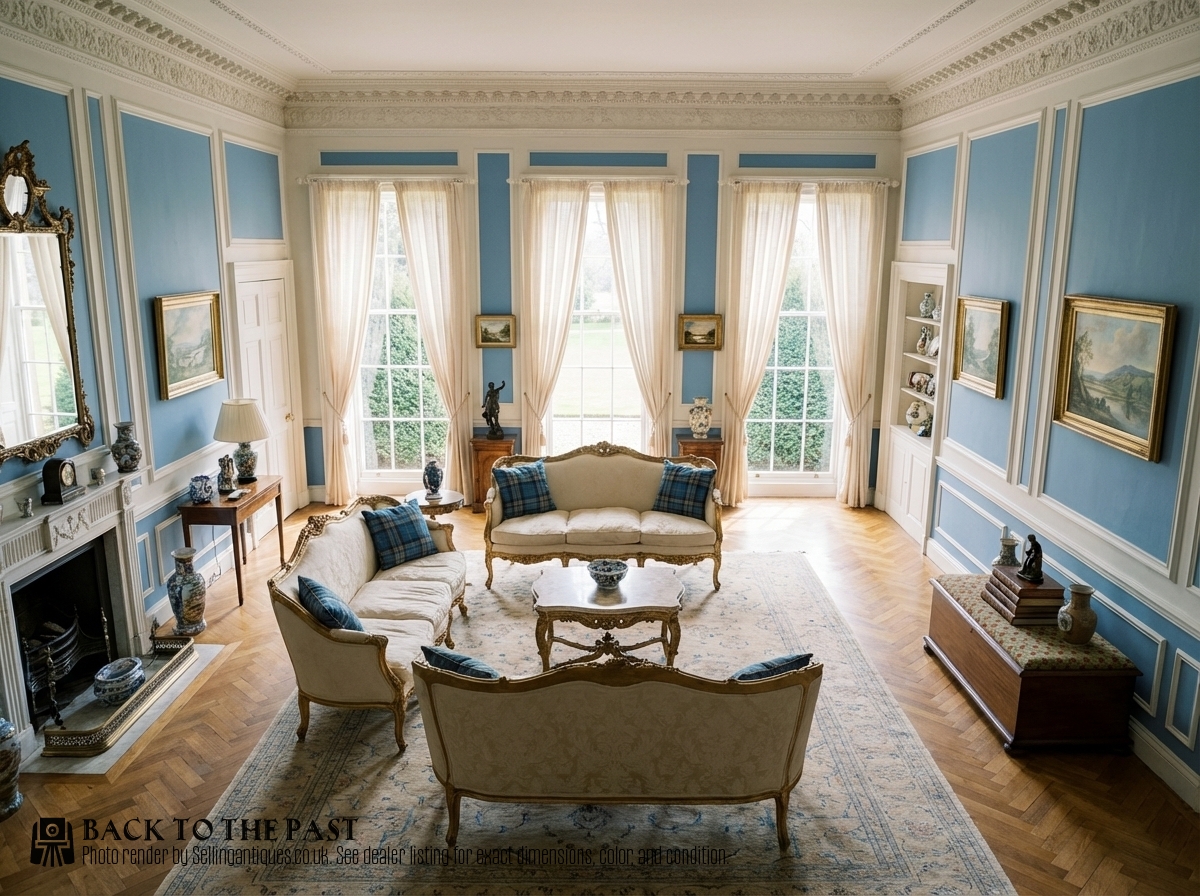
Upholstered Storage Box
When searching for an upholstered storage box, you encounter a practical fusion of seating and enclosed space spanning the Victorian and Regency periods, alongside later 1900 and 1920 examples.
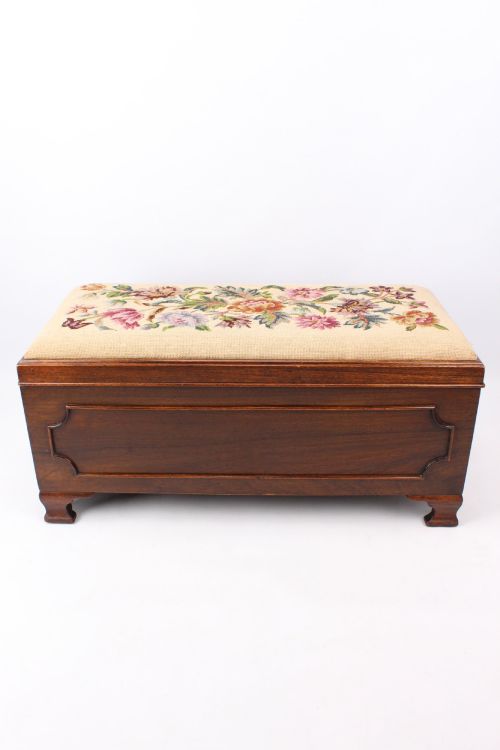
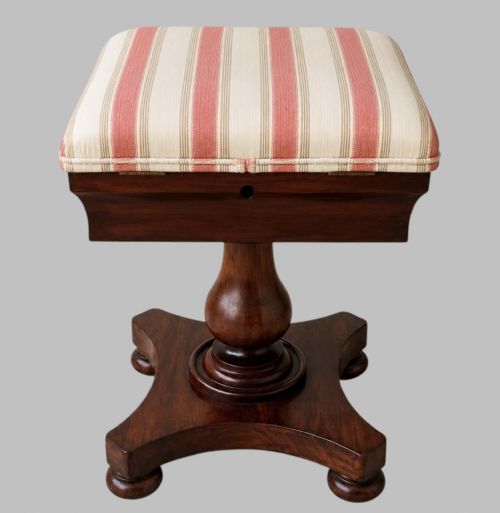
The objects take various functional shapes on this page, including ottomans, piano stools, blanket boxes, sewing box stools, and storage chests.
Mahogany and rosewood frames dominate the formal nineteenth-century pieces, while pine appears in country house storage trunks and kist chests.

Materials and construction
Timbers such as mahogany, rosewood, walnut, and birch form the rigid structural carcases, while brass often accents the feet and fittings.
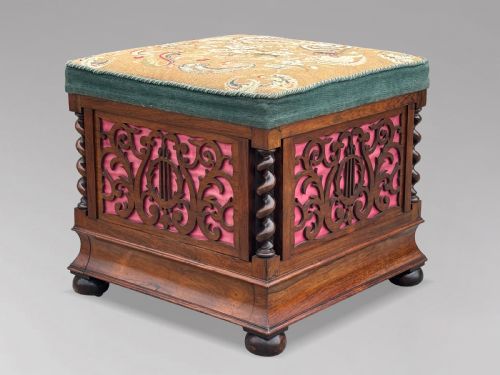
Upholstery techniques rely on textile coverings like velvet, leather, fabric, and needlework including gros-point, frequently paired with deep buttoning.
Makers constructed boxes with hinged or fall-front lids to secure the internal storage cavity beneath the padded seat.
Listings span the Regency, William IV, Victorian, Edwardian, and early twentieth-century periods in mahogany, rosewood, walnut, and pine.
What separates the finest examples
Superior quality rests in the selection of timbers, such as figured rosewood or dense mahogany, matched with robust internal framing rather than soft pine.
The execution of the upholstery work, from precise needlework to deep buttoning and quality fabric choice, elevates an everyday box to a refined piece of furniture.
Hallett & Sons
The Upholstered Storage Box Glossary
- Ottoman
- A padded seat without a back or arms featuring a hinged lid that opens to reveal a storage compartment. These pieces function as versatile seating and trunk combinations.
- Gros-point
- A counted-thread embroidery using wool yarn on canvas, frequently used for durable decorative upholstery tops. It provides a heavily textured surface.
- Canterbury
- A low multi-compartment stand or stool originally designed for sheet music or books, occasionally incorporating seat upholstery and storage. This form reflects nineteenth-century domestic organisation.
- Kist
- A traditional regional storage chest, usually constructed from pine or other sturdy timbers. These heavy trunks provide utilitarian storage capacity.
- Fall-front
- A hinged front panel that drops down to grant access to internal compartments or storage space. This mechanism appears on specialised piano stools and work boxes.
Upholstered Storage Box: Frequently Asked Questions
How were these boxes used?
These pieces served multiple domestic functions, acting as piano stools, blanket storage, sewing work boxes, and casual seating in reception rooms.
The internal cavity kept textiles, music sheets, or household items out of sight while the padded top provided an extra seat.
Where do I place an ottoman stool?
An upholstered box fits well at the foot of a bed, beside a fireplace, or in a hallway for seated shoe removal.
The combination of concealed storage and a comfortable top makes them practical additions to living spaces.
How do I identify a Victorian piece?
Victorian examples frequently utilise dense mahogany or rosewood, sometimes featuring deep buttoned upholstery or needlework tops.
Construction details and proportions align with mid to late nineteenth-century cabinet-making traditions.
What is a duet piano stool?
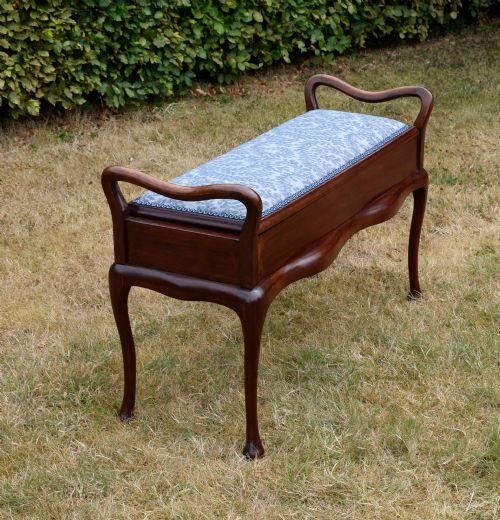
A duet stool provides a wider seat designed to accommodate two musicians side by side at a piano.
Many of these longer seats incorporate hinged lids with internal storage space for sheet music.