


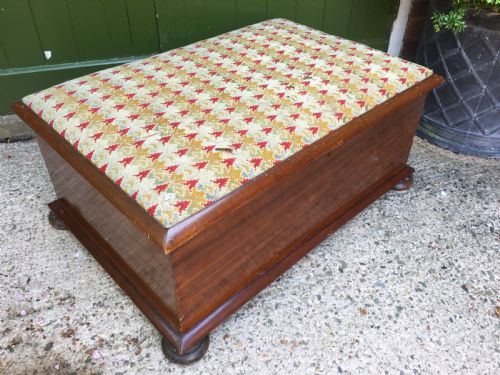
Mahogany Storage Ottoman
A mahogany storage ottoman gives you a solid timber frame with a concealed compartment beneath a padded seat, combining traditional seating with practical concealment.
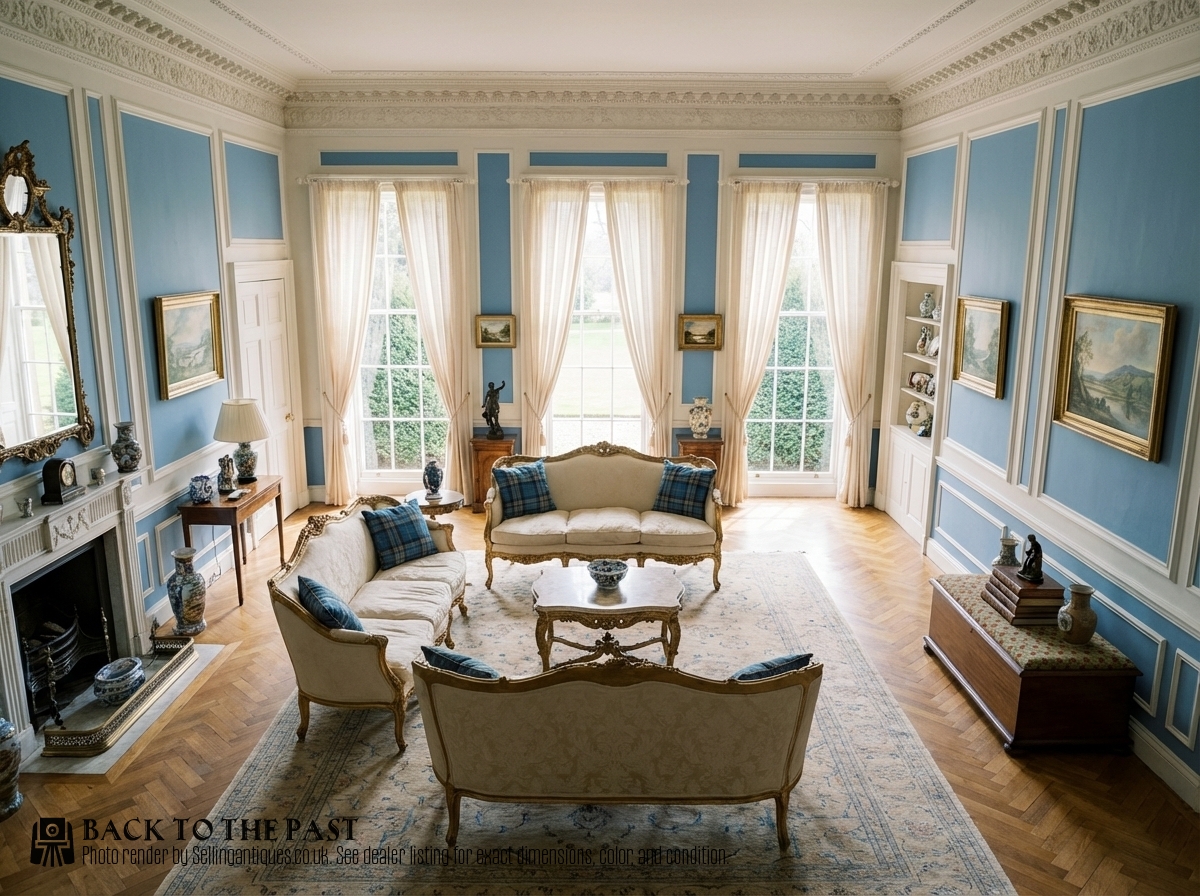
Mahogany Storage Ottoman
When you search for a mahogany storage ottoman, you encounter a selection of timber-framed seating and blanket boxes that date from the Georgian, Regency, William IV, and Victorian periods. These pieces serve as dual-purpose furniture, offering both a place to sit and an internal compartment for linen, sewing supplies, or household items.
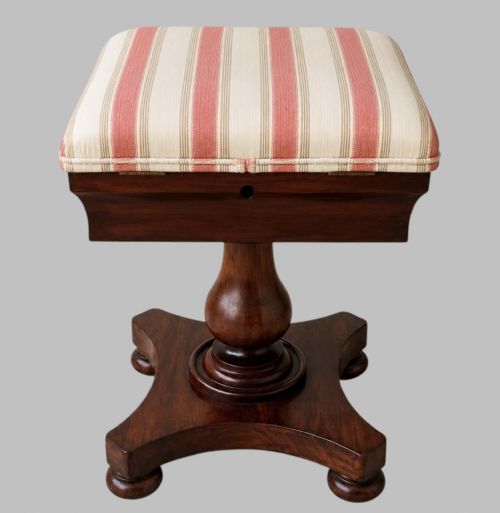
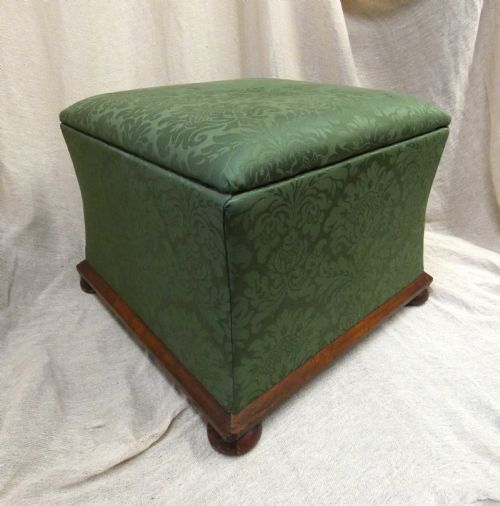
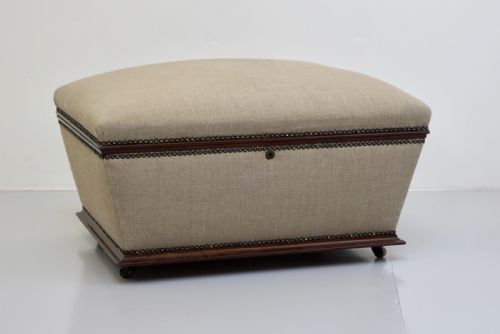
The versions you meet most frequently on this page include Victorian and Regency examples, often described as footstools, sewing box stools, blanket boxes, or shoe box cabinets. They span various forms from simple box ottomans to larger country house pieces and waisted stools upholstered in textiles like damask, velvet, wool, and Liberty fabric.
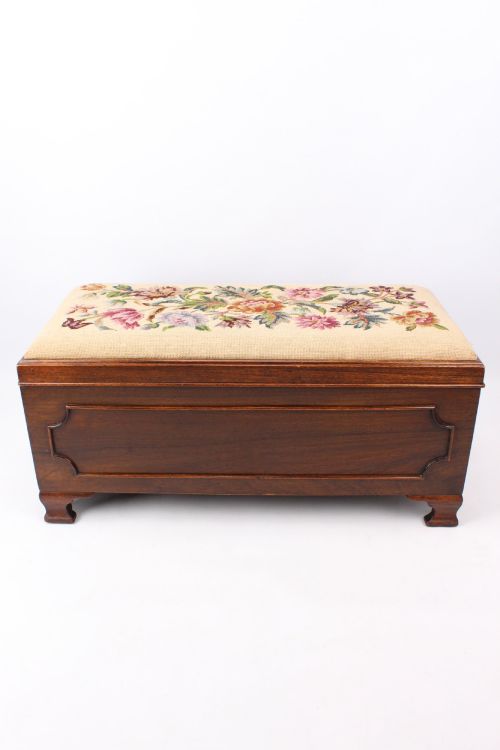
Construction relies heavily on mahogany, sometimes paired with brass details, lions paw feet, or original gros-point needlework tops. Whether shaped with a concave profile or built as a chest, each piece demonstrates the substantial timber work characteristic of nineteenth-century cabinet making.
How they were made
Makers built the structural carcases using solid mahogany and hardwood, ensuring stable housings for the internal storage compartments. Joinery techniques of the period involved secure framing to support the weight of upholstered lids and daily use.
Upholstery methods incorporated traditional textile coverings such as wool, velvet, damask, and needlework including gros-point. Details like brass fittings and carved lions paw feet added ornamental finish to the timber frames.
Listings span multiple nineteenth-century eras, including Georgian, Regency, William IV, and Victorian periods.
What varies in quality
The fineness of the mahogany timber and the crispness of any carved elements, such as lions paw feet, set better examples apart from standard workshop output. Superior pieces often feature sophisticated profiles, like concave shaping or waisted frames, rather than simple box constructions.
The integrity of the original upholstery, including specialist needlework tops like gros-point or specific textile choices such as Liberty fabric, influences the character of the piece. Well-preserved internal compartments and sturdy original hinges also contribute to a higher standard of manufacture.
Hallett & Sons
The Mahogany Storage Ottoman Glossary
- Mahogany
- A durable tropical hardwood prized for its rich reddish-brown colour and fine grain. It forms the primary structural material for these nineteenth-century frames.
- Gros-point
- A type of needlepoint embroidery worked on canvas with a relatively coarse woollen yarn. It frequently appears on the removable or hinged tops of period stools.
- Regency
- A British architectural and design style spanning roughly the early nineteenth century. Pieces from this era often display classical restraint and refined proportions.
- Damask
- A reversible figured fabric woven on a jacquard loom with patterns formed by contrasting warps and wefts. It is commonly utilised for traditional upholstery.
Mahogany Storage Ottoman: Frequently Asked Questions
What is a mahogany storage ottoman?
A mahogany storage ottoman is a piece of nineteenth-century furniture that combines a timber frame with a concealed compartment beneath a padded or upholstered seat. These items functioned historically as blanket boxes, sewing stools, or footstools.
They allow you to store textiles or household goods while providing extra seating. The dual-purpose design made them popular across Georgian, Regency, and Victorian interiors.
How do I date a mahogany ottoman?
Dating relies on examining the timber, construction methods, and stylistic details such as foot designs and upholstery types. Regency and William IV pieces often display classical lines and specific leg turns, while Victorian examples can be heavier or incorporate varied cabinet forms.
Looking at the interior construction and hinges also helps determine the period. Secondary woods inside the box often provide clues to the manufacturing decade.
Where were these pieces used?
These ottomans typically stood in bedrooms, dressing rooms, or drawing rooms of period houses. Their dual function as seating and storage made them versatile additions to domestic spaces.
Smaller sewing box stools sat beside chairs for handcrafts, while larger country house examples served as blanket chests at the foot of a bed. Their mobility allowed owners to move them easily between rooms.