

Upholstered Piano Seat
An upholstered piano seat combines functional height adjustment with period woodwork to anchor a music room or dressing space.
Upholstered Piano Seat
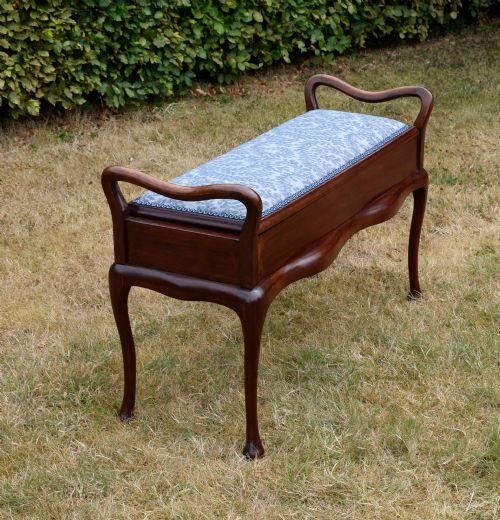
An upholstered piano seat serves as a practical music room or dressing table accessory, appearing across Victorian, Edwardian, and Art Deco periods. These pieces range from single swivel stools to longer duet benches designed for two players.
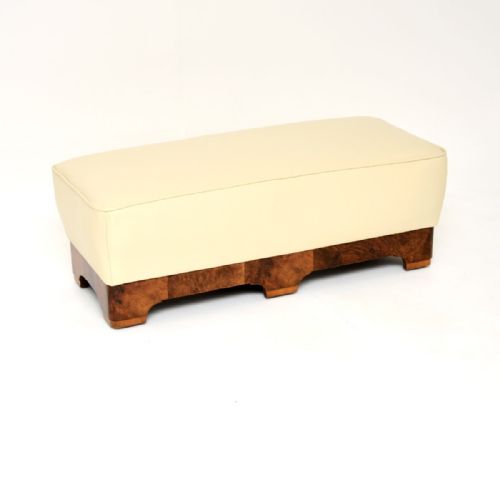
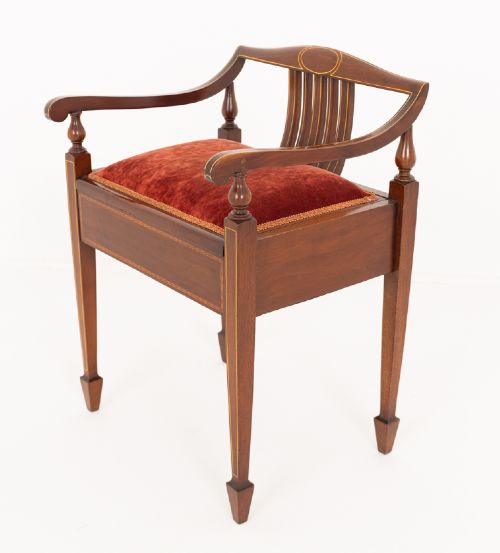
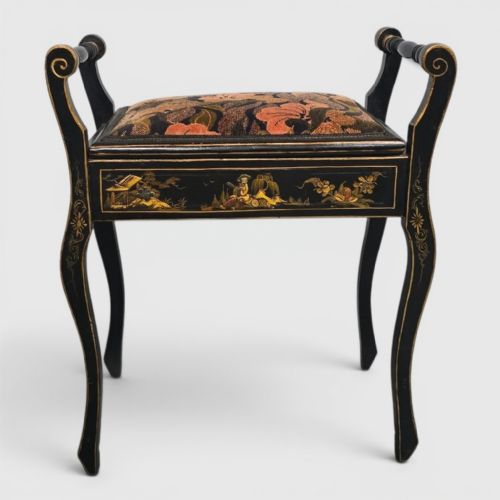
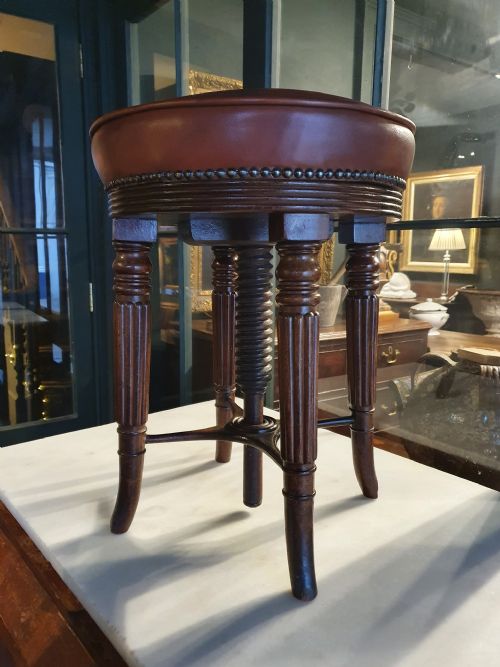
Victorian and nineteenth-century examples often utilise rosewood, walnut, or mahogany with rotating mechanisms or rise-and-fall actions. Edwardian and later pieces favour inlaid mahogany, ebonised finishes, or burr walnut frames paired with leather or fabric.
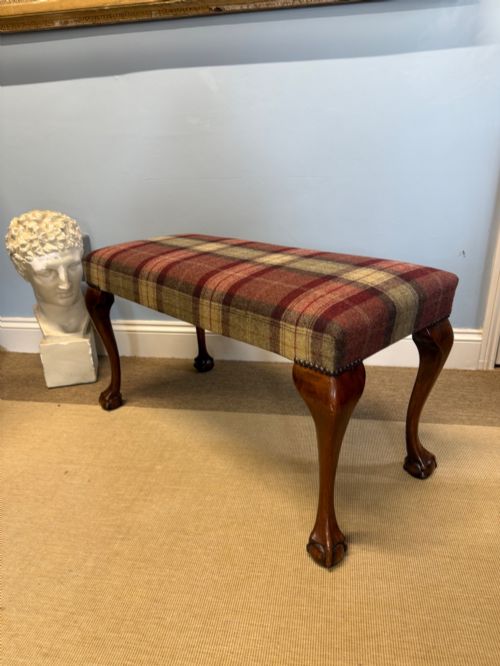
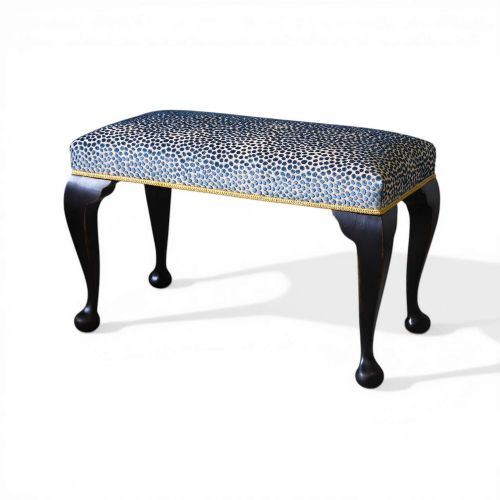
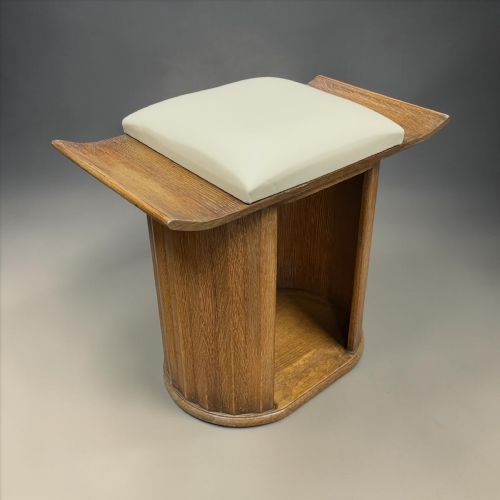
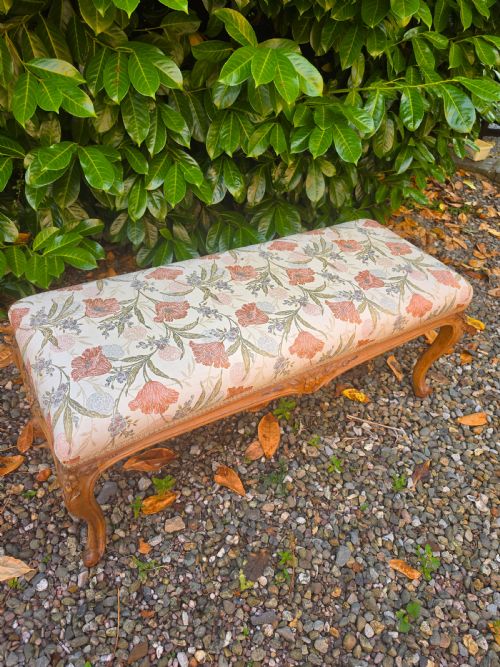
The selections span revolving music chairs, cabriole-legged dressing stools, and lift-lid storage benches. Buyers encounter various seating proportions, from compact tripod piano stools to broad rectangular window seats.
Materials and Construction Methods
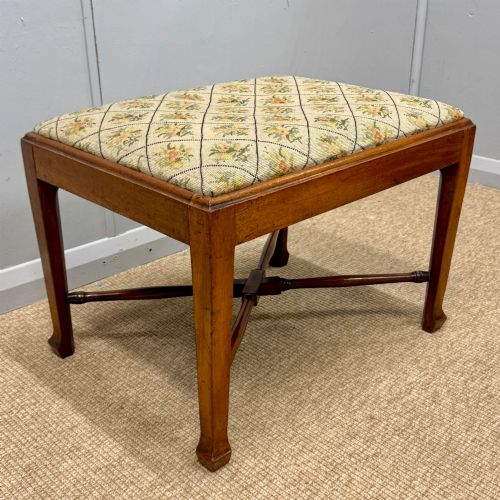
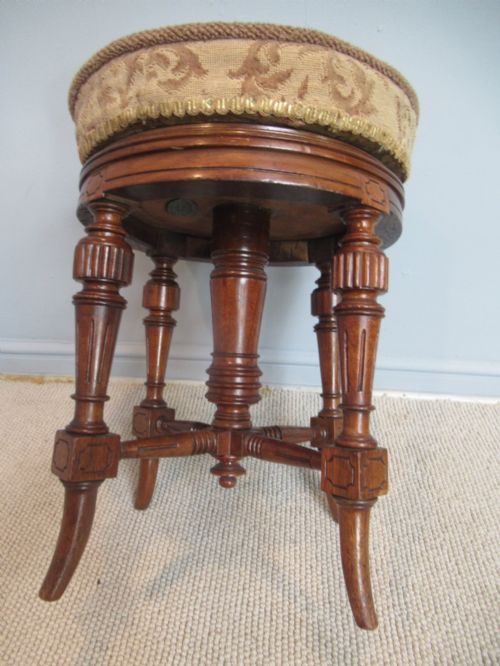
Timbers such as mahogany, walnut, rosewood, and burr maple form the structural frames, shaped with cabriole legs, turned supports, or cross stretchers. Brass components appear frequently in revolving mechanisms, castors, and decorative framing.
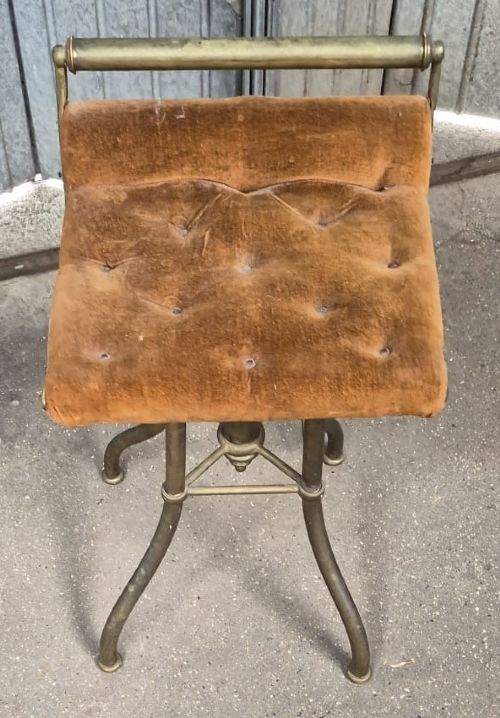
Upholstery relies on traditional coverings including velvet, tapestry, needlepoint, leather, and patterned fabric. Makers integrated mechanical elements like screw threads for height adjustment and hinged tops for internal music storage.
At least one nineteenth-century harpist required a dedicated brass-framed seat designed specifically for playing seated with an instrument.
Distinctions in Build and Materials
Finer examples demonstrate substantial timber selection, such as figured walnut, burr maple, or dense rosewood, paired with detailed carving on the legs and frame. Lesser pieces utilise simpler turned supports and plain mahogany or ebonised softwoods.
The complexity and smooth operation of the mechanical parts dictate the standing of a piece. Original revolving screws, rise-and-fall actions, and intact brass fittings elevate the integrity of a seat compared to modified or rigid structures.
Charles Nosotti·Harry & Lou Epstein
The Upholstered Piano Seat Glossary
- Rise and fall
- A mechanical system using a screw action to alter the height of the seat for the player.
- Cabriole leg
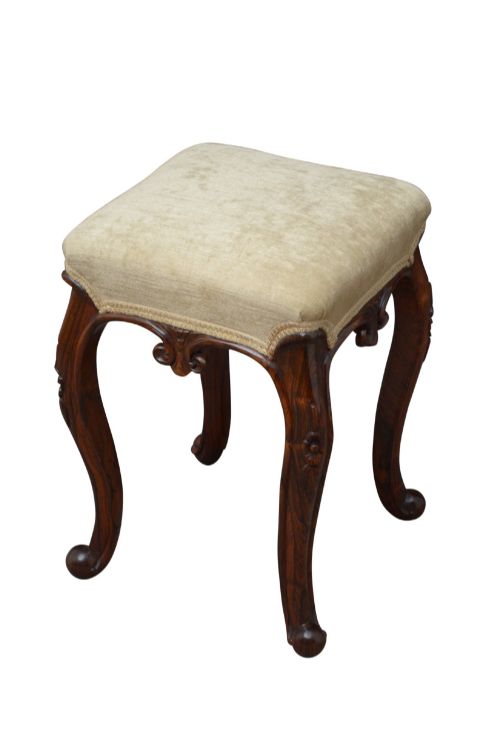
- A furniture leg featuring a double curve, typically arching outward and tapering down to a pad or scroll foot.
- Duet stool
- An extended bench designed to seat two musicians side by side during piano practice or performance.
- Canterbury
- A compartmented stand built beneath or beside the seat for storing sheet music and folios.
- Ebonised
- Wood finished with a dark stain or lacquer to imitate the appearance of solid ebony.
Upholstered Piano Seat: Frequently Asked Questions
How do adjustable piano seats work?
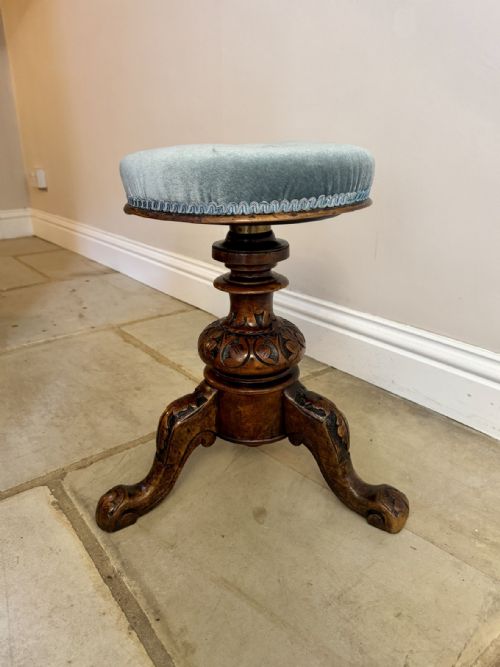
Many period piano seats incorporate a central wooden screw mechanism operated by turning the upholstered top itself. Other variations use mechanical levers or handles to raise and lower the seating platform.
These systems allowed musicians to set their preferred height before playing. The mechanical parts often feature brass components concealed beneath the upholstery frame.
What is the difference between a piano stool and a duet stool?
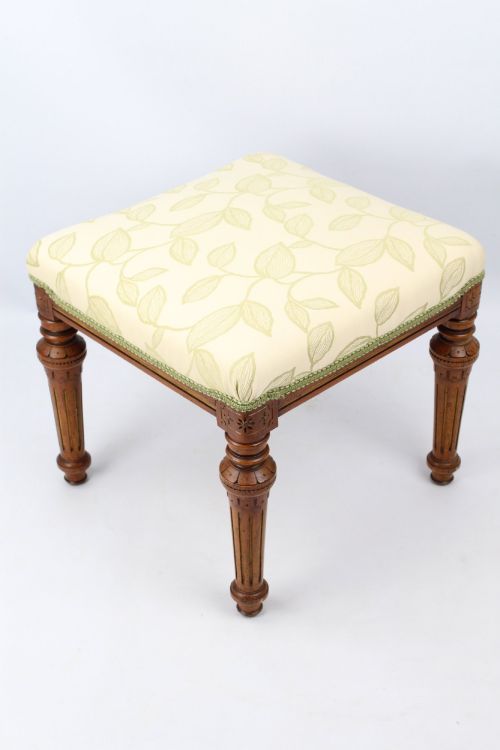
A standard piano stool provides a compact seating area intended for a single player at the keyboard. These often take square, round, or revolving formats.
A duet stool is built much wider to accommodate two people simultaneously. They frequently include hinged lids that open to reveal interior storage compartments for sheet music.
How can I identify a Victorian piano seat?
Victorian examples typically feature dense hardwoods such as rosewood or walnut, often displaying carved cabriole legs or barley-twist columns. Buttoned upholstery and heavy brass mechanisms are also characteristic of this era.
Nineteenth-century pieces prioritize mechanical utility alongside decorative woodwork. Rotating seats and tripod bases appear frequently across this period.
Where were piano seats placed besides the instrument?
While designed primarily for keyboard instruments, these versatile benches frequently served as dressing table stools or window seats. Their varied upholstery styles allowed them to integrate easily into bedrooms and drawing rooms.
Compact square and rectangular forms fit neatly beneath mirrors or beside low windows. Many pieces transitioned between musical and domestic seating roles over time.