
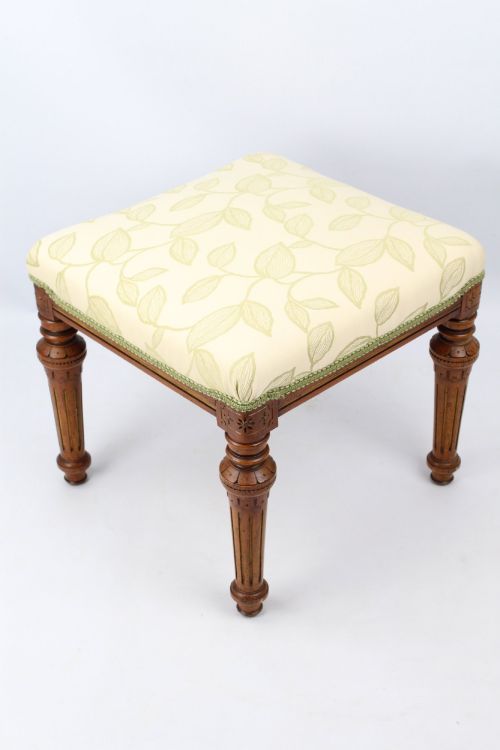
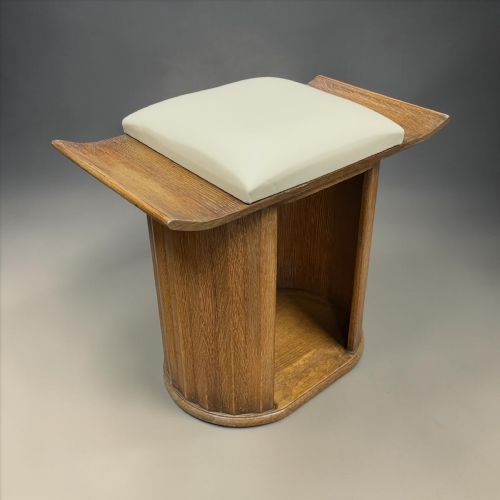


Oak Piano Stool
An oak piano stool offers solid timber construction and practical seating, combining period character with reliable utility for any room.
Oak Piano Stool
An oak piano stool is a functional seat designed for musicians, frequently featuring adjustable mechanisms or lift-up storage lids for sheet music. The pieces available span various decades from the nineteenth century through the early twentieth century, incorporating styles such as Victorian, Arts and Crafts, and Art Deco.
Buyers will encounter simple fixed-height seats alongside more complex revolving and rise-and-fall designs. Many examples utilise sturdy timber frames paired with upholstered pads in fabric, leather, or woven materials.
What varies in quality
The sophistication of the turning, carving, and joinery distinguishes standard utility pieces from finer decorative examples. Finer versions demonstrate careful timber selection and crisp hand-carved detailing on the legs and frame.
The integrity of the mechanical parts, such as the smooth operation of screw-top mechanisms and the robust construction of lift-up storage compartments, marks the difference between basic production and superior craftsmanship.
Listings span several distinct eras, encompassing nineteenth-century Victorian designs, Arts and Crafts pieces, and early twentieth-century Art Deco forms.
Harry and Lou Epstein
The Oak Piano Stool Glossary
- Rise and fall
- A mechanical seat height adjustment system operated by rotating the top on a central screw thread.
- Duet stool
- A wider seating form designed to accommodate two people side by side while playing a musical instrument.
- Barley twist
- A type of decorative timber turning that resembles a spiralling rope column.
- Parcel gilt
- A surface treatment where specific carved or raised details are highlighted with applied gold leaf.
Oak Piano Stool: Frequently Asked Questions
How do adjustable piano stools work?
Many piano stools utilise a central wooden or brass screw mechanism hidden beneath the seat. Turning the upholstered top clockwise or anticlockwise raises and lowers the seating height.
Other historical examples use clever swivel designs or side levers to alter the position for the player.
What is the storage lid used for?
The hinged lift-up seat reveals a concealed compartment built directly into the frame of the stool. This internal space was originally intended to hold sheet music and bound songbooks close at hand.
Today, the compartment provides convenient storage for small household items while keeping the room tidy.
Where should I place a piano stool?
While originally placed beside upright and grand pianos, these compact seats suit modern homes as dressing table chairs or hallway perches. Their modest footprint allows them to tuck neatly under desks or console tables.
Revolving and adjustable versions offer practical flexibility in spaces where seating height needs adaptation.
How do I identify a Victorian stool?
Victorian examples frequently display darker oak tones, robust carved ornamentation, and traditional upholstery such as patterned fabric, leather, or tweed. Look for turned legs, barley twist supports, and heavy solid timber construction.
Patent markings or brass adjustment screws often point towards nineteenth-century manufacturing methods.