


Carved Music Stool
A carved music stool provides a practical and decorative seat for the parlour, designed to adjust for height or swivel as the musician plays.
Carved Music Stool
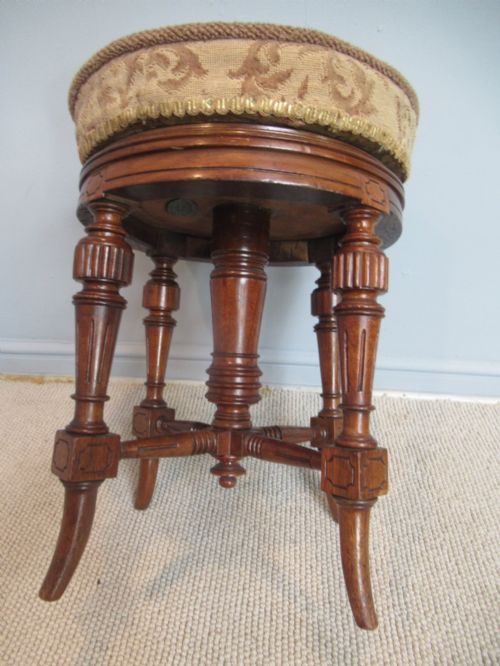
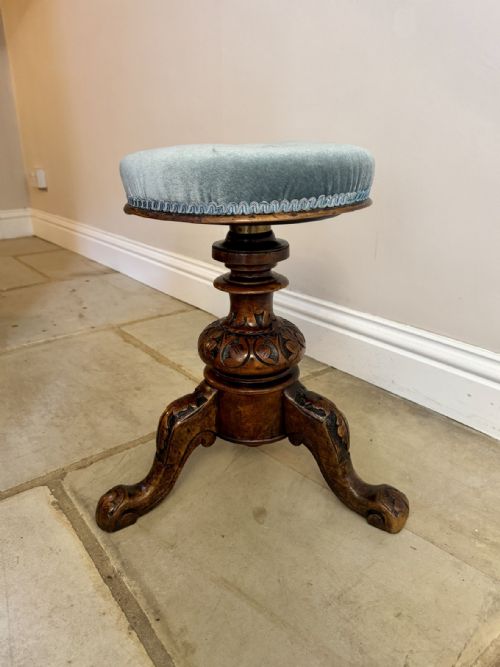
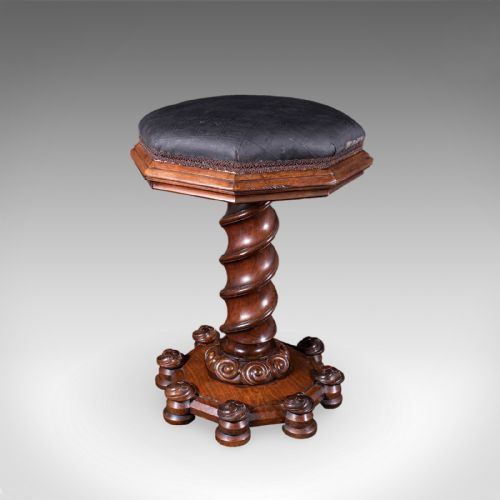
A carved music stool encompasses piano stools, revolving chairs, and duet seats originating primarily from the nineteenth century and the Victorian era. These pieces appear in forms ranging from simple revolving seats on pedestals to elaborate harpist chairs with specific asymmetrical profiles.
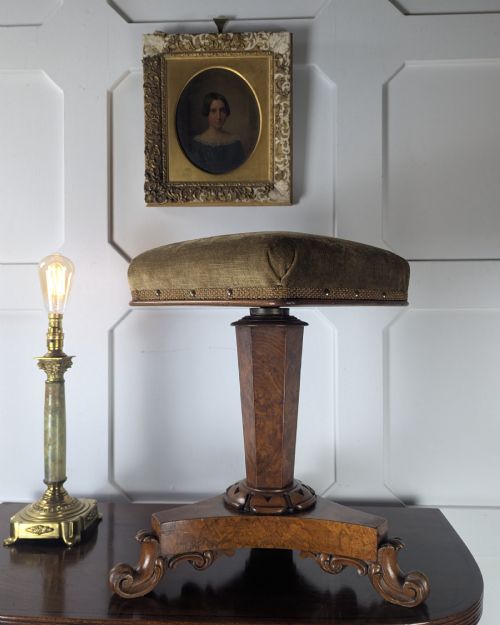
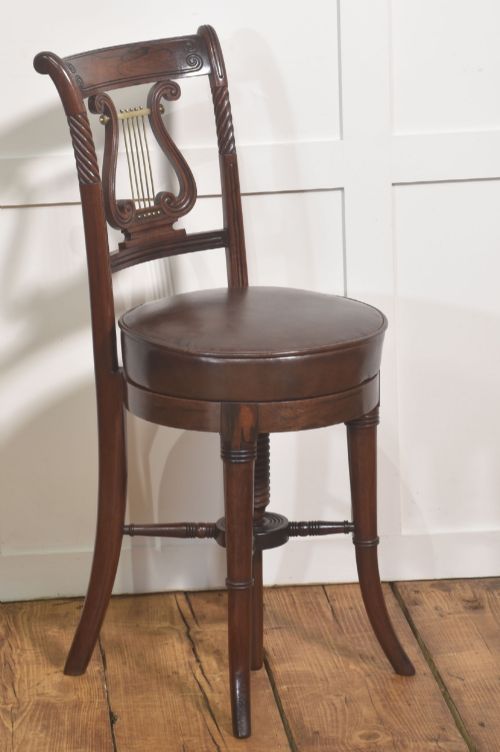
The most common examples on this page date from the Victorian and William IV periods, constructed in rich timbers like walnut and rosewood. Buyers frequently encounter adjustable mechanisms that allow the seat to rise and fall via a central screw or swivel freely.
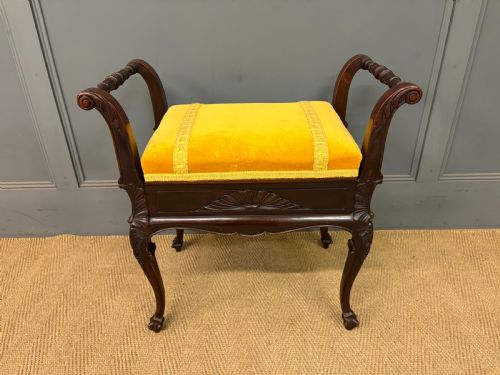
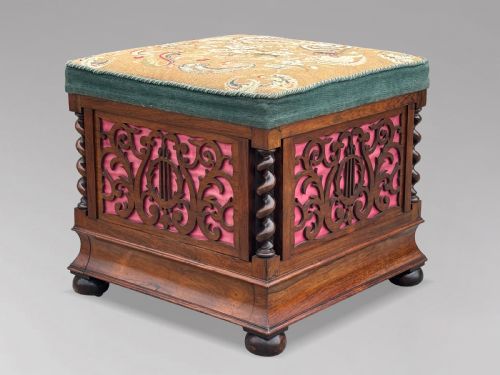
Makers adapted these seats for specific domestic duties, including organ playing, dressing table use, and accompanying duets at the piano. Forms range from compact single pedestals to wider rectangular duet stools with hinged storage compartments.
Materials and construction
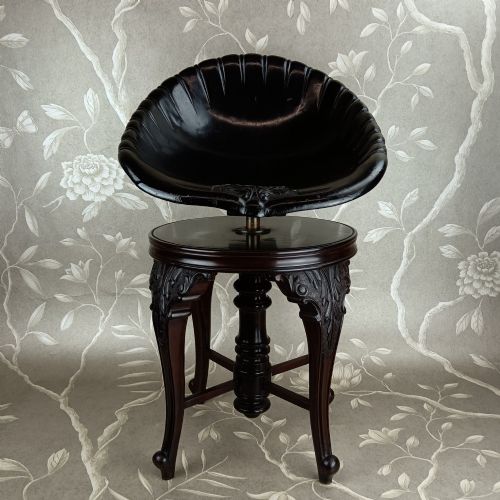
Cabinet makers utilised dense hardwoods such as mahogany, walnut, and rosewood to support the weight and movement of the revolving or rising mechanisms. These timbers were carved with foliage, scrolls, or reeded details along the legs and pedestals.
Upholstery materials include original tapestry, needlework, velvet, fabric, and leather, often secured over padded seats with brass tacking. Internal mechanisms combined heavy iron screws with brass collars to control the adjustable height safely.
Italian makers carved walnut grotto stools with shell motifs, bringing seaside fantasies straight into Victorian musical parlours.
Judging the work
Quality rests in the crispness of the timber carving and the stability of the mechanical screw action. Superior pieces exhibit deeply chiselled walnut or rosewood mouldings that retain their original definition without softening from wear.
The integration of the mechanism dictates the success of the design, ensuring the seat rises evenly without lateral play in the screw thread. Heavier solid timber frames and well-fitted brass components separate standard workshop production from finer examples.
Jennens and Bettridge·Jas Shoolbred
The Carved Music Stool Glossary
- Revolving stool
- A seat featuring a mechanism that allows the top to turn in a complete circle. This movement was achieved through a central wooden or iron spindle threaded into the base.
- Duet stool
- A wider seating platform designed to accommodate two players side by side at a keyboard. These often incorporate hinged lids opening to reveal storage space for sheet music.
- Harpist chair
- A specialised seat designed without arms or with a lowered side to accommodate the posture and frame of a harp player. They frequently feature elaborate carved mahogany or rosewood structures.
- Rise and fall mechanism
- An internal screw device operated by turning the seat itself to alter the height. It permits precise adjustment for different performers.
- Ebonised
- Timber treated with a dark stain or finish to imitate ebony. This technique appeared frequently on Victorian and Aesthetic Movement seating.
Carved Music Stool: Frequently Asked Questions
What is a carved music stool?
A carved music stool is a nineteenth-century seat designed specifically for keyboard players and musicians, often featuring an adjustable height mechanism or a revolving top.
These pieces combine decorative timber carving with functional engineering to suit the formal parlours of the Victorian home.
How do you adjust the height?
Most antique examples adjust by manually spinning the upholstered top, which operates an internal wooden or iron screw thread.
Turning the seat clockwise or anticlockwise raises or lowers the platform to the desired playing level before a locking screw secures it.
Where were they used?
They belonged beside upright and grand pianos, harps, and chapel organs in nineteenth-century drawing rooms and music salons.
Their compact footprints also allowed them to serve as dressing table chairs or occasional seats in domestic spaces.
How do I care for the wood?
Maintain polished mahogany, walnut, or rosewood surfaces by applying a traditional beeswax polish with a soft cloth.
Keep these seats away from direct heat sources and strong sunlight to prevent the timber and the original upholstery fabrics from drying out.