



Brown Tapestry Bench
These brown tapestry bench pieces are low seating forms covered in needlepoint and wool textiles, offering period charm and practical daily utility.
Brown Tapestry Bench
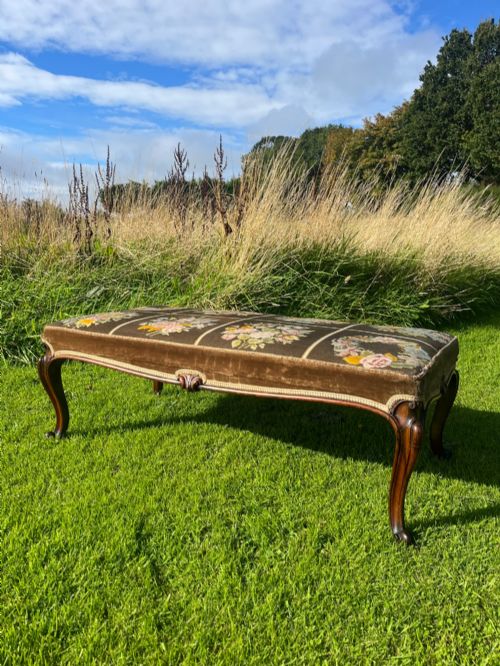
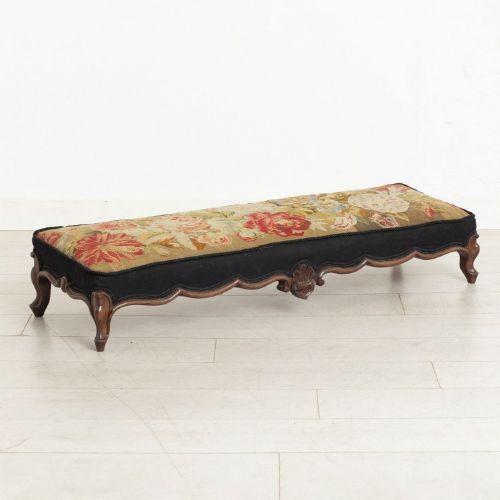
When you search for a brown tapestry bench, you are looking at low seating forms designed for dressing tables, pianos, and window seats. These items range from compact footstools to longer window seats and dressing stools, shaped by periods spanning the Victorian era through the early twentieth century.
The versions you are most likely to meet on this page include walnut and mahogany frames finished with textile or tapestry fabric seats. Examples extend across Victorian, Edwardian, and revival styles such as Queen Anne, Georgian, and French Provincial, often featuring cabriole legs or cross stretchers.
How they were made
Makers constructed these frames predominantly from dense hardwoods like mahogany and walnut, occasionally utilising oak for piano stools. These timbers provided the structural strength needed for carved cabriole legs and detailed window seat frames.
Upholstery involved wool and tapestry fabric secured over padded foundations. Details such as brass elements and hand-worked needlepoint covers completed the surface execution of the textile tops.
Listings span the Victorian era through the 1930s, featuring mahogany, walnut, and oak frames paired with wool tapestry.
What varies in quality
Quality rests in the precision of the woodwork and the character of the textile cover. Pieces with carved cabriole legs or decorative needlepoint demonstrate a higher degree of artisan attention than plain structural frames.
The integrity of the original fabric and the robustness of timber framing distinguish the finer examples. Subtleties in frame carving and the retention of period upholstery set individual pieces apart.
The Brown Tapestry Bench Glossary
- Tapestry fabric
- A heavy textile featuring woven designs, frequently utilised for stool and bench seat covers.
- Cabriole leg
- A furniture leg that curves outward and then tapers inward, common in Queen Anne and Victorian styles.
- X frame
- A structural base formed by intersecting timber supports, seen on window stools.
- Cross stretcher
- Horizontal bracing connecting the legs of a stool to provide added stability.
- Needlepoint
- Stitched yarn work on a stiff open weave canvas, creating decorative seat covers.
Brown Tapestry Bench: Frequently Asked Questions
What is a brown tapestry bench used for?
These items serve as low seating across domestic spaces. They function primarily as dressing table stools, piano seats, or window benches.
Their compact dimensions allow them to sit neatly beneath tables or beside windows while providing a textile-topped seat.
How do I identify the period of a stool?
Dating relies on combining the timber, the style of the legs, and the upholstery. Victorian pieces often use walnut with carved details, whereas later twentieth-century examples lean into Queen Anne revivals.
Examining the construction methods and the textile type helps narrow down the decade of manufacture.
Are these benches sturdy enough for daily use?
Hardwood frames made from mahogany and walnut offer solid structural integrity. Most pieces are built to support regular seating weight.
Care should be taken with older upholstery and delicate decorative frames during daily movement.
What styles are common in these listings?
Victorian and Edwardian pieces appear frequently alongside revival aesthetics. You will encounter Queen Anne style elements and French Provincial influences.
These stylistic markers dictate the shaping of the wooden frames and legs.