





Upholstered French Nursing Chair
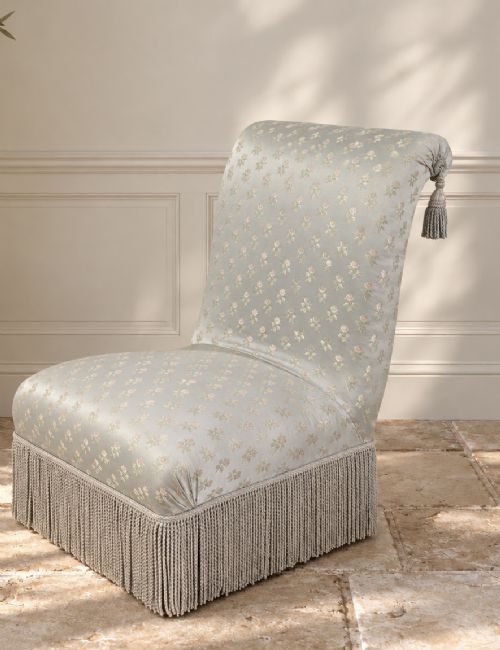
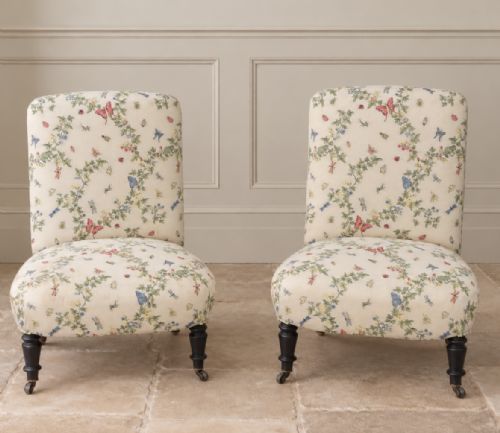
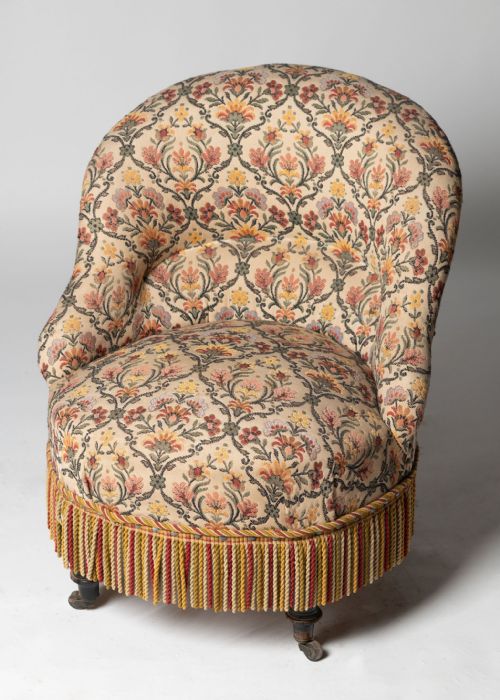
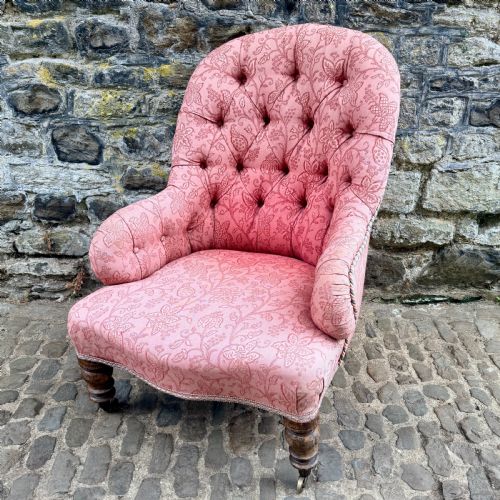
An upholstered French nursing chair offers low seating and deep comfort, prized for its elegant nineteenth century lines and inviting proportions.
Upholstered French Nursing Chair
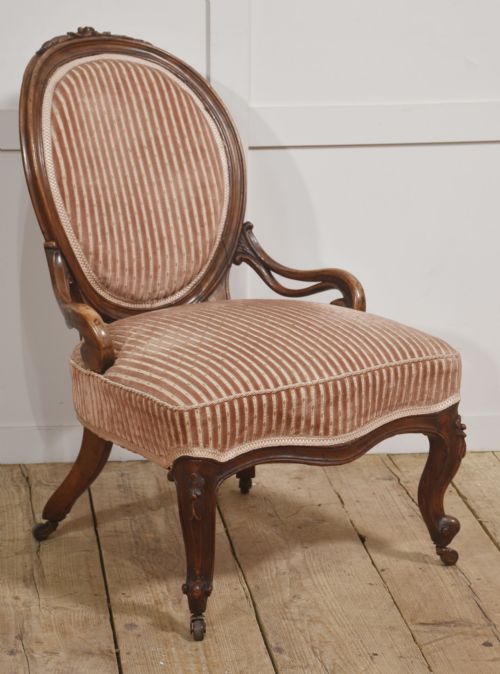
An upholstered French nursing chair brings low, compact seating into the bedroom or boudoir, often featuring an open arm or slipper design intended for ease of movement. These low seats sit closer to the floor than standard armchairs, reflecting nineteenth century domestic habits where comfort and warmth near the hearth mattered.
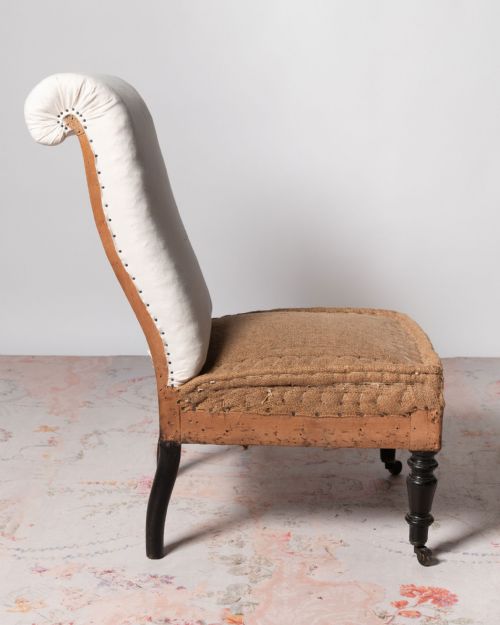
The versions most commonly met on this page span the Victorian period and French Napoleon III styles, with walnut, mahogany, and ebonised wood frames supporting generous upholstery. Makers designed these low chairs with padded backs and sprung seats, sometimes offering pieces specifically suited for recovering or fresh upholstery.
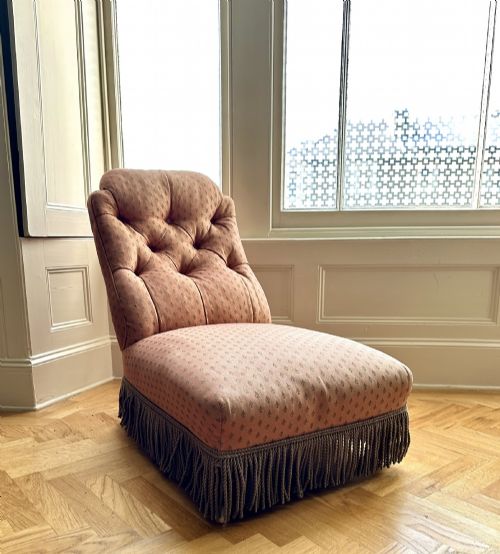
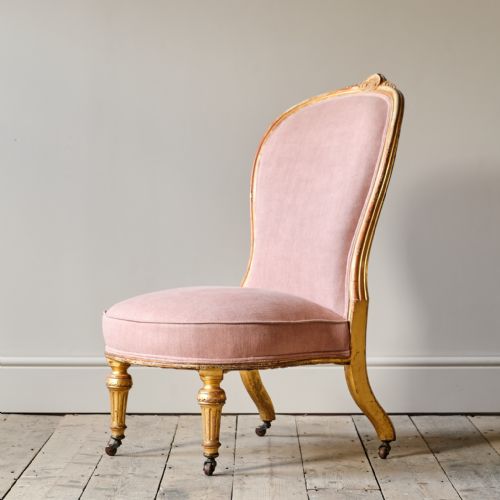
Forms range from scroll back slipper chairs and oval back open armchairs to giltwood frames with fringe trim. Each piece maintains the distinctive low posture and decorative framework characteristic of mid nineteenth century seating.
Materials and construction methods
Cabinetmakers constructed the frames using hardwoods such as walnut, mahogany, and ebonised wood, shaping them into curved scroll backs, oval profiles, and spoonbacks. These sturdy wooden skeletons provided the structural integrity required to support internal springs and padding.
Upholstery techniques involved traditional stuffing finished with fabric, velvet, tapestry, or fringe detailing, while alternative frames received giltwood finishes and exposed brass castors. Selected pieces remain in a raw state specifically prepared for modern fabric application.
Upholstered French Nursing Chair Retail Price Guide 2026
Typical asking prices for upholstered french nursing chair among the pieces listed under this phrase on Sellingantiques today, from the lower quarter to the upper quarter. They describe what is for sale here now, not the wider market.
Listings feature nineteenth century framing materials including walnut, mahogany, ebonised wood, and giltwood paired with velvet and tapestry fabrics.
Assessing quality and craftsmanship
The distinction between standard examples and superior pieces rests on the fluidity of the wood carving and the integrity of the frame. Finer frames exhibit deeply sculpted walnut or crisp giltwood detailing that demonstrates the hand of a skilled workshop rather than mass production.
Proportion and stance dictate the visual success of the piece, with better examples maintaining harmonious curves in the scroll back and leg assembly. The quality of the underlying frame construction determines how well the chair sustains traditional upholstery over time.
Lamb of Manchester
The Upholstered French Nursing Chair Glossary
- Slipper chair
- An upholstered bedroom chair sitting low to the ground without arms, designed originally for ladies to dress in comfort.
- Napoleon III
- A French design style spanning the mid to late nineteenth century, known for eclectic revivalism, ebonised surfaces, and gilt highlights.
- Giltwood
- Timber treated with a thin layer of gold leaf or gilt finish, frequently seen on decorative nineteenth century salon and bedroom chairs.
- Spoonback
- A padded chair back shaped like the bowl of a spoon, providing ergonomic support that follows the natural curve of the spine.
- Fringe
- A decorative border of hanging threads or tassels applied to the base of upholstered seating during the Victorian era.
Upholstered French Nursing Chair: Frequently Asked Questions
What defines a French nursing chair?
A French nursing chair is characterised by its low seat height and upholstered frame, designed during the nineteenth century for domestic comfort in bedrooms and boudoirs.
These pieces typically combine decorative wood frames in walnut or giltwood with generous padding and low proportions suited for relaxed sitting.
How do I spot a Napoleon III piece?
Napoleon III pieces from the mid nineteenth century often display ebonised wood, gilt highlights, and elaborate scroll backs reflecting French decorative arts of the period.
They favour curved silhouettes and rich upholstery options such as velvet or tapestry fabric.
Are these chairs comfortable for daily use?
Most of these chairs offer low seating and sprung support that accommodates relaxed lounging, though comfort depends on the firmness of the internal padding.
Many historic examples benefit from updated interior webbing and modern cushioning during restoration.
Why are some listed for upholstery?
Several pieces arrive with bare frames or worn fabric to allow buyers to choose their own textile finish, matching specific interior schemes.
This approach preserves the antique wooden framework while offering complete freedom in modern fabric selection.