

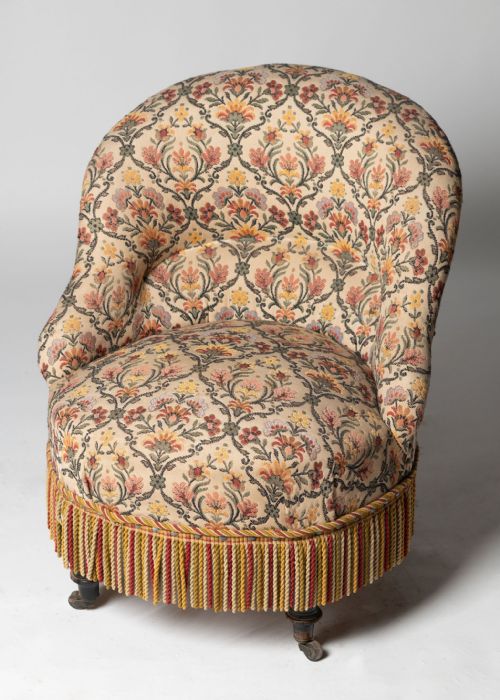
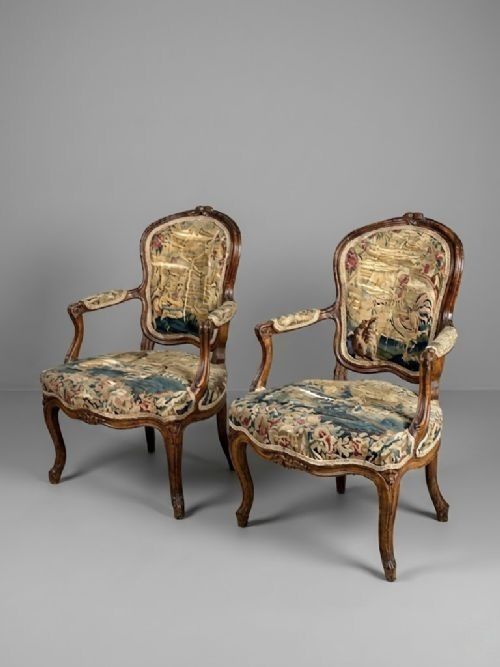


Traditional Tapestry Bedroom Chair
A traditional tapestry bedroom chair offers a touch of historic textile art to a private room, combining timber frames with woven panels.
Traditional Tapestry Bedroom Chair
When you search for a traditional tapestry bedroom chair, you encounter a selection of seating designed for intimate domestic spaces rather than formal reception rooms. The pieces here include side chairs, armchairs, slipper chairs, nursing chairs, and gossip chairs.
The examples on this page span the eighteenth century, the Regency period, the Victorian era, and the Edwardian period, incorporating French Napoleon III, Louis XV, William IV, and Chippendale Revival styles.
You are most likely to meet Victorian and nineteenth-century variants upholstered in needlepoint or tapestry fabric, often featuring carved wooden frames that reflect changing domestic tastes.
How they were made
The structural framework of these chairs relies on traditional timbers such as mahogany, walnut, oak, and other woods, shaped with carved details and occasionally mounted with brass.
The defining element is the textile upholstery, utilising woven tapestry fabric, needlepoint, and general fabric coverings to create patterned seats and backs.
Traditional Tapestry Bedroom Chair Retail Price Guide 2026
Typical asking prices for traditional tapestry bedroom chair among the pieces listed under this phrase on Sellingantiques today, from the lower quarter to the upper quarter. They describe what is for sale here now, not the wider market.
A gossip chair permitted two people to sit facing opposite directions for whispered Victorian conversations without craning their necks.
What varies in quality
The refinement of the timber carving and the structural integrity of the wooden frame distinguish the more accomplished pieces from simpler utilitarian seating.
The complexity, density, and artistic merit of the tapestry or needlepoint work dictate the visual distinction of the upholstery.
The Traditional Tapestry Bedroom Chair Glossary
- Slipper chair
- A low-seated upholstered chair traditionally used in a bedroom for sitting while putting on shoes. These pieces typically lack arms and sit close to the floor.
- Nursing chair
- A low chair designed originally for feeding infants, featuring a compact frame and padded upholstery. These items are closely related to bedroom seating.
- Needlepoint
- A type of canvas work embroidery executed with a yarn in a counted thread or tent stitch. This technique creates the pictorial panels seen on many historic chair seats and backs.
- Aubusson
- A style of tapestry originating from the French town of the same name, known for pictorial woven scenes. These textiles often cover formal antique armchairs.
Traditional Tapestry Bedroom Chair: Frequently Asked Questions
What is a traditional tapestry bedroom chair?
These pieces are historic domestic seats designed for private rooms, featuring textile covers over wooden frames. They include forms such as slipper chairs and nursing chairs.
They bring historical textile work and traditional woodwork into modern domestic settings as decorative and functional furniture.
Where were these chairs used?
Historically, these items were placed in bedrooms, dressing rooms, and private parlours rather than main reception spaces. Their low profiles suited personal grooming and private relaxation.
Today, buyers place them in bedrooms or quiet corners where their textile panels complement the surrounding interior.
How do I identify the period?
Dating relies on observing the timber species, the style of carving, and the structural form of the wooden frame. Details like Chippendale Revival or Louis XV influences point to specific design eras.
Comparing the upholstery style alongside the woodwork helps confirm whether a piece originates from the eighteenth, nineteenth, or early twentieth century.
How do I live with these chairs?
Living with these textile-covered seats requires balancing practical daily use with the preservation of historic fabrics. Placing them out of direct sunlight protects the coloured wools and threads from fading.
Regular gentle cleaning keeps the woven surfaces intact while allowing the historic character to remain prominent in the room.