



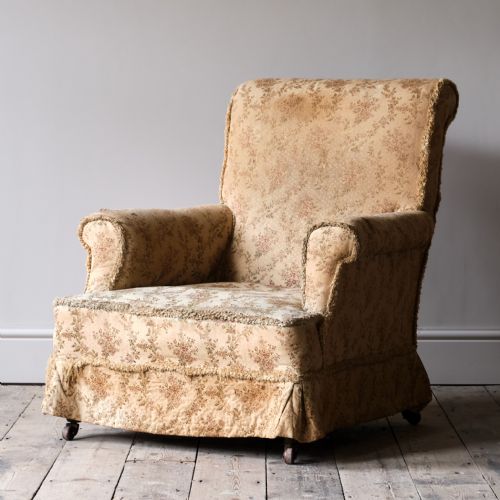

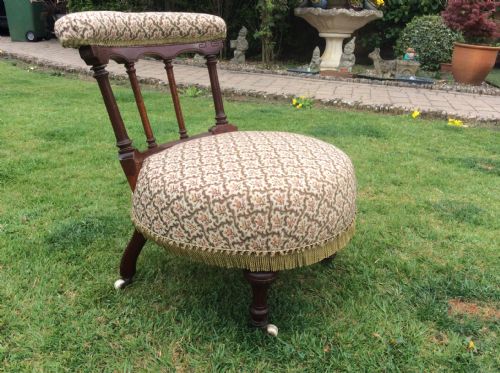


Fringed Upholstered Armchair
A fringed upholstered armchair brings tactile texture and deep-seated comfort to a room, drawing on centuries of skilled seating design.
Fringed Upholstered Armchair
A fringed upholstered armchair represents a broad tradition of soft seating, ranging from low Victorian bedroom chairs and slipper chairs to stately open armchairs and wing chairs. Buyers searching for a fringed upholstered armchair will encounter nineteenth-century pieces alongside French Napoleon III, Empire, and Art Deco variants, reflecting diverse regional tastes.
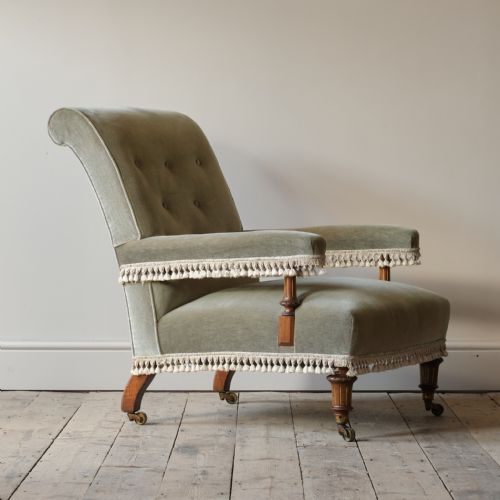
The selection on this page leans heavily toward nineteenth-century English and French examples, including specific forms like nineteenth-century open armchairs and country house chairs. Makers and periods span the Victorian era, the 1860s, 1870s, 1890s, and into the 1930s with oak cross-frame armchairs and Art Deco designs.
Many of these pieces arrive upholstered in velvet, tapestry fabric, or kilim carpet, while others wait for new fabric beneath traditional fringed trim. Whether you seek a bedroom chair or a substantial library seat, the defining characteristic remains the textile fringe edging the base.
How they were made
Construction relies on sturdy timber frameworks built from oak, mahogany, and general wood structures that support heavy stuffing and springing. Artisans shaped these frames into open arms, cross-frames, and high-backed wing chairs before applying layers of webbing, stuffing, and outer fabric.
Textiles form the primary visual impact of these chairs, utilising woven velvet, patterned tapestry fabric, and flatweave kilim carpets stretched tightly over the frame. The signature textile fringe is then stitched along the lower skirt to conceal the castors and lower rail, adding a decorative drop.
Fringed Upholstered Armchair Retail Price Guide 2026
Typical asking prices for fringed upholstered armchair among the pieces listed under this phrase on Sellingantiques today, from the lower quarter to the upper quarter. They describe what is for sale here now, not the wider market.
Periods represented range from the eighteenth century through Victorian decades to the 1930s.
What varies in quality
Quality rests primarily in the architectural integrity of the wooden frame and the precision of the joinery beneath the textiles. Pieces attributed to documented makers demonstrate superior carving, balanced proportions, and robust internal framing compared to anonymous commercial output.
The grade and authenticity of the covering materials also determine the standing of an individual piece, from heavy antique tapestry and kilim panels to simple upholstery-ready frames. Furthermore, the originality and condition of the textile fringe contribute significantly to the overall integrity of the piece.
Gillows·J.Mills
The Fringed Upholstered Armchair Glossary
- Fringe
- An ornamental textile border consisting of hanging threads or tassels attached to a stitched heading. It serves to finish the lower edge of upholstery and conceal the legs or castors.
- Slipper chair
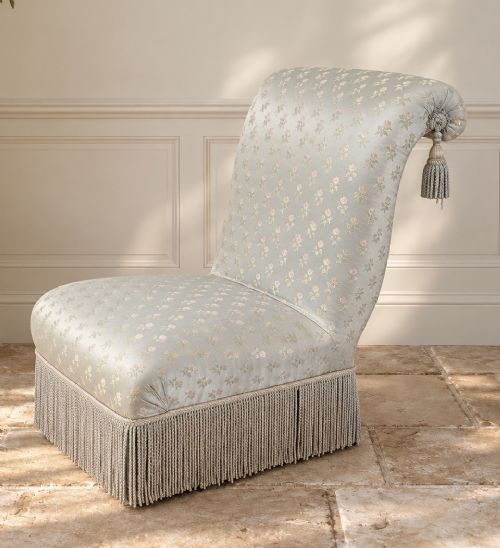
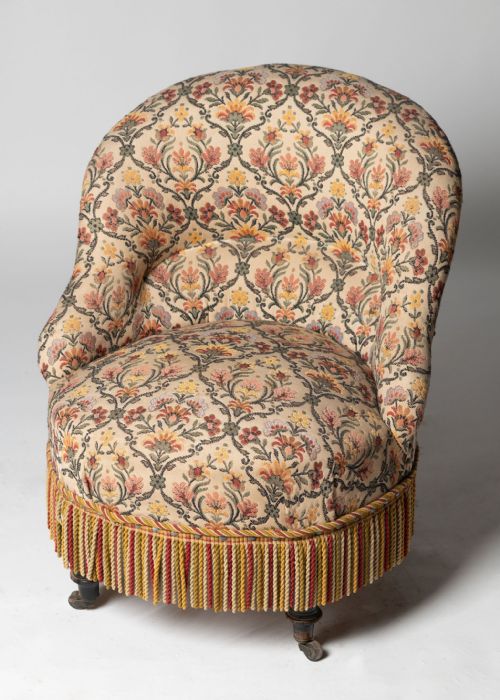
- A low-seated upholstered chair designed originally for a lady's dressing room. Its low profile makes it comfortable for domestic relaxation.
- Wing arm chair
- An armchair featuring high side panels attached to the back to shield the sitter from drafts. It represents a traditional form found across multiple stylistic periods.
- Cross-frame armchair
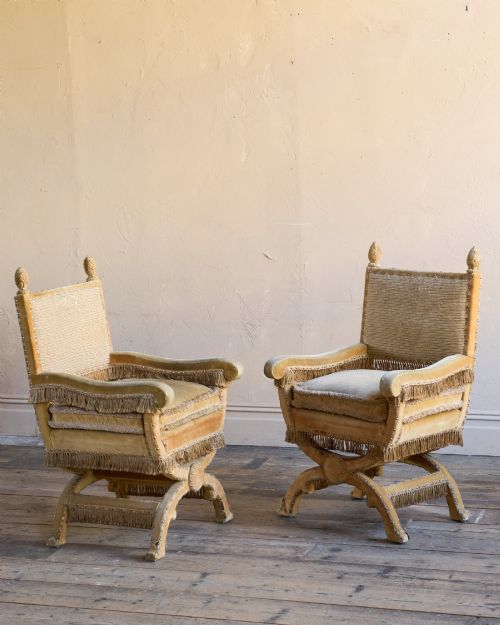
- A seat constructed with intersecting diagonal supports forming an X-shape beneath the arms or seat. This structural form appears in diverse historical periods.
Fringed Upholstered Armchair: Frequently Asked Questions
What periods do these armchairs come from?
The listings span from the eighteenth century through the Victorian era and the nineteenth century, extending into twentieth-century 1930s designs. You will find specific decades represented alongside broader stylistic epochs.
French pieces often align with the Napoleon III or Empire periods, while English examples reflect Victorian cabinet-making and earlier traditional forms.
What materials are used in their construction?
Frameworks consist primarily of wood, mahogany, and oak, providing a solid structural core for the upholstery. Brass components frequently appear on castors or decorative mounts.
The outer coverings utilise velvet, tapestry fabric, textile fringe, and kilim carpets to create varied textures and visual patterns.
How do I identify a slipper chair?
A slipper chair stands out through its notably low seat and absence of high armrests, designed originally for ease of dressing. They often feature generous upholstery and decorative fringing along the base.
These chairs function well in bedrooms and intimate sitting spaces where a compact, low-slung profile is desired.
Are some chairs sold ready for upholstery?
Several pieces are offered specifically as frames for upholstery, allowing buyers to select their own covering fabric. These bare or stripped frames reveal the underlying nineteenth-century woodwork and internal construction.
This option suits those wishing to customize the textile finish to match a specific interior colour scheme.