
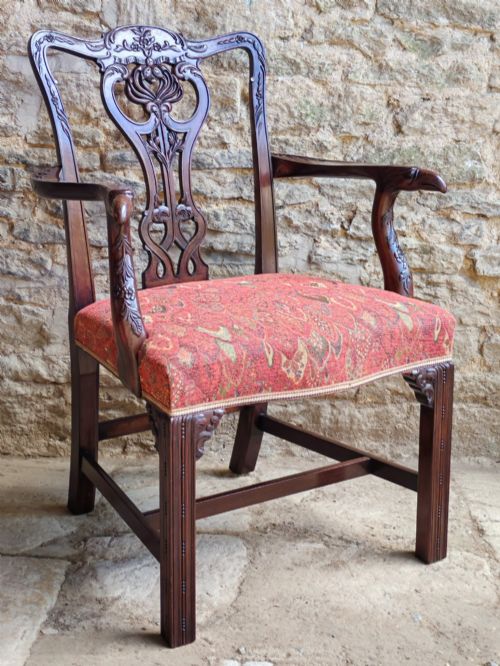
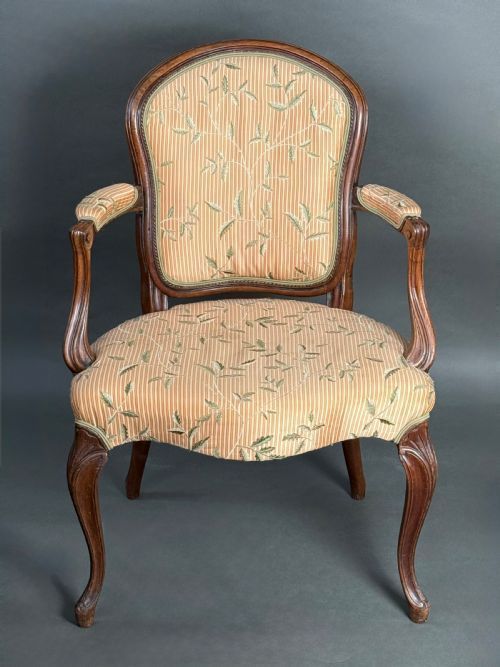
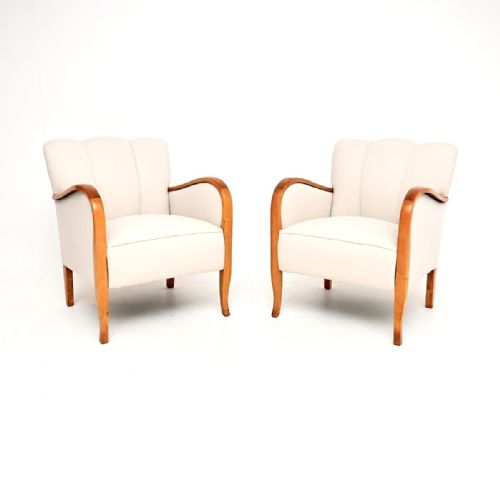
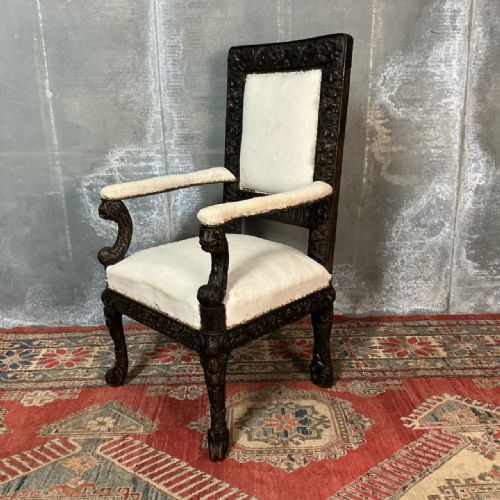
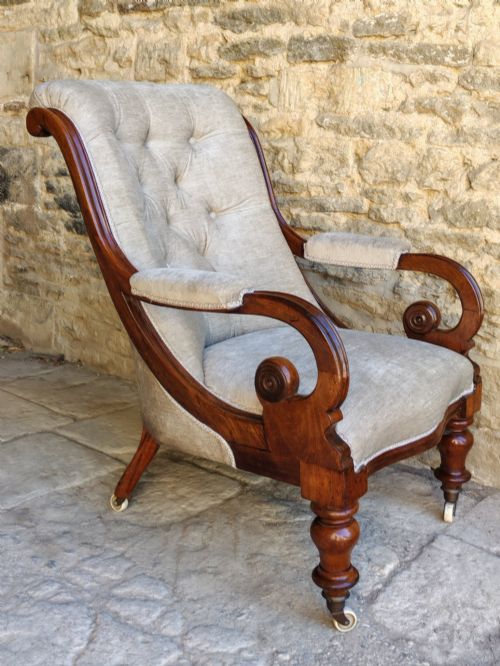
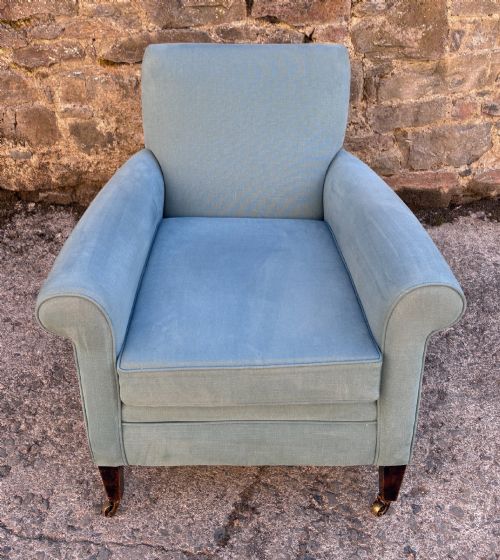
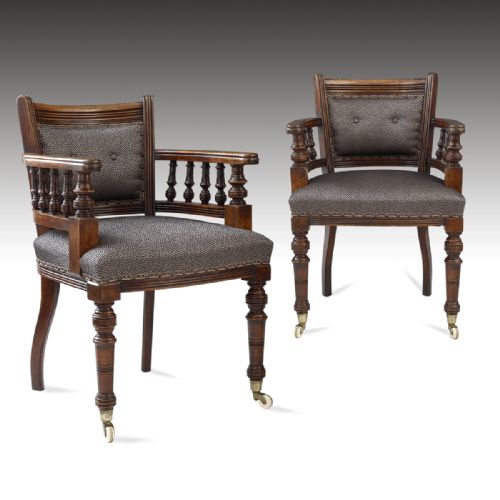
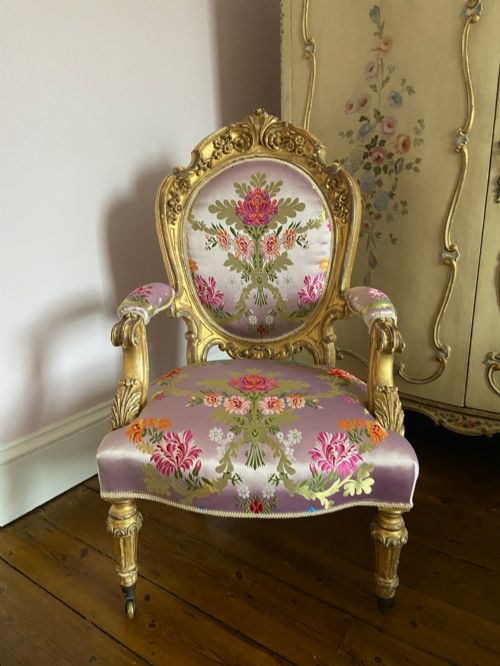
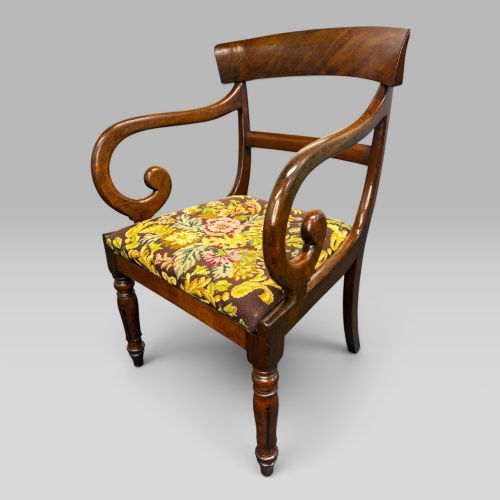
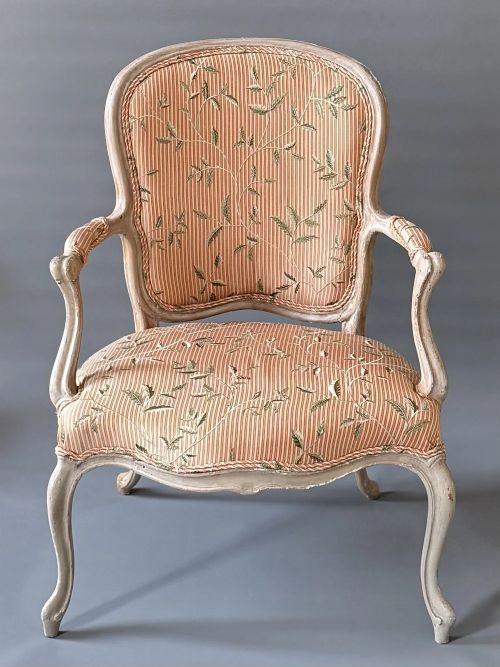
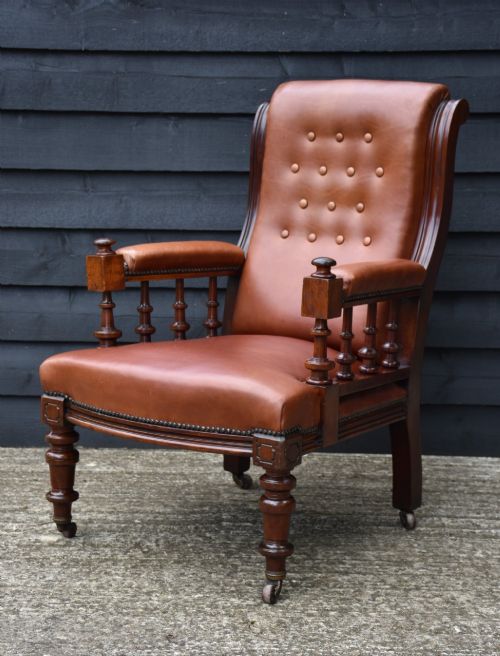
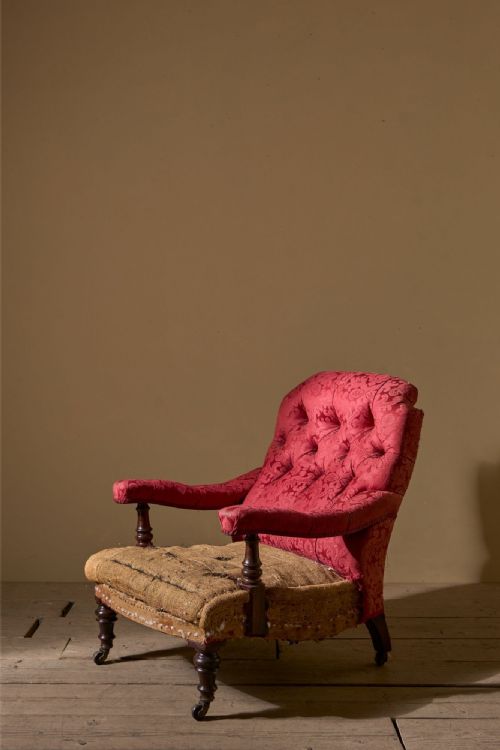
Upholstered Arm Chair
When searching for an upholstered arm chair, one encounters a diverse lineage of seating designed for comfort and reading, spanning centuries of craftsmanship.
Upholstered Arm Chair
An upholstered arm chair provides deep, padded seating designed for studies, libraries, and formal drawing rooms. These pieces encompass library armchairs, wingbacks, and deep country house forms from various periods.
The selection frequently includes Victorian and Edwardian examples alongside Georgian library chairs and later interpretations. Buyers often find pieces finished in traditional ticking, leather, or patterned textiles.
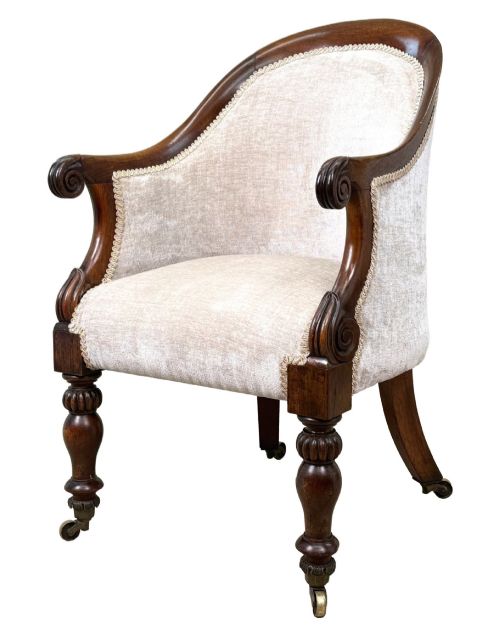
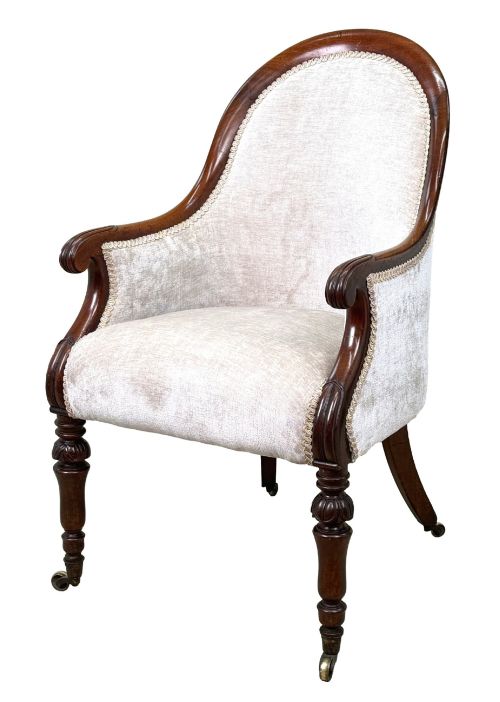
Forms range from compact tub library chairs to expansive wingbacks and revolving desk chairs. Each iteration serves a distinct domestic function, from fireside reading to study at a partners desk.
How They Were Made
Frames rely on dense native timbers such as mahogany, walnut, oak, and rosewood, joined with traditional carpentry techniques. Carved details, reeded legs, and gilded accents define the show wood on refined models.
Upholstery relies on supportive webbing, springs, and stuffing, finished with materials like leather, velvet, silk, and printed textiles. Brass castors frequently support the legs of nineteenth-century examples for mobility.
Upholstered Arm Chair Retail Price Guide 2026
Typical asking prices for upholstered arm chair among the pieces listed under this phrase on Sellingantiques today, from the lower quarter to the upper quarter. They describe what is for sale here now, not the wider market.
The inventory spans the seventeenth century through the Victorian era, Edwardian period, and later Art Deco designs.
What Varies in Quality
The integrity of the underlying timber frame dictates the longevity and structural stability of the seat. Heavy mahogany and walnut frames exhibit superior carving definition and joint rigidity compared to lighter alternatives.
The sophistication of the upholstery work, including hand-stitched detailing, buttoning, and the selection of covering fabric, elevates a utilitarian seat into a notable piece of furniture.
Howard and Sons·Morris and Co·Gillows
The Upholstered Arm Chair Glossary
- Tub armchair
- A rounded, upholstered seating form where the back flows continuously into low arms. This configuration became especially popular during the nineteenth century for library use.
- Wingback
- A tall-backed chair featuring projecting side panels designed to shield the sitter from draughts. Georgian and Victorian makers frequently paired these with deep, sprung seats.
- Gainsborough chair
- An open-framed armchair with padded seat and armrests, dating from the eighteenth century. These typically feature mahogany structures intended for writing desks and libraries.
- Castor
- A small wheel attached to the base of furniture legs to ease movement. Brass examples with ceramic inserts frequently appear on nineteenth-century seating.
- Bergère
- An enclosed armchair with wooden framing and cane or upholstered sides. This French-influenced form provides a lighter visual profile within a room.
Upholstered Arm Chair: Frequently Asked Questions
How do I identify a Howard and Sons chair?
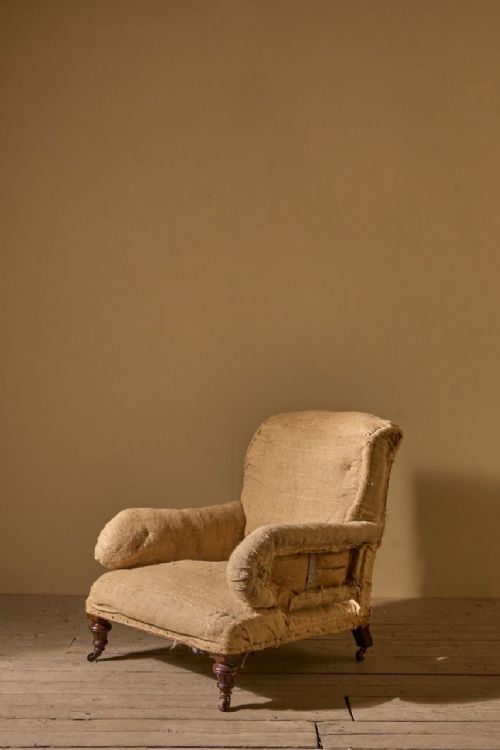
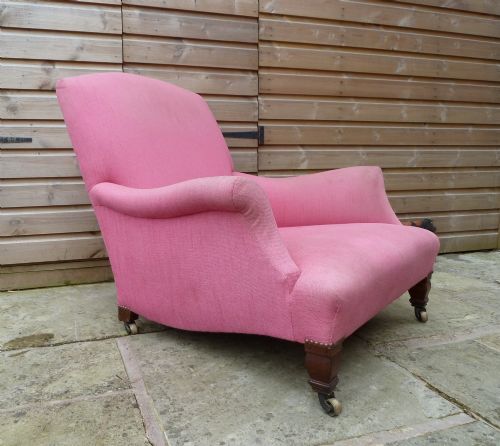
Look for distinctive low proportions, deep sprung seats, and stamped maker details on the castors or back legs. These pieces usually exhibit a relaxed country house aesthetic.
Associated styles often feature loose feather-filled cushions and specific ticking fabrics that signal their nineteenth-century origins.
Were these chairs used in libraries?
Many examples served specifically in libraries and studies, upholstered in durable leather or heavy woven textiles. Their robust frames suited long hours of reading and writing.
Library armchairs often incorporated castors for easy repositioning near bookshelves or fireplaces.
What is a country house armchair?
This term describes comfortable, heavily padded seating gathered over generations in large English residences. They prioritize deep seating and relaxed proportions over strict formal symmetry.
Upholstery on these pieces frequently shows layers of historic textiles or loose loose covers.
How do I date a mahogany armchair?
Examine the timber colour, grain tightness, and joinery methods visible beneath the upholstery line. Georgian examples show crisp hand-carving, while Victorian pieces often utilise heavier proportions and factory-turned components.
Hardware such as brass castors also helps narrow down the manufacturing decade.