
Deep Seat Reading Chair
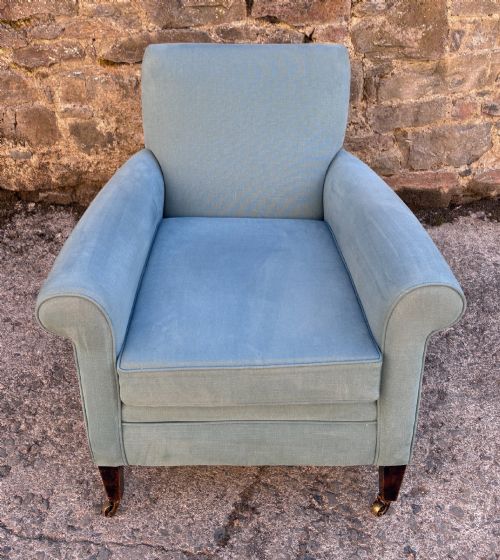
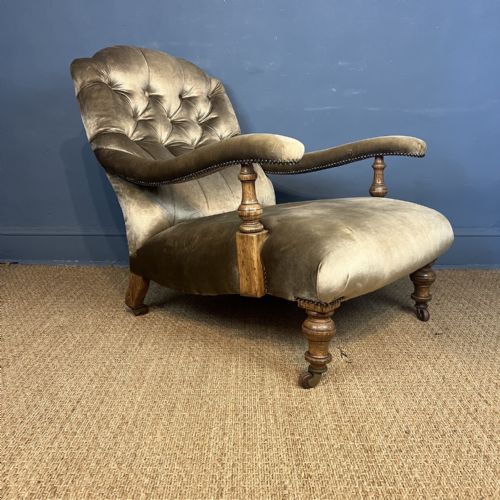
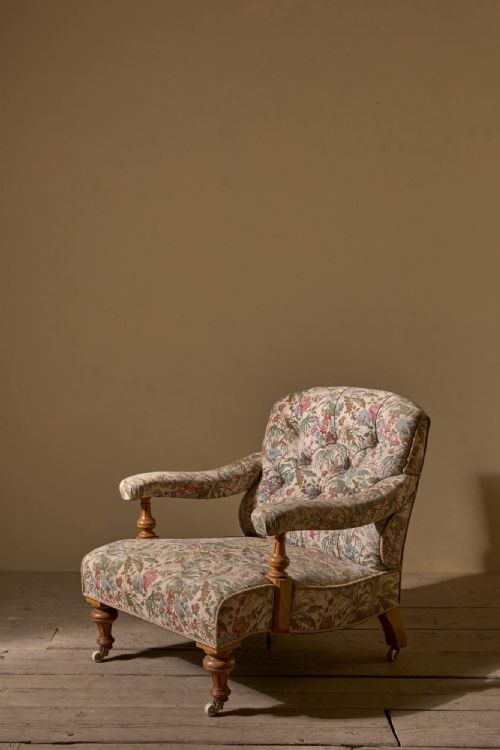
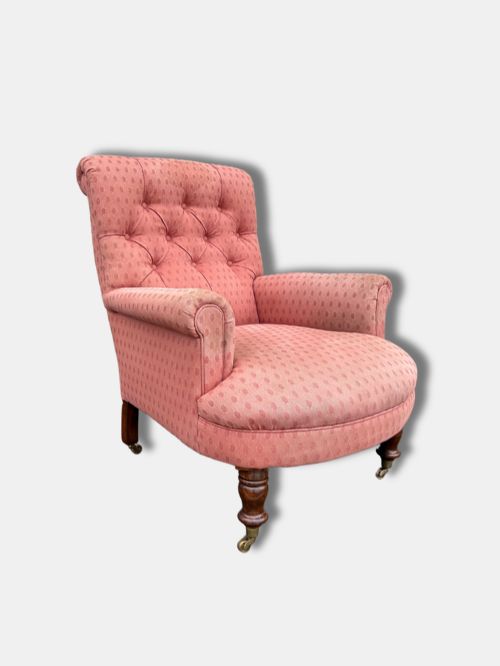
A deep seat reading chair offers deep upholstery and generous proportions designed for long hours of quiet study or rest.
Deep Seat Reading Chair
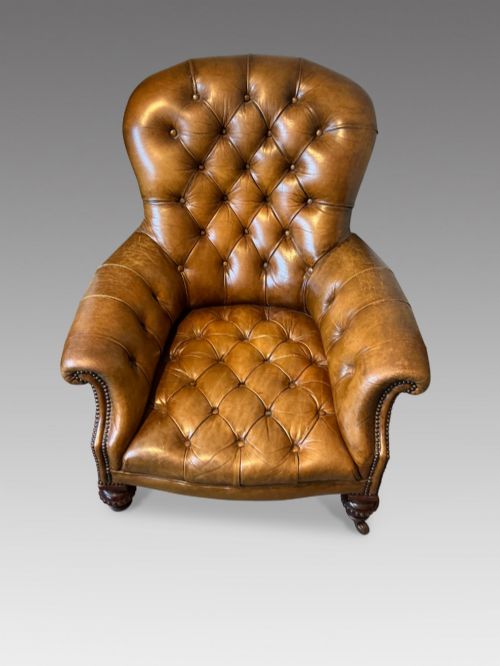
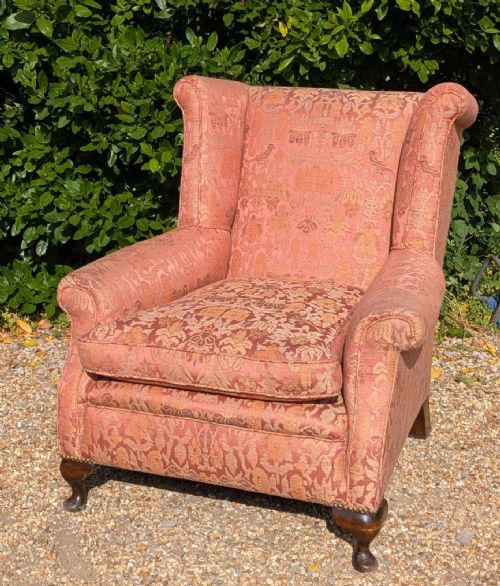
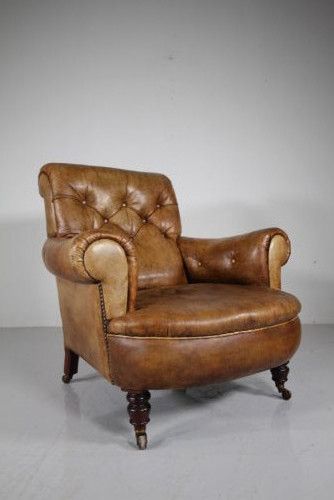
When you search for a deep seat reading chair, you look at large upholstered armchairs built for comfort and repose. The selection spans the nineteenth century through the Edwardian period and the nineteen-thirties, taking forms such as library chairs, country house armchairs, and club chairs.
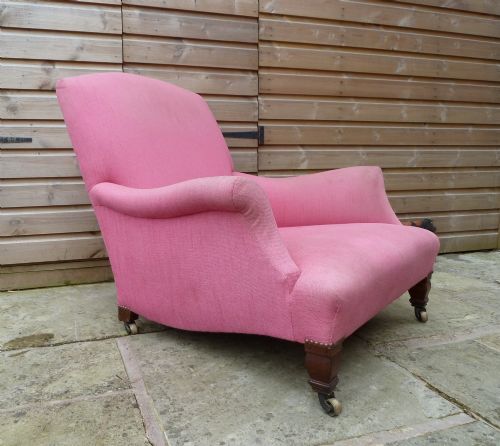
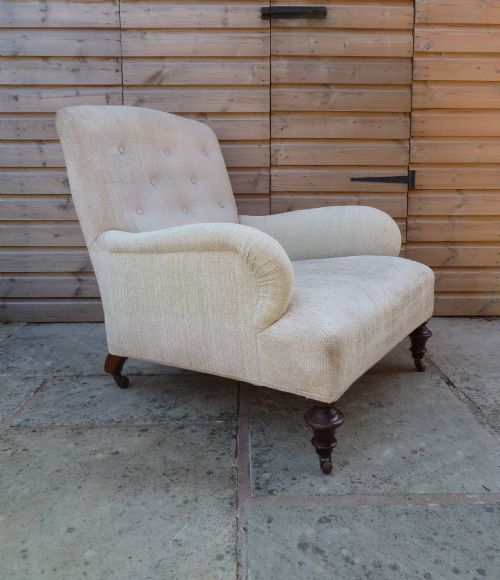
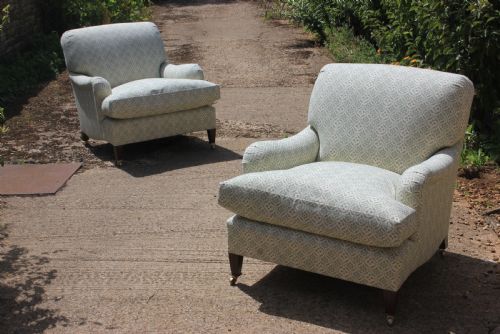
You meet Victorian and Edwardian examples most frequently, often featuring generous low seats and supportive padded backs. Many pieces follow the distinct low-slung aesthetic associated with Howard and Sons, while others draw on Regency and George III styles with exposed mahogany, rosewood, or oak frames.
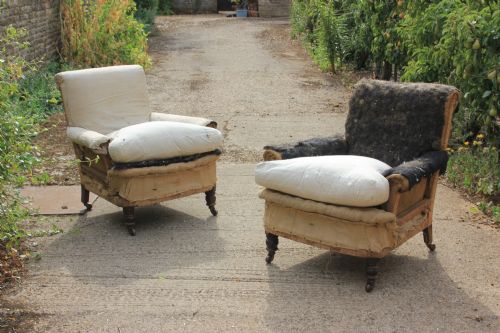
Makers and workshops of the nineteenth century built these armchairs for English country houses and town libraries. They combine robust wooden frames with deep padding designed to hold feather fillings or traditional stuffing materials securely over decades of daily use.
How they were made
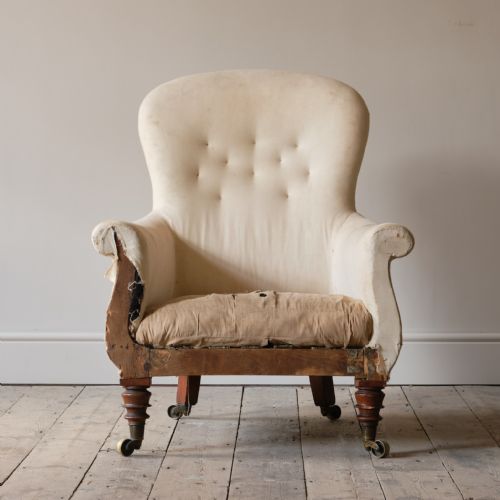
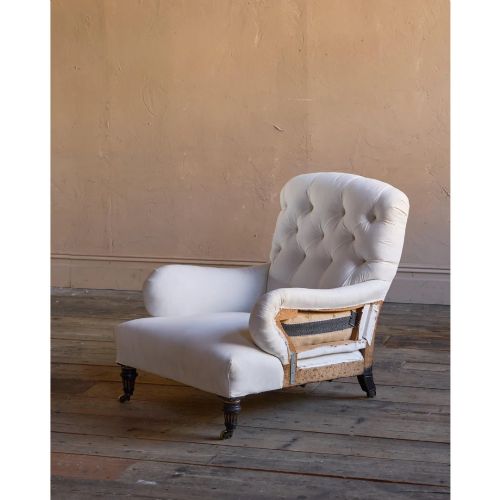
Cabinetmakers constructed the supportive frames of a deep seat reading chair using hardwoods such as mahogany, rosewood, oak, and general timber. Craftsmen joined these structural elements with traditional mortise and tenon joints to withstand the heavy loads placed on low, deep proportions.
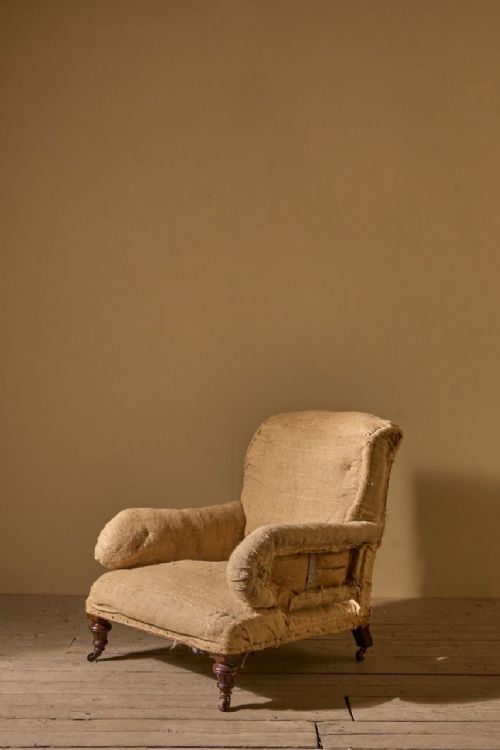
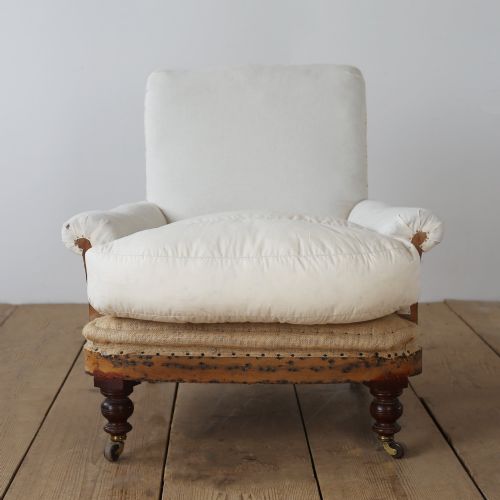
Upholsterers built up the interior using burlap, hessian, and calico to contain stuffing materials, often finishing the exterior in leather, velvet, or woven fabric. Brass tacks and buttons secured the upholstery firmly to the wooden framework while adding decorative detail to the arms and backs.
Listings feature nineteenth-century and Edwardian pieces constructed from mahogany, rosewood, brass, leather, and velvet.
What varies in quality
The integrity of the internal stuffing and the resilience of the suspension separate standard workshop pieces from superior examples. Chairs featuring dense feather fillings and intact traditional webbed foundations retain their intended shape and supportive comfort far better over time.
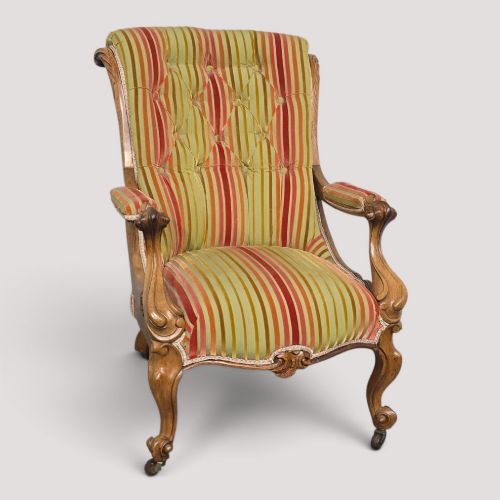
The refinement of the timber frame and the skill of the carving distinguish better examples from simpler country furniture. Finely turned legs with original castors and cleanly carved mahogany or rosewood details elevate the stature of a library armchair.
Howard and Sons·Gillows
The Deep Seat Reading Chair Glossary
- Library armchair
- A sturdy upholstered seat designed for reading rooms, typically featuring padded arms and a supportive back. These chairs often utilise mahogany or rosewood frames.
- Gainsborough chair
- An eighteenth-century style of open armchair featuring upholstered arms, a wide seat, and square legs. Makers revived this form frequently during the nineteenth century.
- Calico
- A plain-woven textile used as an underlying layer in upholstery work beneath top covers of leather or velvet. It provides a tight base for buttoning and padding.
- Hessian
- A coarse woven fabric utilised for webbing and stuffing containment within traditional upholstery. It holds horsehair and stuffing securely within the frame.
Deep Seat Reading Chair: Frequently Asked Questions
What defines a deep seat reading chair?
A deep seat reading chair provides extra seat depth and relaxed proportions intended for long periods of sitting with a book.
These pieces typically date from the nineteenth and early twentieth centuries, drawing on Victorian and Edwardian country house styles.
Where were these armchairs used?
Owners placed these large armchairs in domestic libraries, studies, and drawing rooms of large country houses.
Their generous dimensions and padded arms made them suited for comfortable reading and daily relaxation.
How do I identify the period?
Cabinetmaking styles, wood choices, and upholstery techniques help distinguish between Regency, Victorian, and Edwardian examples.
Rosewood and mahogany frames often point to earlier nineteenth-century pieces, while low-slung Howard style forms frequently date toward the late Victorian or Edwardian eras.
What fillings were used originally?
Traditional makers stuffed these seats with materials such as horsehair, wool, and feathers held together by webbing and hessian.
Many surviving pieces retain feather-filled cushions that contribute to their soft and yielding seat comfort.