
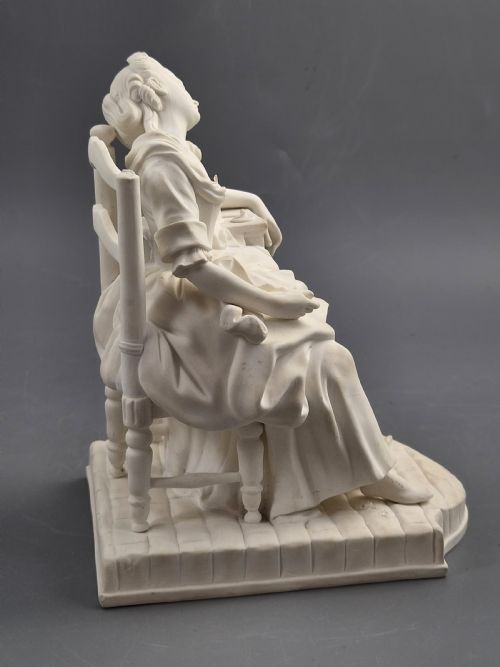
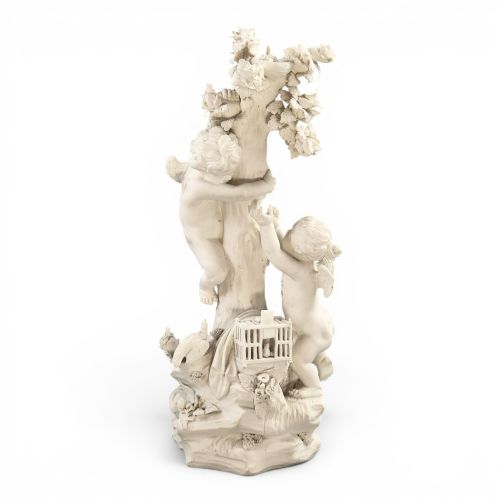
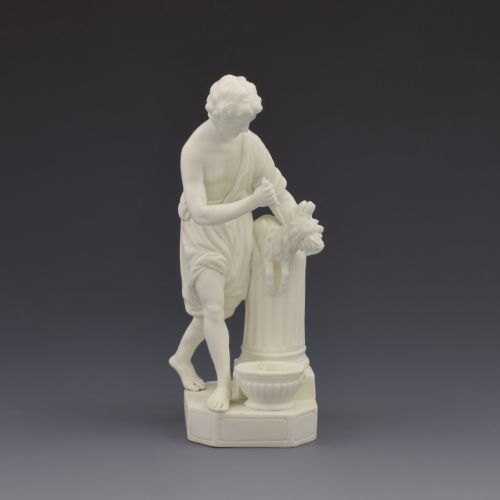


Unglazed Porcelain Figure
An unglazed porcelain figure brings matte tactile warmth and sculptural detail to a room, ranging from neoclassical subjects to Victorian busts.
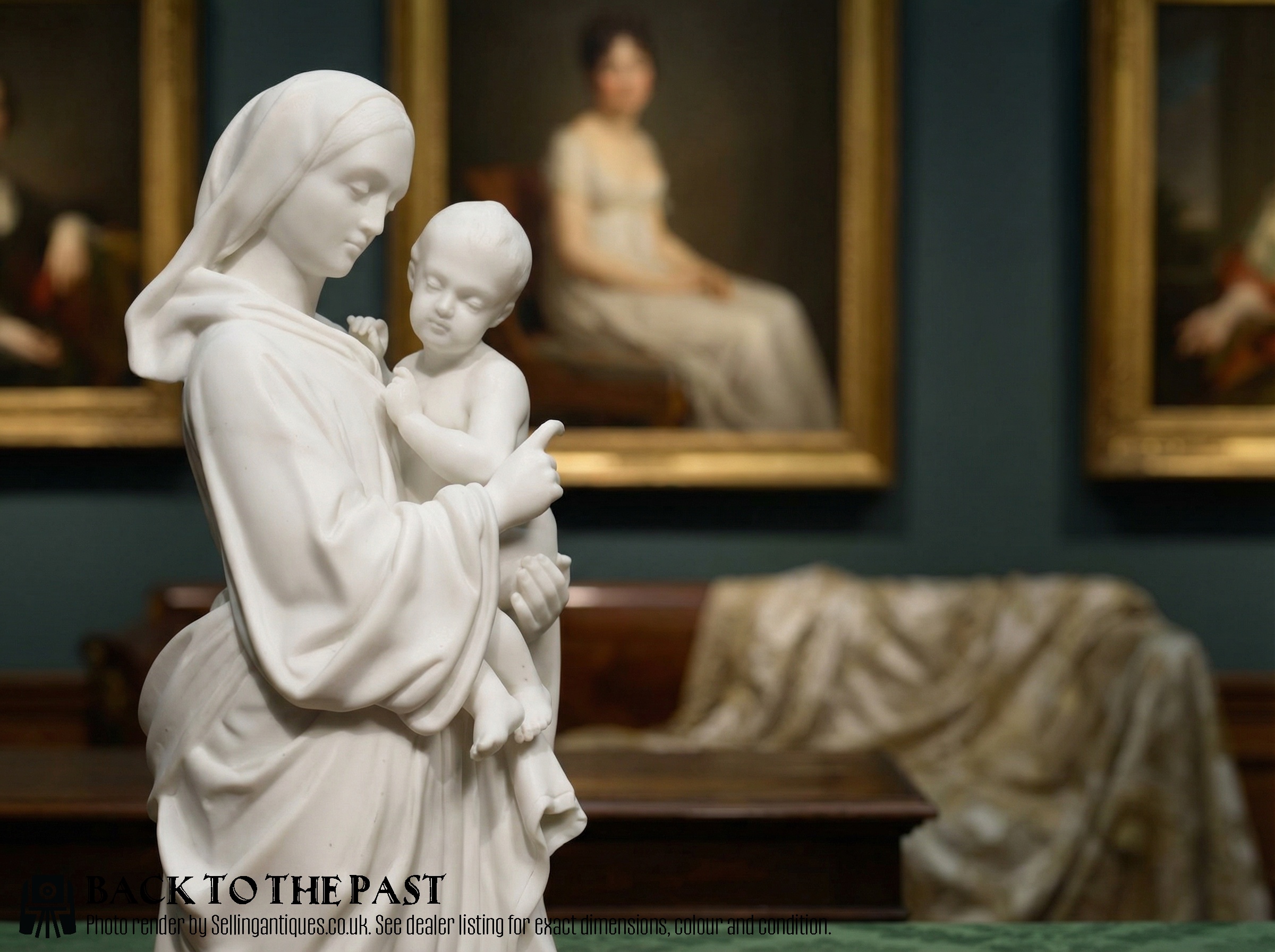
Unglazed Porcelain Figure
When you search for an unglazed porcelain figure, you encounter white or tinted ceramic bodies fired without a glossy surface glaze. These pieces take the form of figurines, statuettes, busts, and sculptural groups depicting classical figures, animals, and historical subjects. You are most likely to meet Victorian Parian ware and 18th-century biscuit porcelain on this page.
The selection spans from Georgian works produced by English factories to late 19th-century French sculptures and Victorian Parian ware. Forms range from single figures of women and children to complex groups involving multiple subjects and animals. These works capture the smooth texture of marble while maintaining the fine detail achievable in ceramic slip.
How they were made
Makers produced these sculptures using soft-paste porcelain, biscuit ceramic, and specialised Parian bodies that imitate carved marble. Liquid slip was poured into intricate multi-part plaster moulds, allowing the ceramic to capture deep drapery folds, facial expressions, and fine hair texture. After casting, pieces underwent high-temperature firing without a vitreous surface glaze.
Post-firing finishing involved careful clean-up of mould seams and occasional hand-chasing of details by skilled modellers before a final low-temperature biscuit firing. Factories like Derby and Copeland utilised specific chemical compositions in their Parian ware to achieve a self-supporting matte surface during the kiln process.
Unglazed Porcelain Figure Retail Price Guide 2026
Typical asking prices for unglazed porcelain figure among the pieces listed under this phrase on Sellingantiques today, from the lower quarter to the upper quarter. They describe what is for sale here now, not the wider market.
Object forms span single statuettes, portrait busts, hunting dogs, and multi-figure classical groups.
What varies in quality
The sophistication of the subject and the reputation of the modeller or factory elevate certain pieces above standard commercial output. Works designed by known sculptors or produced by prominent potteries display balanced compositions and anatomical accuracy that distinguish them from generic factory output.
Derby·Luca Madrassi·Minton·Copeland·Triebner Ens And Co·Royal Worcester
The Unglazed Porcelain Figure Glossary
- Parian Porcelain
- A fine-grained, unglazed porcelain developed in the 19th century to imitate carved white marble. It contains a high proportion of feldspar which vitrifies during firing.
- Biscuit Porcelain
- Unglazed ceramic fired once to create a porous, matte body. Also referred to as bisque porcelain, it was widely used for neoclassical figures and portrait busts.
- Soft-Paste Porcelain
- An artificial porcelain composition fired at lower temperatures than hard-paste porcelain. It produces a warm, granular body frequently seen in 18th-century figures.
- Neoclassical
- A style inspired by the art and architecture of ancient Greece and Rome. It emphasises classical drapery, mythological themes, and restrained, elegant compositions.
- Neo-Rococo
- A 19th-century revival movement characterised by asymmetrical scrollwork, naturalistic floral elements, and theatrical poses. Pieces in this style often feature elaborate bases.
Unglazed Porcelain Figure: Frequently Asked Questions
What is an unglazed porcelain figure?
An unglazed porcelain figure is a ceramic sculpture fired without a glossy surface coating. This group includes biscuit porcelain, bisque, and Parian ware pieces.
These sculptures rely on the raw texture of the ceramic body to showcase fine details. They capture the appearance of carved marble in a ceramic medium.
How do I clean an unglazed porcelain figure?
Clean these matte surfaces with a soft, dry brush to remove dust. Avoid using water or liquid cleaners on porous unglazed bodies.
Because the ceramic lacks a protective glaze, moisture can absorb into the material and trap dirt within the microscopic pores.
What is Parian ware?
Parian ware is a specific type of unglazed porcelain developed in Victorian Britain. It gained popularity for its ability to mimic white marble.
Factories used this dense ceramic body for portrait busts, classical figures, and literary subjects. The material achieved commercial success for household display.
How do I date an unglazed porcelain figure?
Dating relies on factory marks, the style of the base, and the character of the ceramic body. 18th-century biscuit figures differ noticeably from Victorian Parian pieces.
Examining the subject matter and manufacturing technique provides additional clues. Stylistic markers such as neoclassical drapery or Victorian attire help narrow the production window.