

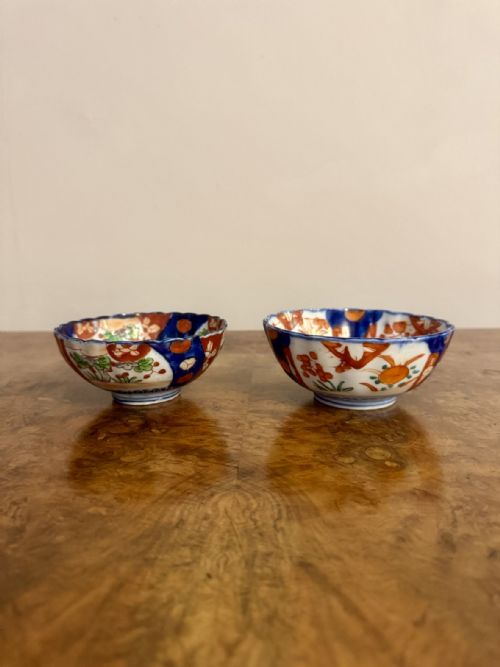


Underglaze Blue Tea Bowl
An underglaze blue tea bowl brings small-scale ceramic artistry to your hand, shaped by eighteenth-century English factories and East Asian kilns alike.
Underglaze Blue Tea Bowl
An underglaze blue tea bowl is a compact vessel for drinking tea, decorated with cobalt pigment applied directly to the body before firing and glazing. These pieces emerge from the eighteenth century, alongside Japanese export wares and nineteenth-century examples.
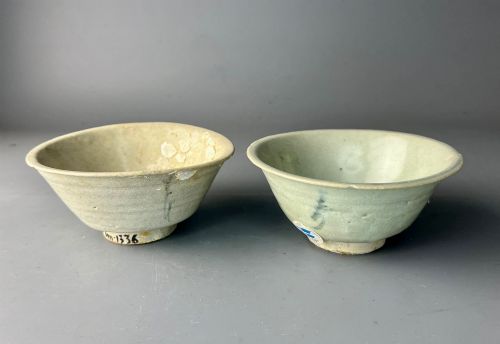
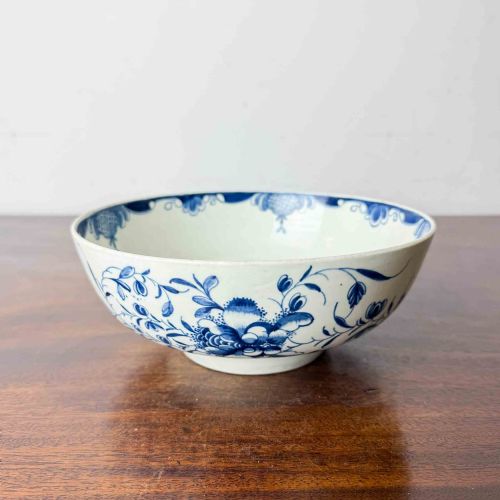
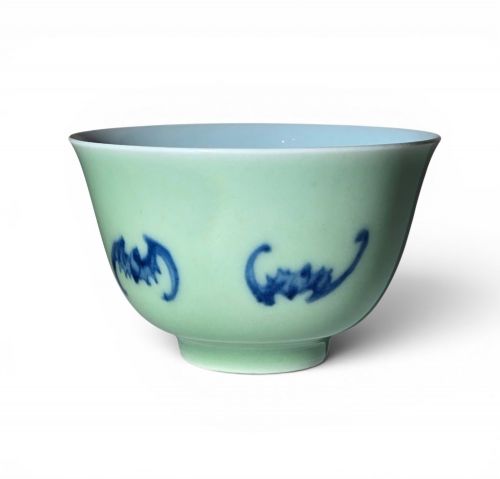
The selections available here span British factories like Worcester and various periods of Chinese porcelain, ranging from simple domestic tea ware to finely painted export pieces. You will encounter forms labelled as tea bowls, slop bowls, and small decorative bowls bearing traditional patterns.
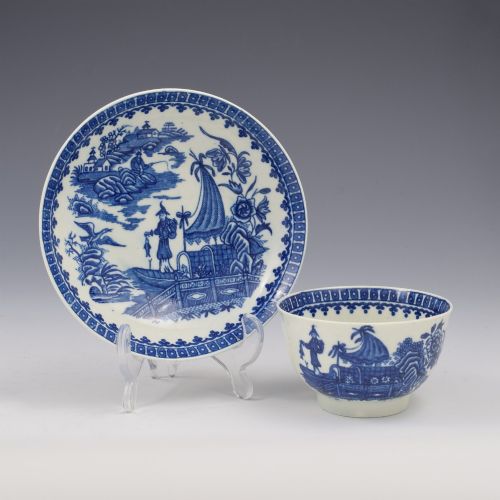
Many examples pair the bowl with a matching saucer, while others survive as individual cups. Styles stretch from Georgian chinoiserie and floral motifs to Qing Dynasty designs and Japanese Imari palettes.
Materials and manufacture
Makers shaped these vessels from porcelain, soft-paste porcelain, and soapstone bodies, applying cobalt glaze or cobalt underglaze beneath a clear protective finish. Some pieces also incorporate supplementary enamel details over the primary glaze.
The cobalt pigment required high-temperature kilns to turn deep blue, fusing with the glaze during the firing process. Moulded elements and hand-painted scenes, such as the fisherman or chrysanthemum patterns, demonstrate the precise brushwork characteristic of the period.
Underglaze Blue Tea Bowl Retail Price Guide 2026
Typical asking prices for underglaze blue tea bowl among the pieces listed under this phrase on Sellingantiques today, from the lower quarter to the upper quarter. They describe what is for sale here now, not the wider market.
Listings feature porcelain, soft-paste porcelain, and soapstone materials spanning the eighteenth and nineteenth centuries.
Distinctions in quality
Quality rests in the crispness of the cobalt painting beneath the glaze and the refinement of the porcelain body. Early English soft-paste porcelains and marked Chinese pieces display distinct weight and translucency compared to later wares.
The success of the firing dictates the clarity of the blue pigment, separating evenly saturated designs from blurred or running hues. Intricate moulded decoration and well-preserved painted motifs elevate certain examples above standard domestic production.
The Underglaze Blue Tea Bowl Glossary
- Underglaze
- Decoration applied to pottery beneath a transparent glaze before firing. This technique protects the pigment from wear during daily use.
- Soft-paste porcelain
- A ceramic composition fired at lower temperatures than true hard-paste porcelain. It was widely utilised by eighteenth-century English factories such as Worcester.
- Cobalt blue
- A metallic oxide pigment that turns blue under high kiln temperatures. It remains the defining colourant for these traditional wares.
- Imari
- A style of Japanese export porcelain featuring blue underglaze combined with iron red and gilt details. It heavily influenced European ceramic design.
- Slop bowl
- A larger bowl used in tea service to discard spent tea leaves and dregs. These pieces match the smaller tea bowls in pattern and material.
Underglaze Blue Tea Bowl: Frequently Asked Questions
What is an underglaze blue tea bowl?
These small ceramic vessels were designed for drinking tea from small portions without handles, following traditional Asian and early European tea customs.
They feature cobalt pigment painted directly onto the clay body before being covered in a clear glaze and fired.
How were these bowls used historically?
People used them during formal and domestic tea services, often paired with saucers to hold the cup or cool the hot beverage.
Larger variations, known as slop bowls, sat alongside the tea set to collect discarded leaves and remaining liquid.
How do I care for antique porcelain?
Wash these delicate vessels gently by hand in warm water using mild soap, avoiding modern dishwashers and harsh abrasive sponges.
Store them securely on stable shelving away from edges where accidental knocks might cause chips or fractures.
How do I distinguish eighteenth-century pieces?
Look closely at the paste composition, glaze pooling, and hand-painted brushwork details that reveal the characteristic traits of early English and Asian manufacture.
Factory marks, where present, help pinpoint specific periods and kilns, though many authentic pieces rely entirely on stylistic indicators.